
Last Updated on June 19, 2025 5:43 pm by INDIAN AWAAZ
R. Suryamurthy
India’s gems and jewellery exports saw a sharp 15.81% decline in May to $2.26 billion (₹19,260.81 crore), as geopolitical tensions and fresh US tariff concerns dented demand, especially for diamonds, according to data released by the Gems and Jewellery Export Promotion Council (GJEPC).
The exports had stood at $2.69 billion (₹22,414.02 crore) in May last year. The fall is being attributed to growing global economic uncertainty, trade barriers, and slowing consumer demand in key markets such as the US and China.
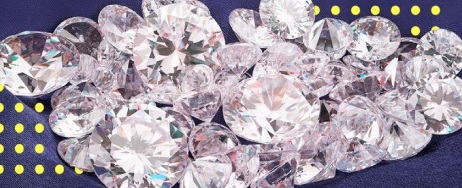
Exports of cut and polished diamonds, the sector’s largest export segment, plunged 35.5% year-on-year to $949.7 million (₹8,089.81 crore), from $1.47 billion (₹12,272.03 crore) in May 2024. Polished lab-grown diamonds also witnessed a steep 32.76% fall to $80.9 million (₹689.71 crore), compared with $120.3 million (₹1,003.06 crore) a year earlier.
In contrast, gold jewellery exports offered some respite, surging 17.24% to $997.5 million (₹8,482.61 crore) from $850.8 million (₹7,094.52 crore) in the same month last year. The rise was attributed to continued global preference for gold as a safe-haven asset amid geopolitical uncertainty in West Asia and Ukraine.
“While overall exports continued to decline in May due to the announcement of tariffs by the US, gold jewellery exports rose as demand for the precious metal increased during times of uncertainty,” said GJEPC Chairman Kirit Bhansali.
Imports and Diamond Supply Chain Hit
On the import front, the industry also felt the impact of global headwinds. Total gems and jewellery imports dropped 13% to $1.69 billion from $1.94 billion a year earlier, reflecting weaker downstream demand and delayed orders due to tariff-related uncertainty under US President Donald Trump’s trade policy.
Imports of cut and polished diamonds fell 39% to $85 million, down from $138 million last year, while rough diamond imports slid 5% to $2.26 billion as traders refrained from fresh purchases, choosing instead to draw down existing inventory.
Bhansali noted that a “growing consumer shift” toward more sustainable and cost-effective lab-grown diamonds is also putting pressure on natural diamond exports.
Subdued Silver, Gemstone Exports
The sector’s broader product portfolio also suffered. Silver jewellery exports for April-May were down 17.59% at $150.08 million (₹1,281.92 crore), compared to $182.11 million (₹1,518.69 crore) in the same period last year. Coloured gemstones registered a marginal 1.13% dip in exports to $62.51 million (₹533.08 crore).
Bhansali warned that prolonged tensions in West Asia, coupled with the lingering Russia-Ukraine conflict, will likely continue to disrupt the demand-supply dynamics across the sector.
“We expect trade activity to remain volatile in the coming months due to ongoing geopolitical instability. Exporters are exercising caution, especially with uncertainty over future tariffs and weak retail sentiment abroad,” he said.
Gold Shines as Safe Haven, but Domestic Demand Weakens
Despite the broader export downturn, gold remains a bright spot, both internationally and within India’s investment landscape. According to the World Gold Council, international gold prices touched a historic high of $3,435 per ounce in June, driven by geopolitical concerns and rising demand for gold-backed Exchange Traded Funds (ETFs).
However, domestic gold jewellery sales remain muted, with consumers largely limiting purchases to essential needs during April and May. This has led to Indian gold trading at a steep discount—over $38 per ounce—compared to global prices.
On the other hand, investment demand for gold bars and coins continues to be strong, alongside a surge in gold-backed lending, which grew nearly 120% year-on-year to ₹2,230 billion as of April, boosted by relaxed RBI norms.
Outlook: Recovery Hinges on Festive Demand
Looking ahead, industry watchers expect a revival in demand starting mid-August with the onset of India’s festive and wedding season. UBS has projected global gold prices to rise further to $3,500 per ounce by 2026, making a compelling investment case.
Still, India’s overall gold demand is expected to moderate to around 725 tonnes in FY26, down 7% from the previous year, before recovering in FY27 with improved household consumption and anticipated payouts from the Eighth Pay Commission.
Efforts to channel household gold savings into formal financial avenues have yielded mixed results. While Sovereign Gold Bonds were discontinued earlier this year, ETFs are gaining traction, with assets under management nearly doubling year-on-year to ₹624 billion.
India remains the world’s largest holder of private gold stocks, with 25,000 tonnes valued at over $2.4 trillion, according to the World Gold Council—underscoring gold’s enduring importance in both economic and cultural terms.
(R. Suryamurthy is a senior economic journalist based in Delhi.)