
Last Updated on August 5, 2026 12:11 am by INDIAN AWAAZ
By ANDALIB AKHTER

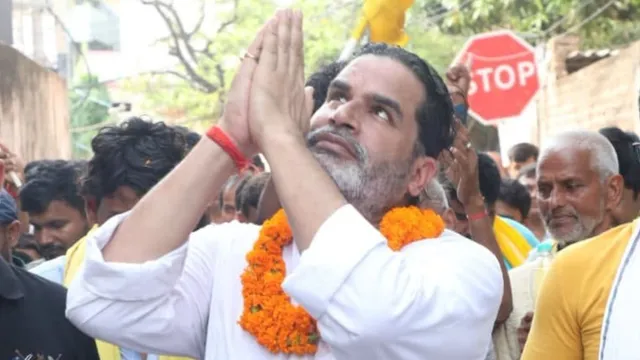
Bihar’s politics has often been shaped by elections whose significance extends far beyond the constituency in which they are fought. The latest by-election appears to be one such contest. While the immediate outcome concerns a single seat, the political message it has generated has triggered a wider debate: does Prashant Kishor’s victory represent an isolated electoral success, or is it the beginning of a broader transformation in Bihar’s political landscape?
The answer is unlikely to be straightforward. By-elections are influenced by local dynamics, candidate selection, voter turnout and constituency-specific issues. Yet they also serve as important political barometers, revealing shifts in voter sentiment and testing the strength of established political narratives. The Bihar by-election has raised precisely such questions.
A Challenge to Established Political Forces
The contest was closely watched because it brought together vastly different political models. On one side were established parties such as the BJP and the Rashtriya Janata Dal (RJD), organisations backed by decades of political experience, extensive grassroots networks and deeply entrenched social coalitions. Both parties treated the election as politically significant, deploying senior leaders and organisational resources in an effort to secure victory.
On the other side stood Prashant Kishor and his relatively new political platform, which has sought to position itself as an alternative focused less on identity politics and more on governance, development and institutional reform.
The outcome has inevitably prompted both major parties to reassess their political strategies. Although one by-election cannot determine the future of Bihar politics, it has demonstrated that established political equations cannot be taken for granted.
Perhaps the most significant takeaway from the result is the evolving nature of voter expectations. For decades, Bihar’s electoral politics has been influenced by caste alignments, community loyalties and traditional political alliances. While these factors remain relevant, there is growing evidence that economic aspirations are becoming increasingly important, particularly among younger voters.
Issues such as employment generation, quality education, healthcare, migration, infrastructure and industrial development now feature prominently in public discourse.
Millions of young people from Bihar continue to migrate to other states in search of employment and better educational opportunities. This prolonged migration has become not only an economic issue but also a political one.
Prashant Kishor has consistently argued that Bihar’s principal challenge is not merely political representation but the absence of sustained economic development. His campaign has repeatedly emphasised that unless the state creates employment opportunities, improves public education and attracts investment, migration will continue and long-term prosperity will remain elusive.
The by-election suggests that at least a section of the electorate is receptive to this development-oriented narrative.
Development versus Electoral Success
However, translating electoral momentum into lasting political relevance presents a far greater challenge. Winning a by-election is fundamentally different from transforming governance across an entire state.
History offers numerous examples of emerging political movements that generated public enthusiasm but struggled to convert popular expectations into effective policy implementation.
Prashant Kishor now faces precisely this test.
His political credibility will increasingly depend not on campaign messaging but on whether he can present practical and financially viable policy solutions. Bihar’s structural challenges—including low industrialisation, limited private investment, high unemployment, weak urban infrastructure and fiscal constraints—cannot be addressed through political rhetoric alone.
Voters are likely to expect detailed roadmaps covering industrial policy, skill development, agricultural reforms, infrastructure financing and governance improvements. Without such policy depth, electoral enthusiasm may prove temporary.
Employment and education Remains Bihar’s Biggest Political Issue
Employment is arguably the defining challenge facing Bihar. Every year, large numbers of educated and semi-skilled workers leave the state in search of jobs elsewhere. Migration has become an accepted social reality, affecting family structures, household incomes and regional development.
This persistent outflow reflects the limited availability of quality employment within Bihar. Any political formation seeking long-term relevance must therefore articulate a credible employment strategy.
Such a strategy would require attracting private investment, improving logistics, developing industrial clusters, strengthening vocational education and creating a more business-friendly administrative environment.
Whether Prashant Kishor can build a convincing economic agenda around these priorities remains one of the most important questions for Bihar’s political future.
Education represents another area where expectations are steadily rising. Bihar has made progress in improving school enrolment over the years, yet concerns remain regarding learning outcomes, teacher quality, and higher education infrastructure and examination integrity.
Repeated controversies surrounding competitive examinations have further eroded public confidence. Young voters increasingly view educational reform not simply as a social issue but as an economic necessity. A stronger education system directly influences employability, entrepreneurship and investment attractiveness.
Prashant Kishor has repeatedly highlighted education as a cornerstone of his political agenda. However, the electorate is likely to judge future political claims based on measurable outcomes rather than campaign promises.
Challenges before the BJP and RJD
The by-election also carries important implications for the BJP. Although the party remains a major political force in Bihar, the result serves as a reminder that organisational strength alone may not guarantee electoral success.
It would be premature to draw sweeping conclusions from a single electoral setback. Nevertheless, the result may encourage introspection regarding campaign strategy, local leadership, candidate selection and responsiveness to constituency-level concerns.
The Rashtriya Janata Dal also faces strategic questions.For years, the party has projected itself as the principal opposition force against the BJP in Bihar.The emergence of another opposition-oriented political platform potentially alters that equation. If Prashant Kishor succeeds in attracting first-time voters, educated youth and urban middle-class segments, electoral competition within the opposition space could intensify.
This may compel established opposition parties to broaden their agenda beyond conventional political narratives and place greater emphasis on governance, employment and economic transformation. Whether this represents a temporary shift or a structural realignment will become clearer in future elections.
The Road Ahead
Despite the political excitement surrounding the result, caution remains essential. By-elections often produce outcomes that are not fully replicated in general elections. Turnout patterns differ, campaign dynamics vary and local issues frequently play a decisive role.
Therefore, interpreting this victory as conclusive evidence of a statewide political transformation would be premature. Nevertheless, dismissing the result as politically insignificant would be equally unwise.It has opened a new conversation regarding Bihar’s future political direction.
Prashant Kishor’s by-election victory should be viewed less as a definitive political revolution and more as an important indicator of changing voter expectations.
The result suggests that sections of Bihar’s electorate are increasingly evaluating political parties through the lens of development, employment, education and governance rather than relying exclusively on traditional electoral calculations.
One message is clear Bihar’s voters are increasingly demanding results over rhetoric, governance over symbolism, and development over political complacency.