
Last Updated on October 22, 2021 2:26 pm by INDIAN AWAAZ
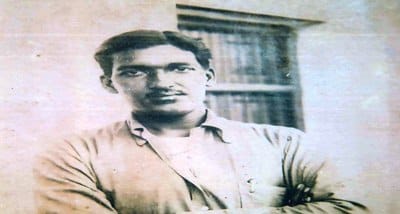
Every year on October 22, the country celebrates and remembers the sacrifices made by freedom fighter Ashfaqullah Khan.
WEB DESK
India today remembered fearless revolutionary Ashfaqulla Khan on his birth anniversary.
Vice President M Vankaiah Naidu in a tweet said, Ashfaqulla Khan was an unwavering patriot and gifted poet. The Vice President said, his indomitable courage and stimulating writings inspired many to join the freedom movement. He said, the nation is eternally indebted to him for his selfless sacrifice.
Ashfaqullah Khan was a freedom fighter who was sentenced to death for the Kakori train robbery. A strong opposer of the British Raj in India, Khan was born on October 22, 1900, in Shahjahanpur. Khan was hanged to death with Ram Prasad Bismil, for their role in the Kakori train robbery of 1925.
While he was killed by the British authorities, he is remembered to this day for his contribution to the Indian Independence Movement. As the country celebrates Khan’s birth anniversary, here are 7 facts about him –
Khan was the youngest among his six siblings. He was among the people disappointed when Mahatma Gandhi called off the non-cooperation movement. Chandrashekhar Azad was among the people who were part of the Kakori train robbery.
He used to pen poems in Urdu and Hindi, under the pen name Varasi and Hazarat
Khan and Bismil shared the love for Urdu poetry and their conviction of seeing a free India strengthened their friendship
Khan was only 27-years-old when he was hanged to death in Faizabad, Uttar Pradesh on December 19, 1927
The film Rang De Basanti is based on the contribution and sacrifices made by Khan and his companions
Lesser known facts related to him:
Ashfaq was the youngest among six children of Shafiqur Rahman and Mehrunnisa. The family was Pathan by ethnicity, and were devout Muslims.
In his early 20s, Ashfaq emerged as an effective writer. He efficiently used both the languages of Urdu and Hindi – spoken by the majority of the population in North India. Varasi and Hazarat were the pen names used by him.
Ashfaq’s firm belief in a revolutionary struggle, claim historians, was triggered by the end of the non-cooperation movement by Gandhi due to the Chauri Chaura incident. He was dejected by the Mahatma’s decision to call off the protests due to violence, despite the fact that it had evoked mass participation in most parts of the nation.
Ashfaqulla was highly inspired by his guide and friend Ram Prasad Bismil. The two were part of the group of revolutionaries who were involved in the Kakori train conspiracy case.
Khan and Bismil, who shared the same vision of a free India, who were equally passionate about Urdu, and were part of the same Kakori mission, also ended up being martyred on the same day. Both of them, lodged in different jails, were sent to the gallows on December 19, 1927.
The cause for which Ashfaqulla was martyred was achieved 20 years after he departed from this world. The hold of the British regime in India finally weakened, and the colonial power was forced to cede its control over the entire territory in 1947.