
Last Updated on August 27, 2025 12:16 pm by INDIAN AWAAZ
Demands Action Against Assam CM
Staff Reporter / New Delhi
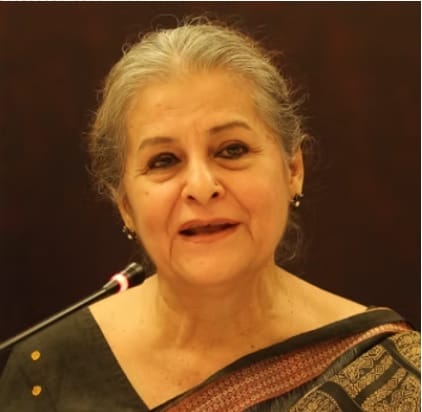
The All India Kisan Sabha (AIKS) has strongly condemned what it described as BJP-led attacks and personal humiliation of Dr. Syeda Hameed, noted academic, social activist, former Planning Commission member, Padma Shri awardee, and National President of the National Federation of Indian Women.
Dr. Hameed, hailing from a family with a rich freedom movement legacy, was part of a fact-finding delegation that recently visited Assam to assess eviction drives, citizenship issues, and the treatment of Muslim communities. Instead of addressing the humanitarian concerns she raised, AIKS alleged, Assam Chief Minister Himanta Biswa Sarma and BJP leaders launched a campaign of character assassination against her, marked by inflammatory rhetoric, threats of legal action, and communal labelling.
AIKS maintained that these attacks were a deliberate attempt to divert attention from policy failures in Assam, including the government’s inability to deal with migration issues in a humane manner and its failure to uphold citizens’ rights. It also accused the Delhi Police, functioning under Union Home Minister Amit Shah, of systematically curbing democratic rights such as freedom of expression and peaceful assembly, while state institutions were being “weaponized” against critics.
The organisation has put forward key demands, including an immediate end to attacks on Dr. Hameed and other human rights defenders, registration of an FIR against Assam Chief Minister Himanta Biswa Sarma and BJP leaders for inciting hostility, protection of constitutional rights, and the initiation of an evidence-based humanitarian dialogue on immigration issues in Assam.
Expressing solidarity with Dr. Hameed, AIKS called upon all democratic forces across the country to stand united against what it termed the BJP’s authoritarian tactics and to uphold justice, equality, and secularism.
Meanwhile Assam Chief Minister Himanta Biswa Sarma on Tuesday cautioned that demographic changes in certain parts of the state could pose long-term challenges to the indigenous population.