
Last Updated on August 20, 2026 12:25 am by INDIAN AWAAZ
By Our Business Correspondent
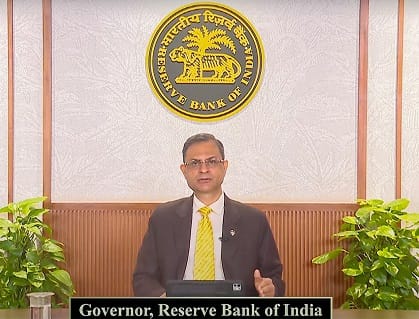
The Reserve Bank of India (RBI) has maintained a cautious approach to monetary policy, with Governor Sanjay Malhotra indicating that the central bank would prefer to wait for greater clarity on the inflation outlook before considering any change in interest rates.
According to the minutes of the Monetary Policy Committee (MPC) meeting held from August 3 to 5, the six-member panel unanimously voted to keep the benchmark repo rate unchanged at 5.25% for the fourth consecutive policy meeting. The MPC also decided to retain its neutral policy stance, signalling that the central bank wants to preserve flexibility amid continuing domestic and global uncertainties.
Governor Malhotra said the inflation outlook needed to be monitored closely before any further policy action. While food, fuel and input costs remain potential sources of inflationary pressure, he noted that there are so far limited indications that these pressures are becoming broad-based across the economy.
The Governor cautioned, however, that a prolonged rise in inflation or a situation in which inflation expectations become unanchored could alter the policy outlook. In such circumstances, the RBI may need to consider tighter monetary conditions to prevent inflation from becoming entrenched.
The MPC’s cautious position reflects the delicate balance facing policymakers. On one side, the economy requires supportive financial conditions to sustain growth, while on the other, renewed price pressures could restrict the room for further monetary easing.
Deputy Governor and MPC member Poonam Gupta also supported a wait-and-watch strategy. She pointed to persistent uncertainties arising from global developments as well as weather conditions, both of which could influence inflation and economic activity in the coming months.
The RBI’s latest projections underline the importance of this balancing act. The central bank has estimated real GDP growth at 6.7% for 2026-27, while CPI inflation has been projected at 5%. The projections suggest that policymakers expect economic activity to remain relatively resilient but recognise that inflation risks continue to warrant close monitoring.
The MPC identified several factors that could shape the inflation and growth outlook, including geopolitical developments, movements in global energy prices and the progress of the monsoon. A sustained increase in crude oil prices, in particular, could raise transportation and production costs and create fresh inflationary pressures across the economy.
Global geopolitical tensions could also affect commodity prices, exchange rates and capital flows, making the external environment an important consideration for the RBI. At the same time, domestic weather conditions remain significant because food prices have a direct bearing on headline inflation as well as household inflation expectations.
The decision to keep the repo rate unchanged therefore reflects the RBI’s preference for policy stability while it assesses incoming economic data. Rather than committing itself to either an immediate rate cut or a tightening cycle, the central bank appears inclined to retain room to respond as the inflation and growth outlook evolves.
For borrowers and businesses, the unchanged repo rate means there is no immediate change in the benchmark policy rate that influences lending conditions across the banking system. However, the continuation of the neutral stance keeps open the possibility of future policy adjustments if economic conditions warrant them.
For financial markets, the RBI’s cautious tone is likely to keep attention focused on inflation data, crude oil prices, the monsoon and global monetary policy developments. The trajectory of food and fuel prices will remain particularly important in determining whether inflation moves closer to or away from the central bank’s projected path.
The latest MPC minutes consequently reinforce the message that the RBI is in no hurry to alter its policy settings. With growth expected to remain steady but inflation risks still present, policymakers appear to be prioritising flexibility and data-driven decision-making.
The central bank’s wait-and-watch approach could continue until there is greater certainty over the persistence of inflationary pressures and the broader economic environment. For now, the 5.25% repo rate and neutral stance remain firmly in place, with future policy decisions likely to depend heavily on how inflation, growth and external risks develop.