
Last Updated on November 10, 2025 2:58 pm by INDIAN AWAAZ
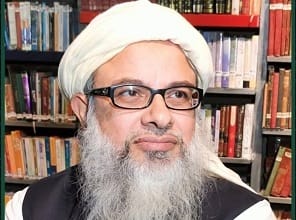
Making It Mandatory in Schools Violates Religious Freedom: Maulana Mahmood Madani, President – Jamiat Ulama-i-Hind
AMN / New Delhi
Maulana Mahmood Madani, President of Jamiat Ulama-i-Hind, has expressed deep concern and strong objection to the directives issued by several state Block Education Officers, mandating all government and private school students and their parents to sing Vande Mataram and record it on video.
He said such an order is a serious violation of the fundamental right to religious freedom guaranteed under the Constitution of India and sets a dangerous precedent for civil liberties.
Maulana Madani also condemned Prime Minister Narendra Modi’s recent remarks in which he attempted to link the omission of certain parts of Vande Mataram to the Partition of India. He described the statement as misleading, historically inaccurate, and contrary to the spirit of national unity.
He stated that Vande Mataram in its complete form is rooted in shirkiya aqaaid (polytheistic beliefs). Particularly, in the remaining four stanzas, the motherland is depicted as the goddess Durga and addressed with words of worship — concepts that clearly conflict with the Islamic belief in the oneness of God. “Muslims believe in one God and worship Him alone,” Maulana Madani said. “Therefore, singing verses that ascribe divinity to anyone other than Allah goes against our faith and conscience.”
Maulana Madani reminded that India’s Constitution upholds both religious freedom (Article 25) and freedom of expression (Article 19), ensuring that no citizen can be compelled to recite any song, slogan, or idea that contradicts their faith. He also referred to the Supreme Court’s 1986 ruling (Bijoe Emmanuel vs. State of Kerala) which affirmed that no individual can be forced to sing the national anthem or any song if it conflicts with their religious beliefs.
He emphasized that love (devotion) and worship (ibadat) are two entirely different things. “Muslims’ love and loyalty for this country are unquestionable,” he said. “Their sacrifices in India’s freedom struggle and in safeguarding the nation’s unity and integrity are written in history. True patriotism lies in loyalty of the heart and in righteous action — not in slogans or forced expressions.”
Referring to historical records, Maulana Madani pointed out that on October 26, 1937, Gurudev Rabindranath Tagore wrote to Pandit Jawaharlal Nehru advising that only the first two stanzas of Vande Mataram be accepted as the national song, since the remaining verses conflicted with the beliefs of monotheistic religions. Following this advice, the Congress Working Committee, on October 29, 1937, resolved that only the first two stanzas would be recognized as the national song.
“Therefore,” he said, “invoking Tagore’s name today to justify enforcing the entire composition is not only a distortion of historical truth but also an affront to both national unity and the dignity of Gurudev Tagore himself. It is deeply regrettable that the Prime Minister has attempted to link this inclusive historical decision with Partition, whereas Tagore’s intention was to preserve the unity of the nation.”
Maulana Madani stressed that the Vande Mataram issue should be discussed within the framework of constitutional rights and mutual respect for religious beliefs, not through political posturing or divisive rhetoric. Jamiat Ulama-i-Hind calls upon the Prime Minister and all national leaders to refrain from politicizing sensitive religious and historical matters, and instead to strengthen the atmosphere of mutual respect, tolerance, and unity that forms the foundation of India’s democracy. Press Release