
Last Updated on August 5, 2025 3:56 pm by INDIAN AWAAZ
Devsagar Singh / New Delhi
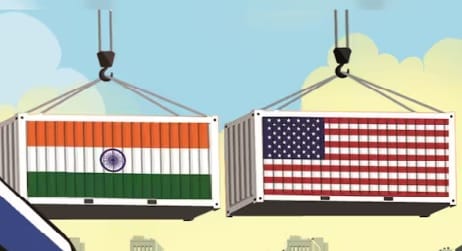
President Trump’s bullying tactics is forcing India to finally come out in the open and politely ignore his threats on oil purchases from Russia. Calling it unreasonable, the ministry of external affairs hinted in no uncertain terms that India will fulfil its energy requirements from any source it considers favorable, including Russia.
At a time when negotiations between US and India are still ongoing, how can Trump threaten on issues relating to trade with a third country? The US may be the biggest trading partner and , therefore, important to India. But India is no less so for the US considering trade and commerce in totality. If trade balance went slightly in favor of India thus far, it was under thoughtful agreements with Trump’s worthy predecessors under special circumstances. None of the presidents before Trump sought to overawe India publicly. When President Nixon tried to threaten India in course of the India-Pakistan war over creation of Bangladesh in 1971, late Indira Gandhi gave him a befitting response.
India has since acquired its own heft in the international community emerging as the fastest growing major economy and a voice that cannot be ignored. Trump must be fulminating over the MEA statement that the very nations (read US) criticizing India are themselves indulging in trade with Russia and that too when such trade is not even a vital national compulsion. The reference was to US importing from Russia uranium hexafluoride for its nuclear industry and palladium for its EVs, apart from fertilizers and chemicals.
Significantly, the MEA statement came out just as the Opposition in Parliament is also raising several issues concerning Trump. In his attempt to live up to his promise of “make America great again”, Trump has raised the tariff issue with all countries having trade relations with US. This has had an unsettling effect around the world. Questions are raised against Trump by renowned figures like Prof Jeffrey Sachchs who openly asked India not to succumb to the American president’s pressure.
The anti-Israeli groups in the US have been raising their voices consistently against Trump’s policies that encourage genocide of innocent Palestinians. In the forefront have been students of prestigious universities like Harvard and Yale prompting Trump to initiative punitive action in the form of withdrawal of federal funds much to the annoyance of American citizens.
China has taken on Trump over the tariff war. So did Canada in some measure. India had so far watched in silence because of its close proximity with US. But the continued rant against India on tariff left the country with little options but to respond and react. It was the first official response of the MEA on Aug 4 . It may have jerked observers coming as it did outside parliament when the monsoon session is on. It may soon have its echo in Parliament once normal functioning resumes.
By all accounts, India has made its position clear on tariff: it would not compromise on its national interest. In other words, agri sector would not be opened to US as Trump is insisting.