
Last Updated on May 24, 2025 10:29 am by INDIAN AWAAZ
Zakir Hossain From Dhaka
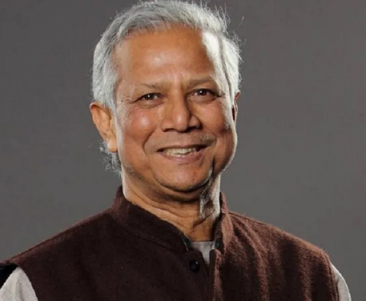
Amidst growing political instability and conflicting demands from political factions and the military, Bangladesh’s Chief Adviser Professor Muhammad Yunus is reportedly considering stepping down from his position at the helm of Bangladesh’s interim government. However, a senior aide on Friday (May 23) dismissed the resignation rumours, stressing Yunus’ continued commitment to a peaceful democratic transition.
Faiz Ahmad Taiyeb, Special Assistant to the Chief Adviser for Posts, Telecommunications and Information Technology, in a Facebook post said, “Prof Dr Muhammad Yunus doesn’t need power. Dr Yunus sir is necessary for the sake of Bangladesh, for the peaceful democratic transition of Bangladesh.” Taiyeb’s statement comes amid widespread speculation that Yunus, who assumed the role of Chief Adviser following the ouster of Sheikh Hasina’s Awami League government in July 2024, had expressed frustration over the current impasse between political parties, rising unrest, and lack of institutional cooperation.
Reports suggest Yunus voiced these concerns during a tense meeting with cabinet advisers on Thursday (May 22). Sources confirmed to BBC Bangla that Yunus conveyed to National Citizen Party (NCP) leader Nahid Islam his thoughts about resigning, citing the inability of political parties to find common ground.
Adding to the crisis is a brewing rift between the interim government and the military, with Army Chief General Waqar-uz-Zaman insisting that general elections must be held by December this year. This position, repeated in an “Officers’ Address” on Wednesday, has raised eyebrows within the civilian administration, which insists that all electoral reforms must be completed before polls are held. “Military must not interfere in politics… the Army Chief’s statement about elections by December failed to maintain jurisdictional correctness,” Taiyeb remarked in his post, while still acknowledging the army as “a source of national pride.”
Political Showdowns and Protest Threats: Meanwhile, the country’s political atmosphere is heating up. The BNP, led by former Prime Minister Khaleda Zia, held an emergency press conference on Thursday demanding an immediate roadmap for elections by December. “This must become the central agenda of the interim government,” said BNP Standing Committee member Khandaker Mosharraf Hossain. The party warned that without this clarity, its cooperation with the government may cease.
The NCP, which spearheaded the student-led uprising last year, accused the BNP of attempting to topple the interim administration. At a rally in Dhaka’s Jatrabari area, NCP leaders lashed out at the BNP for trying to “hijack” the revolution.
Cabinet Tensions and Governance Crisis: Within the interim cabinet, divisions are becoming more apparent. Yunus’s advisers Mahfuj Alam and Asif Mahmud are facing calls to resign, particularly from BNP-backed activists. Ishraque Hossain, BNP leader and recently reinstated mayor of Dhaka South, has paused protests over his oath-taking but demanded a reshuffle in the advisory council.
Mosharraf further demanded the removal of advisers linked to “fascist” politics, and called for the caretaker government to focus solely on facilitating elections, not on making long-term strategic decisions involving ports, humanitarian corridors, or national security.
Jamaat’s Call for Dialogue: Bangladesh Jamaat-e-Islami chief Shafiqur Rahman has appealed for calm and a united front among anti-fascist forces. In a Facebook post, he urged Prof Yunus to convene an all-party dialogue to break the deadlock and restore political stability.
The Road Ahead: The interim government has set a tentative reform timeline from December 2024 to June 2025. However, without a clear election schedule and with mounting internal and external pressures, the future of Prof Yunus’ administration hangs in the balance. Celebrations are planned for the one-year anniversary of the July 2024 uprising later this year, but the mood is uncertain. As political uncertainty grows, Prof Yunus faces the toughest challenge of his leadership— navigating Bangladesh toward credible elections while preserving peace and legitimacy.