
Last Updated on October 31, 2026 8:39 pm by INDIAN AWAAZ
Andalib Akhter / NEW DELHI
In an unprecedented political initiative, opposition parties belonging to the INDIA bloc proposed public impeachment seeking the removal of Chief Election Commissioner (CEC) Gyanesh Kumar, escalating their confrontation with the Election Commission of India over allegations of electoral irregularities and constitutional impropriety.
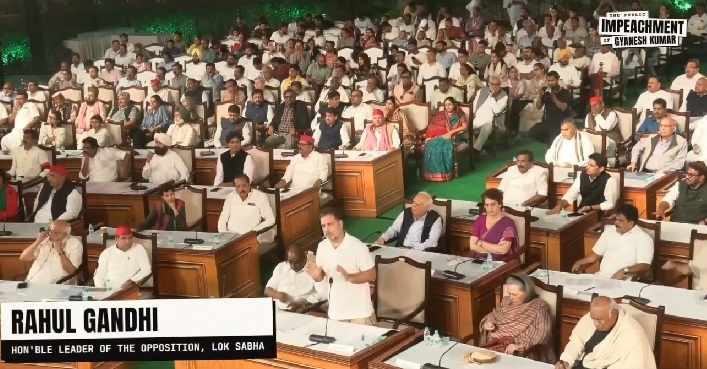
At Mock Parliament hosted by INDIA Bloc, Leader of the Opposition in the Lok Sabha Rahul Gandhi indicated that the opposition was preparing a new political initiative, declaring that the mobilization was aimed at defending democracy and holding the Chief Election Commissioner accountable.
“We are forced to assemble in the garden this evening to save democracy. Tomorrow, you will see on the roads of Delhi that a new political weapon will be unleashed,” Gandhi said, adding that those responsible would also be held accountable.
The proposed initiative has reportedly received support from several constituents of the INDIA bloc, with opposition leaders expressing concern over the functioning of the Election Commission and demanding greater institutional accountability.
The political deliberations were held at the official residence of Congress president and Leader of the Opposition in the Rajya Sabha, Mallikarjun Kharge. Senior leaders from various opposition parties gathered at the residence to discuss the proposed course of action. The meeting reportedly continued for more than four hours, with discussions taking place in the residence’s forecourt.
At the centre of the opposition’s concerns are allegations of electoral irregularities, popularly described as ‘vote chori’, and the alleged deletion or exclusion of eligible voters from electoral rolls. Opposition leaders contend that such discrepancies could undermine electoral fairness and potentially benefit a particular political party.
The Special Intensive Revision (SIR) of electoral rolls has emerged as another major point of contention. Initially undertaken in Bihar, the exercise has subsequently become a significant political issue in West Bengal, prompting questions from opposition parties over voter inclusion, transparency and the verification process.
The gathering also reportedly included representatives of civil society organisations, student groups and other stakeholders, reflecting the broader debate surrounding electoral integrity and democratic accountability.
The proposed campaign has brought renewed attention to the constitutional independence of the Election Commission of India and the safeguards governing the appointment, conduct and removal of its highest officials.
As the opposition prepares to take its campaign beyond Parliament and into the public domain, the controversy surrounding the Chief Election Commissioner is poised to become a major national political and constitutional issue.