
Last Updated on December 29, 2025 5:38 pm by INDIAN AWAAZ
A R DAS / NEW DELHI
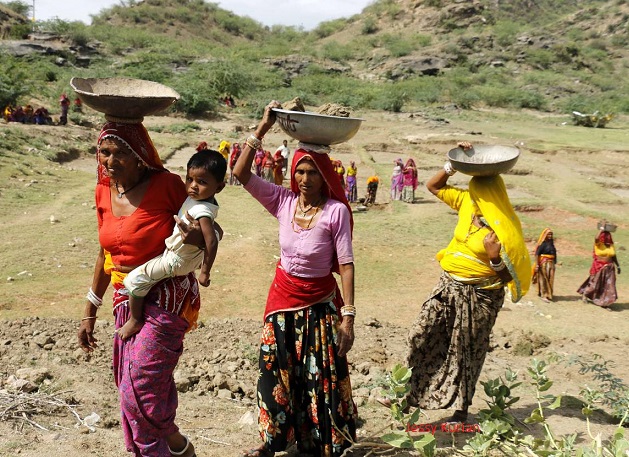
The newly enacted Viksit Bharat – Guarantee for Rozgar and Ajeevika Mission (Gramin) Act, also known as the Viksit Bharat–G RAM G Act, is expected to significantly boost rural employment funding, with most states projected to gain nearly ₹17,000 crore compared to the average allocations of the past seven years. Replacing the two-decade-old Mahatma Gandhi National Rural Employment Guarantee Act (MGNREGA), the legislation aims to reform rural employment delivery, strengthen fund distribution, and enhance transparency, according to a recent research report by the State Bank of India (SBI).
The report highlighted that the restructuring of the earlier MGNREGA through the Viksit Bharat G-RAM G framework seeks to integrate transformative practices and strategies. The focus will be on addressing challenges related to competitive project identification, productive asset creation, enhanced income generation, and an efficient monitoring mechanism. Authored by SBI Chief Economic Advisor Dr Soumya Kanti Ghosh, the report pointed out that Viksit Bharat – G RAM G Act aims to address structural weaknesses while strengthening employment generation, transparency, planning, and accountability at all levels.
During the recently concluded winter session, the Parliament had passed the Viksit Bharat-G RAM G bill. President Droupadi Murmu has also given her assent to the Viksit Bharat-G RAM G Bill, 2025. The act guarantees 125 days of wage employment per rural household from the previous 100 days.