ANDALIB AKHTER
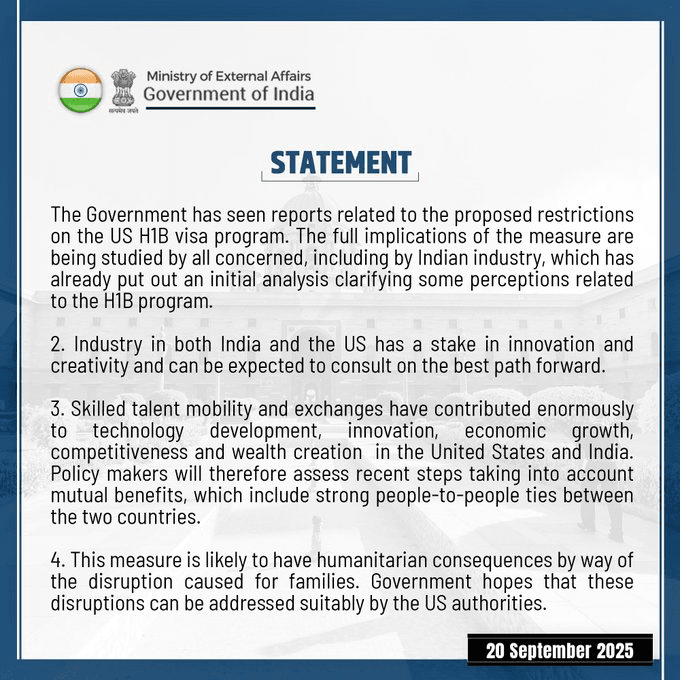
INDIA’S Ministry of External Affairs (MEA) has expressed concern over the potential humanitarian consequences of the proposed restrictions on the US H1B visa program, which plays a vital role in the mobility of skilled professionals between India and the United States.
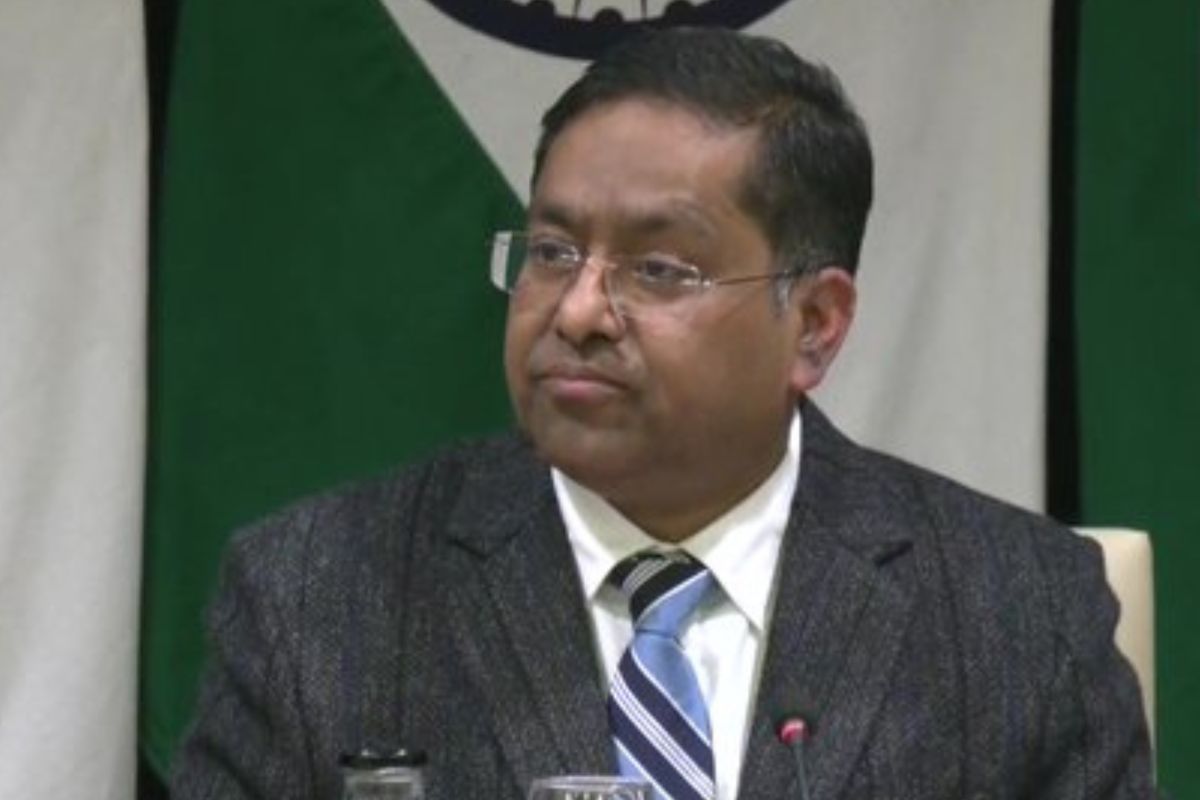
MEA Spokesperson Randhir Jaiswal said that the Government of India, in consultation with Indian industry, is closely studying the full implications of the measure. He underlined that both Indian and American industries have a strong stake in fostering innovation and creativity, and can be expected to engage in constructive dialogue to determine the best way forward.
Placing emphasis on the human dimension of the issue, Mr. Jaiswal highlighted that changes in visa rules could significantly disrupt the lives of thousands of families. Many Indian professionals in the United States live with their spouses and children, and uncertainties about their legal status not only impact career prospects but also create stress, insecurity, and difficulties in maintaining family stability. The Government of India hopes that the US authorities will take these humanitarian concerns into account and ensure that families are not subjected to unnecessary hardships.
The spokesperson also noted that the movement of skilled talent has historically been a cornerstone of India–US relations. It has enriched both economies by driving technological advancement, economic growth, and wealth creation. Beyond economics, it has strengthened people-to-people ties, building bridges of cultural exchange, education, and professional collaboration.
Mr. Jaiswal added that policymakers on both sides will need to carefully balance regulatory steps with the mutual benefits that come from a robust exchange of skilled professionals. India has reiterated its belief that preserving these bonds is essential not only for industry but also for the countless families whose futures depend on them.

What is the H-1B Visa?
The H-1B visa is a non-immigrant visa issued by the United States to foreign professionals who possess specialized skills (Specialty Occupations). Under this visa, U.S. companies can hire engineers, IT specialists, doctors, scientists, and other skilled professionals from abroad.
- The visa is primarily granted through employer sponsorship, meaning a U.S. employer must file the application.
- The H-1B visa is valid for three years, and can be extended to a maximum of six years.
- Approximately 85,000 visas are issued annually, including 65,000 general visas and 20,000 reserved for individuals with a U.S. master’s degree or higher.
- H-1B visa holders can bring their spouse and children on an H-4 visa.
- India is the largest beneficiary of this visa, especially for professionals in IT and technology sectors.
Importance:
The H-1B visa strengthens technology, innovation, and economic cooperation between India and the United States. It also directly impacts the livelihood and future of thousands of Indian families living and working in the U.S.