
Last Updated on September 20, 2025 10:38 pm by INDIAN AWAAZ
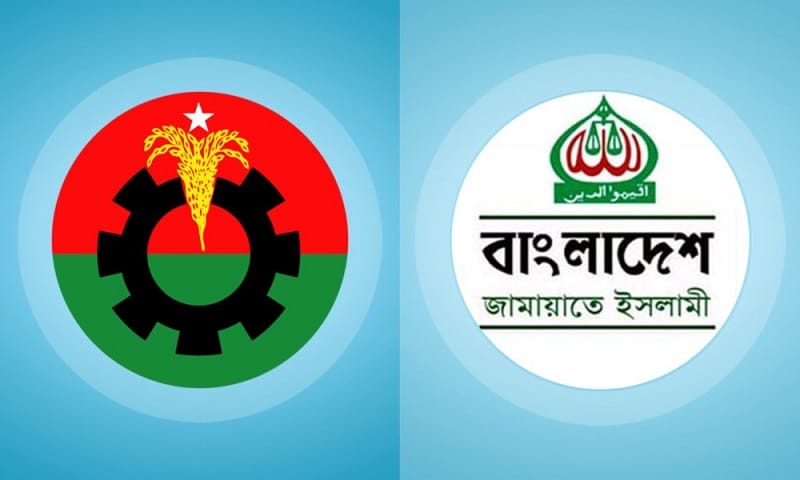
Zakir Hossain from Dhaka
Political divisions in Bangladesh have deepened ahead of the 13th National Parliamentary Election in February, with BNP and Jamaat-e-Islami, once allies, now at loggerheads over the July Charter and electoral reforms.
Seven parties, including Jamaat and Islami Andolon, have launched a three-day street programme demanding elections under the July Charter and pushing for proportional representation and banning of the Jatiya Party and the 14-party alliance. The BNP, however, prefers constitutional issues be resolved through the next parliament and is wary of counter-protests that could spark unrest.
BNP Standing Committee member Salahuddin Ahmed hit out at Jamaat, questioning its intentions. “Some newspapers carried headlines saying Jamaat leaders claimed they will form the government and BNP will be the opposition. But who decides that? Is it you, or the people? If you are so confident, why not join the election instead of making excuses to obstruct it?” he said at a youth dialogue in Dhaka.
He accused Jamaat of “double standards,” pointing out that it had joined hands with parties that took part in what BNP calls the “sham election” of January 2024. “If they become innocent just because they are with you, then what about the 28 others who joined the dummy polls with Awami League? Are they sinners?” he asked.
Salahuddin urged dialogue over confrontation. “If both dialogue and street movement are carried out on the same issue, that is a contradiction. Parties should include demands in their manifestos and seek people’s mandate,” he said.
Meanwhile, the National Citizen’s Party (NCP) distanced itself from Jamaat’s campaign. NCP convener Nahid Islam said, “For the legal basis of the July Charter, there is no alternative to a Constituent Assembly election. That is why we are not aligned with Jamaat’s movement.” He added that while Jamaat demands PR in the lower house, NCP only supports it in the upper house. NCP leaders also confirmed they would contest polls independently, expecting to soon secure registration with the ‘Shapla’ (water lily) symbol.