
Last Updated on September 23, 2021 7:06 pm by INDIAN AWAAZ
WEB DESK
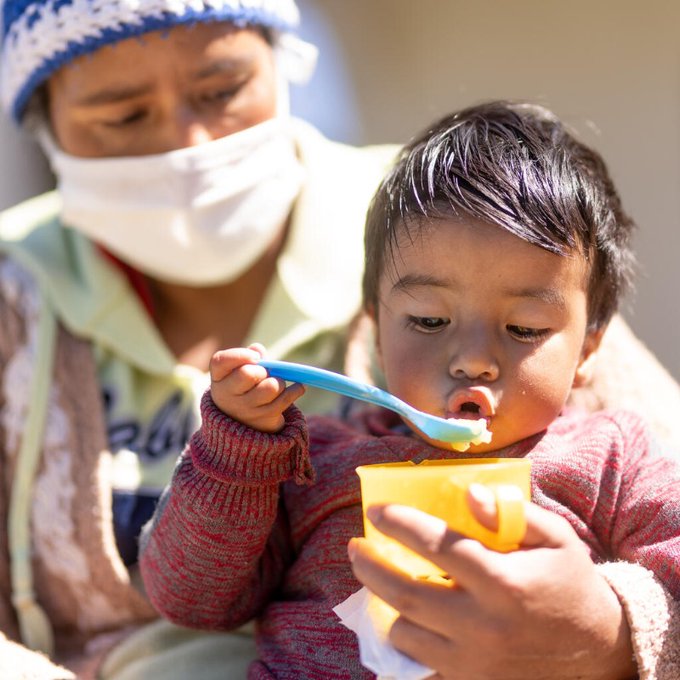
Children under the age of two are not getting adequate food or nutrients they need to thrive and grow well, leading to irreversible developmental harm, according to a new UNICEF report which warned that COVID-19 pandemic could worsen the situation.
The report titled ‘Fed to Fail? The Crisis of Children’s Diets in Early Life’ was released by the United Nations Children’s Fund (UNICEF) ahead of the UN Food Systems Summit this week.
The study was conducted after discussions with mothers and it was found that about one in three young children in Australia, Ethiopia, Ghana, India, Mexico, Nigeria, Serbia and Sudan are fed at least one processed or ultra-processed food or drink daily.
The report warned that rising poverty, inequality, conflict, climate-related disasters, and health emergencies such as the COVID-19 pandemic, are contributing to an ongoing nutrition crisis among the world’s youngest that has shown little sign of improvement in the last 10 years. “Our discussions with mothers found that about one in three young children in Australia, Ethiopia, Ghana, India, Mexico, Nigeria, Serbia and Sudan were fed at least one processed or ultra-processed food or drink daily,” the report said.
The assertion was made by the mothers during a focussed group discussion, it said.
The report said these products are highly available, cheap and convenient, and some are marketed with misleading nutrition claims because legislation to prevent inappropriate marketing is missing, inadequate or poorly implemented.
It was also found that Afghanistan, Bangladesh and India experience powerful social norms that exclude them from food-purchase decisions.
“We asked mothers and nutrition specialists in 18 countries how decisions are made on what to feed young children. We found that mothers in Afghanistan, Bangladesh and India experience powerful social norms that exclude them from food-purchase decisions,” the report stated.
UNICEF executive director Henrietta Fore said, The report’s findings are clear: When the stakes are highest, millions of young children are being fed to fail.
What are food systems?
Food systems are the public policy decisions; the national and global systems and supply chains; and the individuals and groups – public and private – that influence what we eat.
They are important for two key reasons:
- What we eat – our diets – is one of the biggest drivers of health and well-being. This is especially the case for children. Good nutrition at every stage of a child’s life is vital to ensure they grow, develop, and learn to reach their full potential.
- Current food systems – including production, farming, processing and global supply chains – have an enormous impact on our planet, driving climate change and threatening the environment.
Why do food systems need reform?
A staggering two in three children between the ages of 6 months and two years are not getting the diverse diets they need to grow up well, putting them at risk of malnutrition. Food systems are one of the major drivers of this.
Too often driven by profit over purpose, decisions about what food is produced and how that food is processed, packaged, and promoted undermine the quality of what children eat. The most nutritious food is often expensive, putting it out of reach for many households, while unhealthy alternatives are readily available and heavily marketed.
Conflict, climate change, environmental crises and emergencies are also making food systems fragile. As a result, millions of children do not have safe and regular access to nutritious food to the extent that famine – which should be consigned to history – looms again.
Food systems are threatening the health of our planet. Industrial food production contributes a third of greenhouse gas emissions globally, and its heavy use of fresh water, fertilizers, and pesticides has an immense ecological impact. This creates a vicious cycle of environmental degradation that further harms children’s access to safe, healthy and nutritious food.
By better understanding the significance of food systems, and joining forces with children and young people, we can deliver good nutrition and a healthier planet for every child.
Making change happen
Action on food systems can transform this situation – progress is possible. For example, over the past two decades, the number of undernourished children has fallen by one-third.
We know we can continue this progress through collective action to:
- Improve the quality of what children eat. This includes mandatory quality standards for children’s food, public policies that promote healthy diets, and supply-chain interventions to fortify staple foods for young children.
- Improve the quality of children’s food environments – where they live, learn and eat. This includes ending unhealthy food marketing that targets children, serving better food in schools, and improving food labeling.
- Improve feeding practices – especially in early childhood. This includes protecting, promoting and supporting breastfeeding and encouraging healthy food practices through health, education and social protection systems.
It is also vital that action is taken to minimize the environmental damage of food systems and to reduce their carbon footprint. This has a critical role to play on the road to COP 26 – the 2021 UN climate conference. Healthy diets must be nutritious, affordable and sustainable.
The Food Systems Summit 2021
The UN Food Systems Summit aims to increase understanding of the problems with current food systems, and set a course to radically transform them. The summit is a critical moment to listen to the voices of children and young people. Not only does their future depend on a radical overhaul of our food systems, but they also have some of the best and brightest ideas about how these systems can better serve people and our planet.
The summit is an important opportunity to set the stage to strengthen food systems boldly and collectively to:
- Increase the availability and affordability of nutritious foods – including fruits, vegetables, eggs, fish meat and fortified foods – by incentivizing their production, distribution, and retailing.
- Implementing national standards and legislation to protect young children from unhealthy processed and ultra-processed foods and beverages and to end harmful marketing practices targeting children and families.
- Increase the desirability of nutritious and safe foods through multiple communication channels including digital media to reach parents and children with easy to understand, coherent information.