
Last Updated on August 19, 2026 5:01 pm by INDIAN AWAAZ
Andalib Akhter and Bir Bahadur Yadav
On August 19 every year, the world celebrates World Photography Day, a day dedicated to the art, science, craft and history of capturing moments through a lens. But in the age of smartphones, the celebration has acquired a fascinating new dimension. Almost everyone who owns a mobile phone today carries a camera powerful enough to capture portraits, landscapes, street scenes, sunsets and even professionally usable videos.
So, has everyone become a photographer? In one sense, yes. In another, absolutely not.
The smartphone has democratised photography like never before. A person no longer needs an expensive camera, a darkroom or a collection of lenses to record a memorable moment. A tap on the screen can freeze a child’s smile, a dramatic sky, a crowded street or a once-in-a-lifetime event. Social media has further transformed ordinary people into constant image-makers, with millions of photographs being created and shared every day.
Yet taking a photograph and practising photography are not necessarily the same thing.
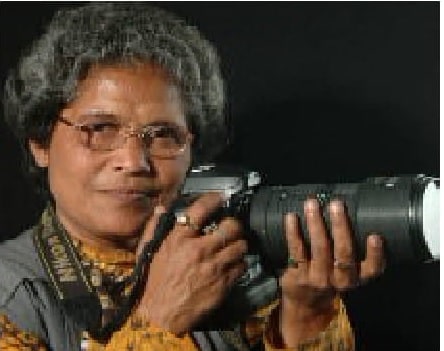
A professional photographer does much more than press a shutter button. Photography is often a combination of technical knowledge, artistic judgement, patience and storytelling. Professionals understand light, composition, exposure, colour, perspective, lenses and timing. They know when to wait for the right moment and when to move quickly. A wedding photographer, for example, may spend hours anticipating an emotional glance that lasts barely a second. A photojournalist may risk discomfort or danger to document an important event. A wildlife photographer can spend days waiting silently for the perfect frame.
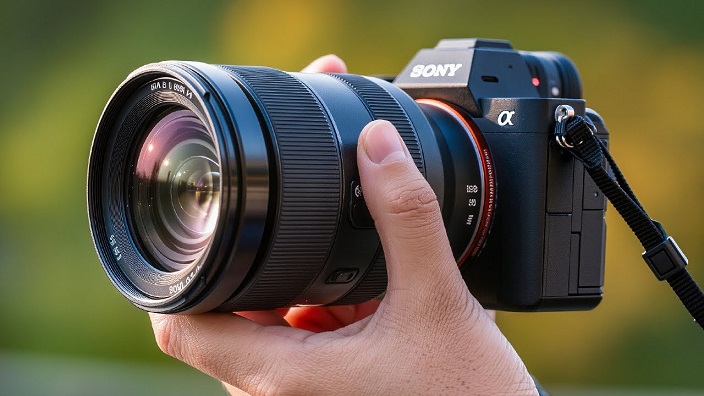
Amateur photographers, meanwhile, have something equally valuable: freedom. They photograph because they enjoy it, not necessarily because a client is waiting for the final image. Their subjects can be anything—a cup of tea, a family gathering, a busy market, a favourite pet or an ordinary road transformed by evening light. Digital technology allows them to experiment without worrying about the cost of film or developing every photograph.
The distinction between professionals and amateurs is also becoming increasingly blurred. A talented mobile-phone photographer can sometimes produce an image that rivals one taken with an expensive camera. Computational photography, artificial intelligence, advanced sensors and powerful editing applications have placed remarkable creative tools in ordinary hands.
But technology cannot completely replace the photographer’s eye.
Photography has come a remarkably long way since 1839, when the French Academy of Sciences announced the Daguerreotype process. It produced highly detailed permanent images on silver-coated copper plates and became an important milestone in the history of photography. The process was eventually refined further. In 1884, George Eastman developed a dry photographic film on paper, making photography considerably more practical and portable. Four years later, his Kodak camera helped bring photography to a much wider public.
Today, film photography itself has returned as a creative choice. Some photographers prefer film for its distinctive appearance, tactile process and the discipline it demands. Unlike digital photography, where hundreds of images can be taken within minutes, film encourages photographers to think carefully before pressing the shutter.
World Photography Day has an interesting history of its own. The first official celebration was held on August 19, 2010, when nearly 270 photographers from more than 100 countries shared their work in a global online gallery. The date commemorates the French government’s acquisition of the patent for the Daguerreotype process in 1839, an invention described at the time as a gift to the world.
More than a celebration, World Photography Day is therefore a reminder of photography’s extraordinary journey—from heavy plates and chemicals to compact digital cameras and smartphones.
And perhaps that is the real beauty of photography today. The camera may be in everyone’s hands, but the story behind the picture still depends on the person holding it.
A professional photographer brings experience, discipline and vision. An amateur brings curiosity, spontaneity and passion. Both can discover beauty where others see only an ordinary moment.
On World Photography Day, perhaps the best way to celebrate is simple: pick up your camera—or your phone—and look at the world a little more carefully.
Because sometimes, the difference between an ordinary picture and an unforgettable photograph is not the camera. It is the eye behind the lens.