
Last Updated on July 9, 2026 4:58 pm by INDIAN AWAAZ
Aafreen Hussain
The brutal rape and murder of an 11-year-old girl in Surja Nagar, Baruipur has shaken the conscience of West Bengal. Behind every headline is a family whose world has been shattered forever. For her parents, there are no words that can describe the pain of losing a daughter in such a horrific manner. No speech, no slogan, no march and no political promise can bring her back.
After the incident, political leaders rushed to the grieving family. BJP leader met the bereaved parents, expressed his condolences and assured them that justice would be delivered. Former Chief Minister led candlelight protest rallies, calling for justice and expressing solidarity with the victim’s family. Meanwhile, questioned the safety of women and girls in West Bengal, arguing that the incident reflected a deep failure of law and order.
Each political party has spoken in its own language. Some have blamed the government. Others have accused the opposition of exploiting a tragedy for political gain. Television debates have grown louder, social media has become more divided, and political accusations continue to dominate public discourse.
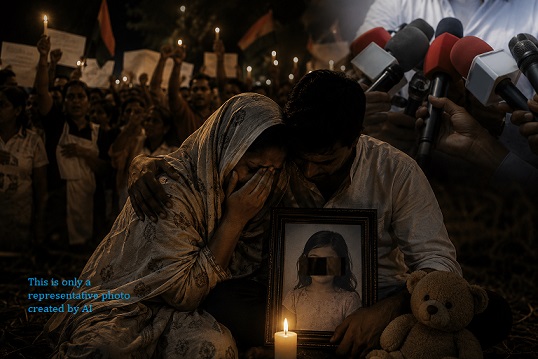
Yet one question remains unanswered: Who is listening to the parents?
Their daughter is gone forever. Their home, once filled with laughter, is now filled with unbearable silence. Their grief cannot be measured by television cameras or political speeches. Justice, if it comes, may punish the guilty, but it cannot restore the life that has been taken away.
Reports indicate that the accused has since died in a police encounter. If so, many may feel that swift punishment has been delivered. Others may ask whether every aspect of the case has been fully examined through due process. Whatever one’s view, one reality remains unchanged: the loss suffered by the victim’s family cannot be undone.
The anger among local residents is real. Neighbours have demanded accountability, stronger policing and better protection for children. Their outrage is not merely political—it is deeply human. Parents across the state are asking themselves the same painful question: If this can happen to one child, could it happen to ours?
A society is judged not by how fiercely its politicians argue after a tragedy, but by how effectively it prevents such tragedies from happening again. Candlelight marches have their place. Visits by political leaders may provide moral support. Statements of condemnation are necessary. But none of these should become substitutes for better policing, faster investigations, fair trials and stronger protection for women and children.
The memory of this young girl deserves more than political confrontation. It deserves meaningful action. Her parents deserve compassion, dignity and justice not only from governments and political parties, but from society as a whole.
When the cameras leave and the slogans fade, her parents will still wake up every morning to the same heartbreaking reality: their daughter will never come home again. That is the tragedy no political victory, no public rally and no speech can ever erase.