
Last Updated on April 22, 2026 10:11 am by INDIAN AWAAZ
Iran’s Foreign Minister Abbas Araghchi says that “blockading Iranian ports is an act of war and thus a violation of the ceasefire”, adding that Tehran knows “how to resist bullying“.
AMN / WEB DESK
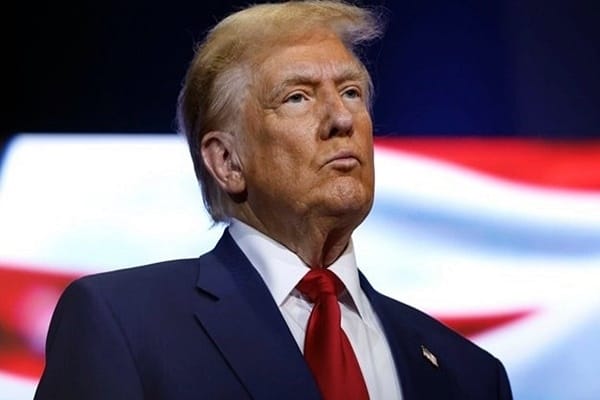
US President Donald Trump has extended a two-week ceasefire with Iran while announcing the continuation of blockade on IRAN’s ports and vessels—despite Tehran’s insistence that the blockade must be lifted for bilateral talks to continue.
In a post on his Truth Social platform, Trump said the extension came “upon the request of Field Marshal Asim Munir and Prime Minister Shehbaz Sharif of Pakistan.”
He added that he had “directed our military to continue the blockade.”
The Islamic Republic, however, unequivocally insisted on the removal of the blockade, stating that it would not rejoin negotiations under pressure.
Trump also said the United States would continue to cease its aggression “until such time as their [Iran’s] leaders and representatives can come up with a unified proposal.”
Trump announced the two-week cessation of aggression on April 7 after agreeing to a ten-point proposal from Iran to permanently end the aggression.
It came after 100 waves of decisive retaliatory strikes by Iran’s armed forces against the US and the Israeli regime’s unprovoked war of aggression against the country.
Iran’s Foreign Minister Abbas Araghchi says that “blockading Iranian ports is an act of war and thus a violation of the ceasefire”, adding that Tehran knows “how to resist bullying“.
IRGC Warns of Retaliation if Hostilities Resume After Ceasefire
Tehran, April 22 — Iran’s Islamic Revolutionary Guard Corps (IRGC) has issued a fresh warning that it will respond forcefully to any renewed aggression following the expiry of a temporary ceasefire, as tensions in West Asia remain unresolved.
Brigadier General Seyyed Majid Mousavi, commander of the IRGC’s aerospace division, said on Tuesday that Iranian forces are prepared to target adversaries if hostilities resume. In a message broadcast across public spaces, he stated that any violation of Iranian territory after the ceasefire would prompt a response aligned with what he described as the will of the Iranian people.
The remarks come as the two-week ceasefire—agreed after weeks of intense conflict—approaches its scheduled end. The truce has been marked by mutual accusations of violations and uncertainty over the framework for future negotiations.
In his address, Mousavi praised public support during the conflict, noting that citizens had maintained a visible presence in demonstrations backing the armed forces. He added that military units had remained on high alert even during the ceasefire period.
The IRGC commander also warned regional countries against facilitating any military action against Iran, cautioning that the use of neighboring territories for attacks could have broader consequences for the region’s energy infrastructure.
The ceasefire, which followed approximately six weeks of hostilities between Iran and a coalition led by the United States and Israel, has yet to transition into a longer-term agreement. While former U.S. President Donald Trump has announced an extension of the truce, Tehran has not formally confirmed acceptance and has reiterated demands, including the lifting of what it calls an unlawful naval blockade.
Diplomatic efforts to resume talks remain stalled, raising concerns among analysts about the risk of escalation once the ceasefire period concludes.