
Last Updated on June 16, 2026 12:24 am by INDIAN AWAAZ
Mohan Bhagwat defends the organisation’s model

Our Correspondent
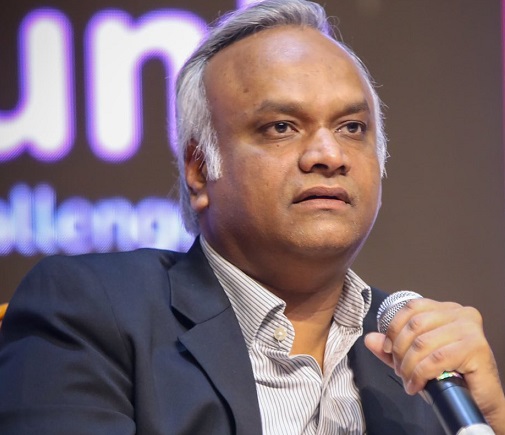
Karnataka Home Minister Priyank Kharge has written to RSS chief Mohan Bhagwat seeking public clarification on the organisation’s legal status, financial structure, funding sources, office-bearers and compliance with statutory norms, reviving a long-standing discussion around the Sangh’s organisational framework and transparency.
In a letter dated June 13, Priyank questioned how an organisation of the RSS’s size and nationwide presence continues to operate without registration as a society, trust or company. He argued that entities with such public reach should be held to disclosure and accountability standards similar to those applied to other institutions.
In a social media post on June 15, Priyank stated that an organisation claiming more than 60,000 shakhas and crores of swayamsevaks should also demonstrate transparency and constitutional accountability.
The minister requested that the RSS publicly disclose information regarding its legal identity, internal structure, office-bearers, sources of donations and income, expenditure patterns, assets, tax compliance and the legal provisions under which it functions without formal registration.
Emphasising the principle of public scrutiny, Priyank said no organisation, regardless of age, influence or scale, should remain exempt from accountability. He noted that charitable trusts, NGOs, companies and religious institutions are routinely required to provide financial and structural disclosures.
RSS chief Mohan Bhagwat has consistently defended the organisation’s model, maintaining that the RSS functions as a “body of individuals” rather than a registered society, trust or corporate entity. According to Bhagwat, the RSS was founded in 1925 under British rule when registration was not necessary, and no post-Independence law has made such registration compulsory.
Bhagwat has also maintained that the organisation’s legal status has previously been examined by courts and tax authorities and that the RSS functions within existing laws. He has argued that the organisation’s classification as a body of individuals means it is not liable for income tax in the manner applicable to registered organisations.
Priyank’s letter cited figures from the RSS’s 2025–26 report released by the Akhil Bharatiya Pratinidhi Sabha (ABPS), the organisation’s highest decision-making body, to underline the scale of its operations. According to the report, Karnataka currently has 4,127 daily shakhas, 1,389 weekly milans and 60 monthly mandalis.
Within RSS terminology, shakhas are regular local gatherings involving physical activity, discussion and ideological engagement. Milans are periodic meetings in areas without daily shakhas, while mandalis are monthly assemblies of volunteers.
The report further stated that the organisation conducted 2,194 Samajotsavas involving over 19.6 lakh participants and organised 562 route marches attended by more than 2.2 lakh uniformed participants across the state.
Priyank argued that such extensive public mobilisation and organisational outreach raise legitimate questions regarding funding sources, taxation, event permissions and institutional accountability.
The latest communication continues a series of interventions by Priyank concerning the RSS’s legal and administrative structure. In 2025, he had sought restrictions on RSS activities at government premises and later advocated action against government employees participating in RSS events.
The RSS’s legal position has remained under discussion for decades. Observers have noted that despite exercising broad social and political influence, the organisation itself is not subject to several disclosure requirements applicable to formally registered bodies.
Studies and investigations examining the RSS structure have observed that while the organisation itself is not registered as a society or trust, many of its activities and institutions operate through a network of affiliated entities, trusts, educational institutions and service organisations registered separately under different laws.
One such investigation argued that this structure enables the organisation to operate without a central legal entity responsible for publishing audited accounts, membership data or annual disclosures comparable to those required of companies, societies and charitable trusts. It also noted that the RSS has historically described itself in different contexts as a cultural organisation, social movement and body of individuals while affiliated entities manage properties and institutional functions.
Supporters of the RSS have maintained that all activities remain lawful and that associated organisations comply with relevant regulations.
Responding earlier to criticism of restrictions on RSS activities in Karnataka, Bhagwat rejected allegations of secrecy and described such actions as politically motivated attempts to hinder the organisation’s work.
Addressing an event in Kerala, Bhagwat said the RSS functions openly, with shakhas held in public spaces and programmes conducted in full public view. He also argued that many unregistered bodies exist in India and that registration generally becomes necessary only under specific conditions, including receipt of government funding.
Bhagwat further stated that the Union government has always recognised the RSS, pointing out that the organisation had faced two bans in the past, both of which were later withdrawn. He added that the RSS submitted its written constitution to the government during the 1950s and said no authority had directed the organisation to register during its century-long existence.
Concluding his letter, Priyank urged the RSS to use its centenary year as an opportunity for what he termed “constitutional introspection” and voluntarily disclose organisational and financial information.
He argued that an organisation encouraging public adherence to rules should also be prepared to operate under comparable standards of transparency and accountability.