
Last Updated on September 29, 2026 7:07 pm by INDIAN AWAAZ
Gyanesh Kumar’s Removal Likely to Dominate Discussions
By Aafreen Hussain
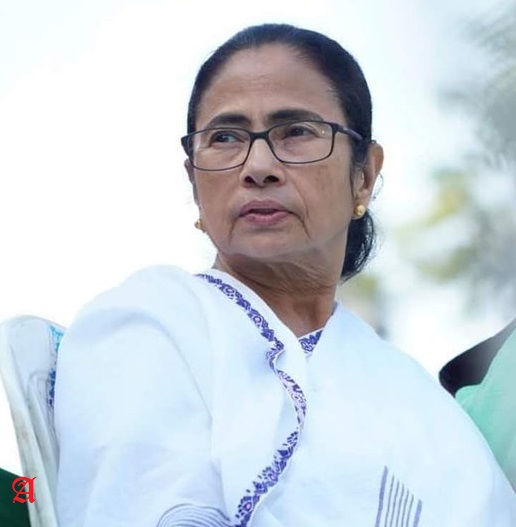
FORMER West Bengal Chief Minister Mamata Banerjee on Tuesday arrived in New Delhi to attend the INDIA bloc meeting scheduled for September 30. The meeting is expected to focus on the Election Commission of India (ECI), the ongoing Special Intensive Revision (SIR) of electoral rolls, and opposition demands for action against Chief Election Commissioner Gyanesh Kumar.
Speaking after arriving in Delhi, Banerjee said she would place everything that needs to be said before the meeting on Wednesday. She reiterated that the opposition’s principal focus was the Election Commission. Referring to Gyanesh Kumar, she again used the expression “Vanish ji”, saying she had been calling him “Vanish” from the beginning. Banerjee also said she would raise before the meeting issues concerning the election software and the electoral process which, according to the opposition, had affected voters.
The September 30 meeting comes amid an intensifying political dispute between opposition parties and the Election Commission over the SIR exercise. Opposition parties have alleged that the revision process could lead to genuine voters being excluded from electoral rolls or subjected to additional verification. The Election Commission, however, has rejected such allegations and maintained that the revision is being conducted according to the prescribed legal and constitutional procedures.
SIR Dispute and Reported Differences within ECI
The controversy has also intensified following a report by The Indian Express published on September 23. The report claimed that Election Commissioners Sukhbir Singh Sandhu and Vivek Joshi had recorded formal objections on at least 14 occasions during the preceding 10 months over various decisions and proceedings, including matters relating to electoral rolls, SIR and administrative issues.
The Supreme Court has also agreed to list a petition concerning the functioning of the Election Commission and the legality of the SIR process for an early hearing. The matter is expected to be heard by a three-judge bench next week. The court has not, however, ruled that the allegations against the Election Commission are established.
Opposition Seeks Fresh Removal Motion
The demand for Gyanesh Kumar’s removal is not new. In March 2026, opposition MPs submitted notices in both Houses of Parliament seeking his removal. The notices reportedly carried the signatures of 130 Lok Sabha MPs and 63 Rajya Sabha MPs. However, the notices were not accepted by the Lok Sabha Speaker and the Rajya Sabha Chairman.
Opposition parties are now preparing another attempt to initiate proceedings against the CEC. Reports indicate that a fresh motion may be introduced in both Houses after legal scrutiny of the draft.
A parliamentary motion itself does not automatically remove the Chief Election Commissioner. Under the constitutional mechanism, removal requires the prescribed parliamentary process and is linked to grounds such as proven misbehaviour or incapacity.
Why Mamata Has Gone to Delhi
Banerjee has repeatedly raised objections to the SIR exercise and the functioning of the Election Commission in West Bengal. The INDIA bloc meeting is expected to discuss a joint strategy on the issue, including the proposed parliamentary action against the CEC and other political and legal measures.
The meeting also comes at a significant political moment, with the Trinamool Congress, Congress, Left parties and other opposition groups seeking greater coordination over the Election Commission issue.
While the opposition has raised concerns over electoral transparency and voters’ rights, the Election Commission maintains that its decisions and the SIR exercise are based on the applicable legal framework. The issues remain politically contested, with some aspects also under judicial consideration.
Gyanesh Kumar and the Election Commission
Gyanesh Kumar, a 1988-batch IAS officer of the Kerala cadre, became India’s 26th Chief Election Commissioner on February 19, 2025. He had earlier served as an Election Commissioner after joining the Election Commission on March 15, 2024.
The Election Commission is a constitutional body responsible for conducting elections to the Lok Sabha, Rajya Sabha, state legislative assemblies, and the offices of the President and Vice-President.
Under the constitutional framework, the Chief Election Commissioner and Election Commissioners have a tenure of six years or until attaining the age of 65, whichever is earlier. The removal of the Chief Election Commissioner follows a procedure comparable to that applicable to the removal of a Supreme Court judge.