
Last Updated on July 18, 2025 3:35 pm by INDIAN AWAAZ
R. Suryamurthy
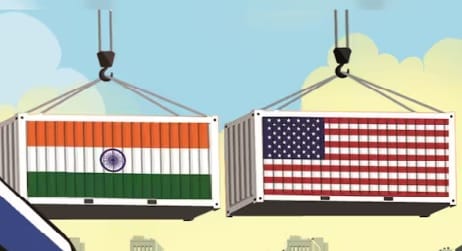
As the August 1 deadline for new reciprocal tariffs looms, India and the United States are locked in a frantic final round of negotiations for an interim trade deal. While US President Donald Trump touts an imminent agreement, New Delhi is proceeding with caution, wary of succumbing to a “phone-based” deal that could compromise its core national interests, particularly in the sensitive agricultural and dairy sectors.
The ongoing discussions, confirmed by the Ministry of External Affairs (MEA), aim to iron out contentious issues that have long stalled a comprehensive trade pact. Central to these negotiations is the US proposal to reduce tariffs on Indian goods to below 20%, a notable drop from the 26% initially threatened by Trump in April. This adjustment could give India a competitive edge over nations like Vietnam, which now faces a 20% tariff after its own recent deal with the US.
Agricultural Red Lines and Economic Risks
Despite the push for an expedited agreement, India has consistently drawn a “red line” around its agriculture and dairy sectors. New Delhi has firmly resisted US demands for greater market access for agricultural products, including genetically modified (GM) crops, and dairy imports. This stance is rooted in profound concerns for the livelihoods of millions of Indian farmers and the nation’s food security.
An analysis by the State Bank of India (SBI) starkly illustrates the potential fallout, estimating annual losses of a staggering Rs 1.03 lakh crore for the Indian dairy sector alone if it were opened to US imports. Farmers’ organizations have also voiced strong opposition, urging the Commerce Minister Piyush Goyal to exclude all aspects of agriculture from the trade deal to safeguard Indian farmers and prevent the market from being flooded with heavily subsidized US products. The threat of cross-contamination from GM crops, given India’s fragmented agricultural logistics, is another significant biosafety concern.
The Trump Playbook: Lessons from Jakarta and Hanoi
Adding another layer of complexity to the negotiations is President Trump’s unconventional approach to sealing trade deals, as highlighted by Ajay Srivastava of the Global Trade Research Initiative (GTRI). Srivastava cautions India against becoming “the next casualty of Trump’s phone-based deals,” pointing to the recent agreements with Indonesia and Vietnam.
In both instances, Trump announced sweeping gains for the US, including zero tariffs on American exports and significant purchase commitments, following private phone calls with top leaders. These pronouncements, however, have been met with skepticism and even disputes from Vietnam and murmurs of dissent in Indonesia, where officials admit the agreements bypassed formal negotiating teams and lack publicly released texts.
Srivastava warns that Trump’s pattern suggests Indian negotiators might agree to “A-level” concessions, only for the President to publicly announce “A++” outcomes—such as duty-free access for US goods and substantial purchase commitments—without formal documentation after a direct call with Prime Minister Modi. This could leave India locked into a highly asymmetric deal based on verbal promises rather than verifiable texts.
Sticking Points and Strategic Considerations
Beyond agriculture, India is seeking the removal of additional tariffs on steel and aluminum (currently at 50%) and easing of tariffs on the auto sector (25%). Meanwhile, the US continues to resist lowering its import duties below the 10% mark for many products.
The ongoing negotiations are also set against a broader strategic backdrop. The deal forms a part of the US-India COMPACT initiative, launched in February 2025, aimed at bolstering military, commerce, and technology ties, with an ambitious goal of doubling bilateral trade to $500 billion by 2030. However, India’s Commerce Minister Piyush Goyal has firmly stated that India will not enter into any trade agreement under pressure or based on deadlines, insisting that any deal must be fully finalized, properly concluded, and serve the national interest.
Risks and the Path Forward
Experts like Srivastava of GTRI have raised concerns about the deal’s potential compliance with WTO standards and the geopolitical risks posed by Trump’s threats of additional tariffs on BRICS nations, including India, over policies such as exploring alternatives to the US dollar. There is a palpable worry that a rushed deal could harm India’s long-term interests, particularly in sensitive sectors.
As an Indian commerce ministry team holds another round of talks in Washington, the pressure is mounting. The suspense over the deal has already disrupted Indian businesses, with importers delaying customs clearances in anticipation of duty cuts.
Ultimately, India’s leadership faces a delicate balancing act: securing a beneficial trade agreement with a key strategic partner while safeguarding its crucial domestic industries and avoiding the pitfalls of a hastily constructed deal. The coming days leading up to the August 1 deadline will reveal whether India can navigate these treacherous waters and secure an agreement that truly serves its national interests, or if it will be another nation caught in the web of an asymmetrical trade pact.