
Last Updated on August 30, 2025 5:51 pm by INDIAN AWAAZ
R. Suryamurthy
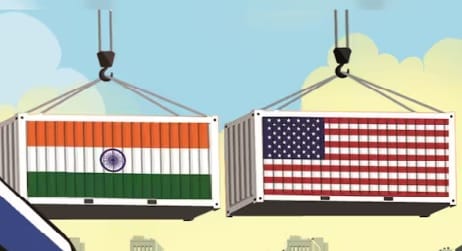
A U.S. court ruling striking at the legality of President Donald Trump’s sweeping tariffs has offered a glimmer of hope for global exporters. But in India, where tariffs on goods leapt from 3% to 50% within a year, that hope is overshadowed by a glaring absence of a policy response.
The U.S. Court of Appeals for the Federal Circuit ruled on Aug. 29 that Trump had exceeded his authority by invoking emergency powers to justify broad tariffs. Though the duties remain until Oct. 14 while the White House appeals to the Supreme Court, the verdict has re-opened debate on the future of America’s trade regime.
For Indian exporters-from garment makers in Tiruppur to engineering firms in Pune-the ruling signals the first possibility of relief since the tariff shock. Yet unlike Brazil, which rolled out a sweeping “Sovereign Brazil” rescue package within weeks, India has not announced a single major measure to help its exporters withstand the storm.
Brazil Moves, India Waits
Brazil’s rapid playbook included export credit worth USD 5.6 billion, tax deferrals, direct government procurement of farm goods, and even WTO action. By late August, its beef exporters had already diverted shipments to Mexico, cushioning the impact of losing U.S. buyers.
India, meanwhile, has been left with falling orders and eroding competitiveness. The gap has become stark: while Brazil used the tariff crisis to re-engineer its trade strategy, India risks drifting in policy inertia.
GTRI’s 10-Point Call to Action
A report released on Aug. 30 by the Global Trade Research Initiative (GTRI) warns that India cannot simply wait for the U.S. Supreme Court to decide the fate of Trump’s tariffs in October. Even if the duties are struck down, the report argues, global trade is entering a protectionist era, and Indian exporters need systemic support.
The 10-point plan urges New Delhi to:
Reactivate suspended schemes such as the Market Access Initiative and Interest Equalisation Scheme, which have left MSMEs without marketing funds or affordable credit.
Operationalise pending reforms like the Export Promotion Mission and Bharat Trade Net, both still stuck on paper despite budget allocations.
Fix structural frictions by streamlining customs, stabilising export rebates under RoDTEP, and simplifying the Advance Authorisation system.
Rebuild trade institutions through better-funded export promotion budgets and professional trade officers abroad.
The report stresses that diversification away from the U.S. will take years, particularly for labour-intensive industries that rely on large American retailers. Cutting costs by 5-10% at home through revived schemes and faster clearances could buy exporters breathing space.
Rising Pressure at Home
The tariff shock has already hit small and mid-sized exporters hard. Textile clusters report shrinking order books, leather exporters warn of job losses, and engineering firms say price competitiveness has vanished overnight. With the festive season approaching in key Western markets, the window for salvaging orders in 2025 is closing fast.
Industry groups have lobbied for relief, but government response has been muted. Officials argue that retaliatory action risks escalation, and that exporters should diversify markets. But as GTRI points out, Latin America and Africa lack the scale to replace U.S. buyers quickly, and the EU’s new environmental rules from 2026 will make market entry harder.
A Legal Battle Abroad, a Policy Test at Home
The U.S. Supreme Court is expected to hear the tariff case in October. A ruling upholding the lower courts could bring tariffs crashing down, restoring market access for India. But a ruling in Trump’s favour would entrench unilateral presidential tariffs, forcing countries like India to adapt to a harsher trading climate.
For India, the court battle is not the only variable. The real test lies in whether it uses this breathing space to shore up exporters or continues to wait passively.
Hope, but on Borrowed Time
For now, the appeals court verdict has raised optimism. Exporters battered by seven months of tariff turmoil see at least a chance that the trade regime may reset. But that hope remains fragile.
Brazil has shown how quickly a country can pivot to protect its exporters. India, by contrast, is still weighing its options. If it fails to act, the Supreme Court may hand exporters a reprieve in October-but by then, many of them may already have lost markets too valuable to recover.