
Last Updated on July 23, 2026 10:58 pm by INDIAN AWAAZ
By Our National Bureau
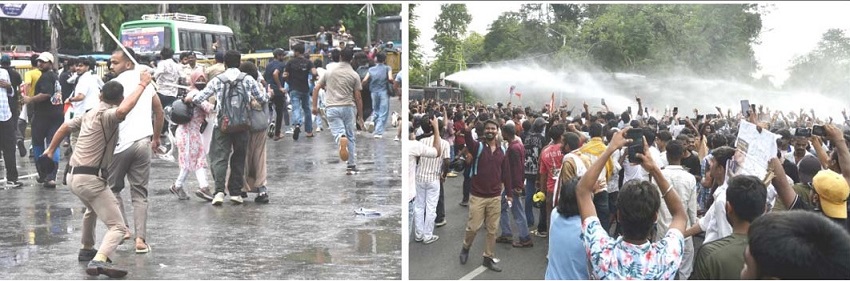
New Delhi: A wave of student-led protests and solidarity demonstrations spread across several Indian cities this week after police action against protesters marching from Jantar Mantar towards Parliament in the national capital. What began as a campaign led by the Cockroach Janta Party (CJP) over alleged examination paper leaks has rapidly evolved into a broader youth movement demanding accountability, education reforms and action against alleged police excesses. The protests have drawn support from opposition parties, student organisations, professionals and civil society groups, making it one of the largest youth mobilisations in recent years.
While demonstrations varied in scale and intensity from city to city, authorities maintained heightened security in several states, and organisers announced plans to continue peaceful nationwide protests.
Delhi: Epicentre of the Movement
The national capital remained the focal point of the agitation. Thousands of students and supporters continued their sit-in at Jantar Mantar, despite restrictions imposed across central Delhi. Protesters accused Delhi Police of using tear gas, baton charges and mass detentions to stop the July 20 march towards Parliament.
Authorities responded by deploying large numbers of police personnel, closing several Metro stations around central Delhi, restricting mobile internet services in sensitive areas and enforcing prohibitory orders. The protesters are demanding the resignation of Union Education Minister Dharmendra Pradhan, a comprehensive overhaul of recruitment and examination systems, and accountability for alleged police brutality.
Mumbai: Largest Solidarity Protest outside Delhi
Mumbai witnessed the most significant demonstrations outside the national capital. According to local reports, nearly 2,000 people assembled at Shivaji Park in Dadar, while parallel gatherings were organised at Ambedkar Garden in Chembur and near IIT-Bombay in Powai.
The demonstrations included students, parents, professionals, teachers and civil society members. Police maintained a heavy presence, carried out preventive detentions at some locations and enforced prohibitory orders. Organisers described the movement as largely decentralised, with mobilisation taking place through social media and local volunteer networks rather than formal political structures. Despite occasional standoffs with police, the protests remained largely peaceful.
Bihar: Student Organisations Express Solidarity
In Bihar, student groups and youth organisations held solidarity demonstrations in Patna and several district headquarters.
Protesters condemned the alleged police action in Delhi and reiterated demands for transparent examination systems and action against those responsible for paper leaks. Opposition leaders also voiced support for the movement.
However, unlike Delhi and Mumbai, there were no independently verified reports from major national news agencies of large-scale clashes, widespread arrests or significant violence in Patnaas of Thursday. Most available reports described peaceful demonstrations and memoranda submitted to district authorities.
Maharashtra Beyond Mumbai
Apart from Mumbai, solidarity protests were reported from several Maharashtra cities including Nashik, Pune, Nagpur and Malegaon
Regional student organisations, youth groups and civil society activists organised rallies, candlelight marches and public meetings expressing solidarity with students allegedly injured during the Delhi protests.
In Nashik, local youth groups reportedly submitted memoranda to district officials supporting the CJP’s demands for education reforms and accountability. While demonstrations drew moderate participation, there were **no confirmed reports from major national agencies of serious violence or prolonged confrontations with police**. ([Reuters][1])
Madhya Pradesh: Peaceful Gatherings Across Educational Centres
Student-led gatherings were also reported from parts of **Madhya Pradesh**, particularly in educational hubs and district headquarters.
Participants organised peaceful marches, human chains and meetings condemning the alleged police action in Delhi while demanding reforms in public recruitment examinations.
Although regional media reported demonstrations in several cities, detailed city-wise attendance figures, arrests or police action could not be independently verified through major national or international news agencies. The available reports indicate that most protests remained peaceful.
Karnataka: Students Join Solidarity Campaign
In Karnataka, solidarity events were reported from **Bengaluru** and other educational centres.
Student groups held campus meetings, peaceful marches and public discussions supporting the demands raised by protesters in Delhi. Demonstrators criticised repeated examination controversies and called for transparent recruitment mechanisms. Security remained tight around educational institutions, although there were **no widely reported incidents of major violence.
Reports also emerged of solidarity protests in several other states, including: Hyderabad, Chennai, Lucknow, Kolkata, Goa, Pune
Most of these demonstrations involved peaceful marches, sit-ins, candlelight vigils and signature campaigns demanding accountability in examination systems and expressing support for students injured during the Delhi protests.
Political observers note that the agitation has gradually broadened beyond the issue of alleged examination paper leaks.
Participants increasingly cite youth unemployment, delays in government recruitment, lack of accountability in public examinations, and concerns over the handling of demonstrations by police as central issues. The movement has also attracted support from sections of academia, professionals, retired civil servants and opposition parties.
Fresh Nationwide Call
The CJP has now called for another round of peaceful nationwide demonstrations, urging supporters to organise district-level protests under the slogan “Every District. One Day. One Demand.” The organisation says the campaign is intended to show solidarity with those allegedly subjected to police action while maintaining non-violent methods of protest.