
Last Updated on December 19, 2025 12:33 am by INDIAN AWAAZ
Zakir Hossain from Dhaka
Sharif Osman Hadi, a prominent leader of the July mass uprising and spokesperson of Inqilab Moncho, died on Thursday night while undergoing treatment at Singapore General Hospital. He was shot in the head in Dhaka earlier this month. His death was confirmed by his brother, Omar Hadi, and later announced through Hadi’s verified Facebook page and the official page of Inqilab Moncho.
According to family members, Hadi passed away at around 9.40 pm on Thursday (local time). The Chief Adviser’s press wing had earlier said that his condition was “extremely critical,” triggering widespread concern across the country. Following that announcement, messages of anxiety and prayers flooded social media platforms.
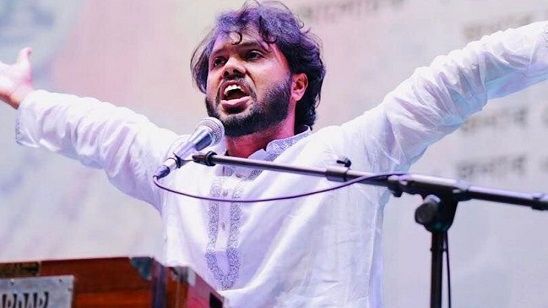
Hadi was shot on Friday (December 12) at around 2.30 pm while sitting in a battery-powered rickshaw on Box Culvert Road in the Puranapaltan area of Dhaka. Eyewitnesses said motorcycle-borne assailants opened fire at close range, leaving him critically injured with a bullet wound to the head. He was first taken to Dhaka Medical College Hospital, where emergency surgery was performed. As his condition deteriorated, he was shifted to Evercare Hospital in Dhaka. With no significant improvement, he was flown to Singapore by air ambulance on Monday afternoon for advanced treatment. His brother accompanied him, along with a team of Bangladeshi doctors and nurses.
Law enforcement agencies have identified Faisal Karim Masud as the main shooter, while the motorcycle was allegedly driven by Alamgir Sheikh. Investigation sources claim that both suspects fled Bangladesh illegally.
Hadi had recently been active in political mobilisation and was campaigning as a prospective independent candidate from the Dhaka-8 constituency when the attack took place.
The killing of Sharif Osman Hadi, regarded as one of the most vocal faces of the July uprising, has cast a deep shadow of grief over Bangladesh’s political and social landscape. Leaders, activists and citizens alike have described his death as a serious blow to the movement and have renewed calls for swift justice.