
Our Correspondent / NEW DELHI
Jamiat Ulama-i-Hind has expressed strong opposition to the Prevention of Insults to National Honour (Amendment) Bill, 2026, which has been passed by Parliament, arguing that the legislation infringes upon the constitutional guarantees of religious freedom and freedom of expression.
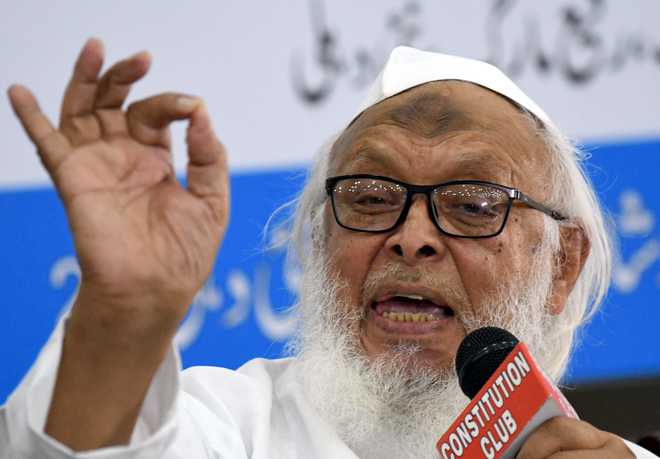
Reacting to the passage of the Bill, Jamiat President Maulana Arshad Madani said the organisation has never objected to individuals voluntarily reciting or singing Vande Mataram. However, he maintained that compelling anyone to participate in its singing would violate the religious beliefs of many Muslims.
According to Madani, certain portions of Vande Mataram, particularly the verses depicting the motherland as “Durga Mata” and using language of worship, are incompatible with the Islamic doctrine of monotheism. He said Islam permits worship only of Allah, making it impossible for Muslims to participate in expressions that they believe conflict with their faith.
Madani argued that Article 25 of the Constitution guarantees every citizen the freedom to practise and profess religion, while Article 19 protects freedom of speech and expression, including the right not to be compelled to express views or participate in acts that contradict sincerely held religious beliefs.
Citing the Supreme Court’s landmark judgment in Bijoe Emmanuel vs State of Kerala (1986), Madani said the apex court had clearly ruled that individuals cannot be compelled to participate in expressions contrary to their religious convictions. He noted that the Court had also recognised the right to remain silent as part of the freedom of speech and held that respectful non-participation cannot be treated as an act of disrespect or insult.
Drawing a distinction between patriotism and religious worship, Madani said love for the country should not be equated with participation in any particular slogan or song. He asserted that Indian Muslims have consistently demonstrated their patriotism through their contributions to the freedom movement and nation-building, adding that loyalty to the country is reflected through actions and commitment rather than compulsory expressions.
He further said that the role played by Muslims and leaders of Jamiat Ulama-i-Hind during India’s freedom struggle, including their opposition to Partition and their contribution to preserving the country’s unity after Independence, is a matter of historical record.
Expressing concern over the government’s legislative priorities, Madani said the country is currently facing pressing challenges such as unemployment, inflation, economic slowdown, the agrarian crisis and uncertainty among the youth. He urged Parliament to focus on addressing these issues instead of taking up matters that could deepen religious sensitivities and social divisions.