
International Day to Combat Islamophobia is observed annually on March 15, following a resolution adopted unanimously by the United Nations General Assembly.
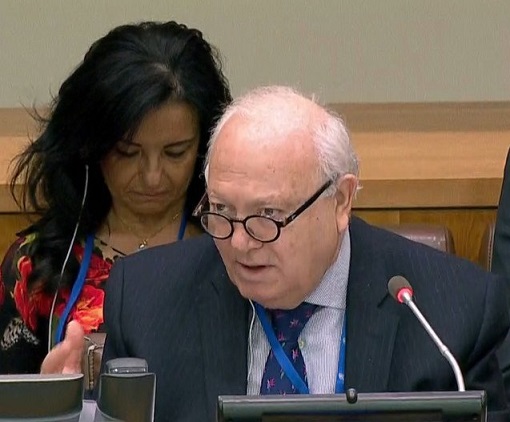
UN’s Special Envoy for combating Islamophobia, Miguel Ángel Moratinos
— Andalib Akhter
Marking the International Day to Combat Islamophobia, the United Nations has expressed serious concern over the growing wave of anti-Muslim hatred and discrimination across different parts of the world. Senior UN officials have warned that rising Islamophobia, fueled by political rhetoric, misinformation and online hate campaigns, threatens social harmony and democratic values in many societies.
Speaking in an interview with UN News, the UN’s Special Envoy for combating Islamophobia, Miguel Ángel Moratinos, said incidents targeting Muslims have increased in several regions, particularly in Europe, but also in parts of Asia and Africa. He noted that Islamophobia is no longer limited to isolated hate crimes but has become a broader social and political challenge.
The International Day to Combat Islamophobia is observed annually on March 15, following a resolution adopted unanimously by the United Nations General Assembly. The day aims to raise global awareness about discrimination and prejudice against Muslims and to encourage governments and societies to take concrete steps to counter hate and intolerance.
Political exploitation of religious divisions
Moratinos warned that in several countries, certain political movements and parties are increasingly using religion as a tool to create divisions and mobilize support. According to him, religious identity is sometimes manipulated to spread fear and mistrust against minority communities, particularly Muslims.
He stressed that such narratives not only undermine social cohesion but also weaken democratic institutions. “Religious differences should not be used as political weapons,” he said, emphasizing that societies must promote dialogue, mutual respect and coexistence among different faith communities.
Moratinos was appointed as the UN Special Envoy to Combat Islamophobia in May 2025 by António Guterres. In addition to this role, he also serves as the High Representative for the United Nations Alliance of Civilizations, which works to foster understanding among cultures and religions.
Rising hate crimes and discrimination
According to human rights groups and international observers, incidents of anti-Muslim discrimination have risen in recent years. These include attacks on mosques, harassment of Muslim women wearing religious attire, discriminatory legislation, and the spread of anti-Islam narratives in public discourse.
Moratinos said the situation is particularly worrying in parts of Europe, where far-right political movements have gained visibility and influence in recent years. However, he cautioned that the problem is not confined to one region.
“Islamophobia is emerging in many parts of the world,” he said, adding that societies must remain vigilant to ensure that intolerance does not become normalized.
Balancing freedom of expression and respect for religion
Another important challenge highlighted by Moratinos is the need to maintain a balance between freedom of expression and respect for religious beliefs.
He referred to the Universal Declaration of Human Rights, particularly Articles 18 and 19, which guarantee freedom of thought, religion, opinion and expression. According to him, these principles must be applied in a balanced way so that freedom of speech is protected while preventing its misuse for spreading hatred or discrimination.
“Freedom of expression should never be a justification for inciting hatred against any religious community,” he noted.
Digital platforms amplifying Islamophobia
Moratinos also highlighted the growing role of digital platforms and artificial intelligence in shaping public discourse. While technology has enabled faster communication and access to information, it has also created new channels for spreading misinformation and hate speech.
He warned that social media platforms are often used by extremist groups and political actors to spread anti-Muslim propaganda and conspiracy theories. In many cases, such campaigns target vulnerable communities and reinforce stereotypes about Islam and Muslims.
According to the UN envoy, the lack of effective regulation and oversight of digital platforms has allowed harmful content to circulate widely. He urged governments, technology companies and civil society organizations to work together to address online hate speech.
Education and awareness as key solutions
Moratinos emphasized that education and public awareness are among the most effective tools to combat Islamophobia. He said that many misconceptions about Islam stem from a lack of understanding of the religion’s teachings and history.
“Many people have never read the Qur’an or studied Islamic civilization,” he said, adding that misinformation often fills the gap created by this lack of knowledge.
He called for stronger educational initiatives in schools and universities, as well as responsible media coverage that promotes accurate information about Islam and Muslim communities.
Such efforts, he said, could help challenge stereotypes and encourage intercultural dialogue.
UN preparing global strategy
The United Nations is currently working on a comprehensive plan to combat Islamophobia worldwide. Moratinos said the initiative is expected to be presented later this year and will focus on several key areas.
These include developing a clearer definition of Islamophobia, strengthening educational programs about Islam and religious diversity, encouraging countries to adopt legal frameworks to counter discrimination, and improving monitoring systems to track incidents of anti-Muslim hate.
The goal of the strategy is to create coordinated global action to address the growing problem.
A call for unity in a diverse world
Concluding his message on the International Day to Combat Islamophobia, Moratinos stressed the importance of unity and cooperation in an increasingly diverse world.
He noted that humanity is made up of multiple cultures, religions and civilizations, all of which contribute to the richness of global society. Islamic civilization, he said, has historically played a major role in shaping global knowledge, culture and science.
At a time when many societies face polarization and political tensions, he added, promoting mutual respect and dialogue is more important than ever.
“The fight against Islamophobia is not only about protecting Muslims,” Moratinos said. “It is about defending human dignity, equality and peaceful coexistence for everyone.”