
Last Updated on February 13, 2026 11:08 pm by INDIAN AWAAZ
Dr Shehla Shaikh and Dr Sanjay Kalra
The holy month of Ramadan will begin in next week, marking a period of prayer and fasting for Muslims across the world1.
This is the month of Sha’ban, which immediately precedes Ramadan. It is the time where one prepares for Ramadan, by observing fast for a day or two, at least, and plan how to handle matters in the coming month. This is also an opportune time for physicians to conduct a trial run of the treatment regimens they intend to implement during the month of Ramadan. The month of Shawwal comes right after the holy month of Ramadan, beginning with the celebration of Eid al-Fitr, marking the end of the month long fasts.
Both fasting and feasting must be avoided in diabetes. It’s a tight rope walk, but it has to be undertaken by minimizing the risk
Although obligatory, diabetes exempts individuals from fasting, yet many with diabetes choose to fast during Ramadan. An estimated 148 million Muslims have diabetes and of these, 116 million may observe the fast, despite the exemption2.As per the epidemiology of diabetes and Ramadan (EPIDIAR) study conducted in 13 Muslim countries with nearly 13,000 participants, 43% of type 1 diabetes patients with and 79% of those with type 2 diabetes fasted during Ramadan3.
Risks and challenges
People with diabetes and healthcare professionals both face challenges during Ramadan. Those who fast face a sudden change in one’s usual lifestyle.
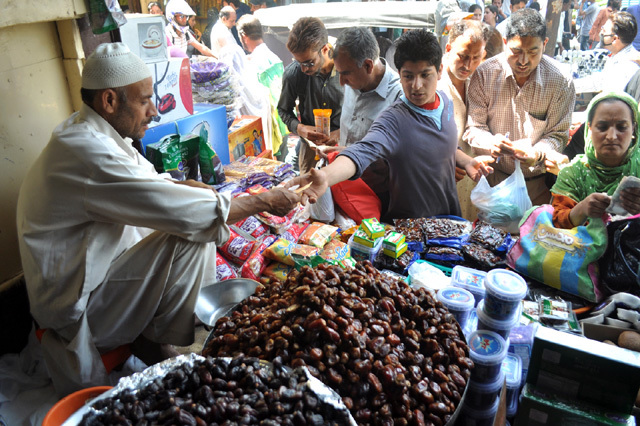
Two meals are permitted during fasting; one before sunrise, called suhoor, and iftar, the more widely-recognized second meal celebrated as a feast, when the fast is broken, shifting the meal times to the night. This break in the daily routine disturbs the glycemic balance and the increased intake of foods rich in carbohydrates and saturated fats and sugary drinks further adversely affects blood glucose levels2,with risk of hypoglycemia during the day and hyperglycemia post-iftar.
Additionally, the sleep pattern changes, levels of physical activity decline, and the odds of non-compliance to medication rises2.
The most common risk is hypoglycemia because of the long hours of fasting, continuing foralmost 14 to 18 hours for consecutive 30 days. The risk of other acute complications including hyperglycemia, ketoacidosis, thrombosis leading to acute cardiovascular events is also increased1.Dehydration is particularly more likely in hot and humid conditions and among those with physically demanding occupations2.Some might require emergency care.
Proper preparation before commencing fasting is therefore essential for a spiritually meaningful, metabolically safe fasting.
Communication
Preparation of the patient begins with clear communication; this bridges cultural barriers, fosters trust, and enhances effective shared decision-making4.If the patient does not ask, then as the treating clinicians, we should initiate the conversation about fasting 1-2 months before Ramadan. The objective should not be to discourage fasting, but to guide them on how to do it safely4. The tone of the conversation should be non-judgmental and non-forceful.
Assessment
The International Diabetes Federation (IDF) and Diabetes and Ramadan (DAR) International Alliance recommend that a pre-Ramadan assessment be performed at least 6 to 8 weeks before Ramadan to carry out risk stratification5.
The IDF-DAR risk calculator can also be used to assess the patient’s ability to fast and also determine the likelihood of adverse events occurring during the fast.It incorporates 14 variables such as type and duration of diabetes, pre-Ramadan level of glycemic control, history of hypoglycemia, self-monitoring of blood glucose (SMBG) practices, antidiabetic medications, presence of acute diabetes complications like diabetic ketoacidosis and hyperglycemic hyperosmolar non-ketotic syndrome, macrovascular complications, chronic kidney disease (CKD), pregnancy, frailty, cognitive function, physical labor, fasting hours, and prior experience in managing diabetes during Ramadan fasting.A score >6 is high risk, 3.5-6 is moderate risk, while score ≤ 3 is considered low risk6.
Successfully fasting in the previous year does not necessarily guarantee a similar experience in the next year. The patient has to be metabolically stable, has to have less glycemic variability to minimize the risks that come with prolonged fasting during the month of Ramadan. Patients with uncontrolled diabetes, or those with frequent episodes of hypoglycemia/hyperglycemia should be advised against fasting. The need for extra monitoring of blood glucose should be emphasized.
Ramadan focused medical education
The goal of patient education is to increase knowledge and awareness about the associated risks and to equip patients with strategies to reduce them using simple, easy-to-understand language. The fasting patient must be educated about the symptoms of hypoglycemia and hyperglycemia, including the importance of self-monitoring of blood glucose5.Some people hold the belief that pricking the finger to check blood sugar levels invalidates the fast. Education also aims to clear such misconceptions1.Diet, fluid intake and physical activity are also important components of education.
Ramadan focused medical education empowers people to fast safely.
Diet and exercise
Patients should be advised to eat well-balanced meals; complex carbohydrates with slow energy release for suhoor (pre-dawn meal) and simple carbohydrates for iftar (evening meal).Foods with low glycemic index and high fiber content are recommended, while foods rich in saturated fats and sugary foods and drinks should be avoided1. Or, they could be advised portion control where small amounts of sweets, seviyan (vermicelli) or dates can be consumed. However, blood glucose should be monitored diligently.
Strenuous physical activity during fasting should be avoided to prevent hypoglycemia4. Moderate exercise in addition to usual physical activity is allowed1.
It is important to stay well-hydrated between sunset and sunrise by drinking water or other non-sweetened beverages 1,5.
Medications
All medications, diabetes-related as well as non-diabetes-related should be reviewed in the pre-Ramadan period to check which medications need dose and time adjustment7.
Medications can be changed to sustained-release formulations or dosing regimens can be adjusted to once or twice daily schedules that would predispose to less hypoglycemia. Initiating new therapies before Ramadan should be only cautiously considered. Timing of maintenance inhalers can be shifted to nonfasting hours4.
When to break the fast
The IDF-DaR guideline recommends breaking the fast if blood glucose is < 70 mg/dL or >300 mg/dL or if symptoms of hypoglycemia, hyperglycemia, acute illness or dehydration occur5.
Conclusion
The holy month of Ramadan is not just for spiritual meaningfulness or spiritual health, it is also an opportunity for comprehensive medical checkup, including biomedical assessment, to ensure metabolic safety for physical health. Depending upon the education or awareness levels of the community, some patients come in early for a pre-Ramadan evaluation, while others, such as those with newly-diagnosed diabetes, may come in late. Proactive healthcare during this period helps everyone fast safely and meaningfully.
References
1. Raveendran AV, et al. Diabetes control during Ramadan fasting. Cleve Clin J Med. 2017 May;84(5):352-356.
2. Hassanein MM, et al. Changes in fasting patterns during Ramadan, and associated clinical outcomes in adults with type 2 diabetes: A narrative review of epidemiological studies over the last 20 years. Diabetes Res Clin Pract. 2021:172:108584.
3. Salti I, et al. A population-based study of diabetes and its characteristics during the fasting month of Ramadan in 13 countries: results of the epidemiology of diabetes and Ramadan 1422/2001 (EPIDIAR) study. Diabetes Care 2004;27:2306–2311
5. International Diabetes Federation and DAR International Alliance. Diabetes and Ramadan: Practical Guidelines, Brussels, Belgium: International Diabetes Federation, 2021. www.idf.org/guidelines/diabetes-in-ramadan and www.daralliance.org.
6. Shamsi N, et al. Verification of 2021 IDF-DAR risk assessment tool for fasting Ramadan in patients with diabetes attending primary health care in The Kingdom of Bahrain: The DAR-BAH study. Diabetes Res Clin Pract. 2024:211:111661.
7. Shaikh S, et al. Diabetes Management During Ramadan. [Updated 2022 May 18]. In: Feingold KR, Adler RA, Ahmed SF, et al., editors. Endotext [Internet]. South Dartmouth (MA): MDText.com, Inc.; 2000-. Available from: https://www.ncbi.nlm.nih.gov/books/NBK581875/.

This is only medical advice and nothing to infringe in religious belief.