
Last Updated on January 10, 2026 3:42 pm by INDIAN AWAAZ
Internet Shutdown and Supreme Leader’s Warning
Official Narrative: Claims of Calm and Foreign-Backed Violence
AMN / News Desk
Iran remained under a near-total internet blackout on Saturday as nationwide protests entered their second week, prompting the country’s supreme leader, Ayatollah Ali Khamenei, to issue a stern warning of a tougher crackdown. In his first public remarks since demonstrations erupted on December 28, Khamenei said the Islamic Republic would not retreat in the face of unrest, accusing protesters of acting at the behest of foreign powers.
According to the Human Rights Activists News Agency (HRANA), at least 62 people have been killed since the protests began, amid heavy deployment of security forces across major cities. The blackout has significantly restricted the flow of information from inside the country, complicating independent verification of events on the ground.
Khamenei blamed Iran’s adversaries, particularly the United States, for exploiting economic hardships to fuel instability. He specifically accused US President Donald Trump of encouraging unrest linked to Iran’s deepening economic crisis.


Escalating War of Words Between Tehran and Washington
As protests continued, rhetoric between Iran and the United States sharply escalated. President Trump warned that Iran was “in big trouble” and threatened severe consequences if demonstrators were killed. Tehran responded with strong counter-accusations.
Iranian Foreign Minister Abbas Araghchi alleged that the United States and Israel were actively seeking to influence and destabilize the protest movement. Speaking during a visit to Lebanon, Araghchi said Washington and Tel Aviv were openly interfering in Iran’s internal affairs, though he dismissed the likelihood of direct foreign military intervention.
Meanwhile, United Nations human rights officials expressed serious concern over the use of force against protesters and called on Iranian authorities to uphold the right to peaceful assembly. France, the United Kingdom and Germany also condemned the killing of demonstrators, urging restraint and accountability.
From Economic Grievances to Political Defiance
What began as protests over economic decisions has evolved into a broader challenge to Iran’s clerical establishment. The demonstrations were initially triggered when Iran’s central bank ended a programme that allowed certain importers access to US dollars at subsidised rates. The move sent shockwaves through the bazaar economy, forcing shopkeepers to raise prices or shut down businesses.
The participation of bazaaris, traditionally loyal to the Islamic Republic, marked a significant turning point. Historically, the alliance between bazaar merchants and the clergy played a decisive role in the success of the 1979 Islamic Revolution by providing financial backing against the monarchy. Although their political influence has since diminished, currency volatility directly affecting their livelihoods reignited their activism, helping transform isolated protests into a sustained nationwide movement.
As unrest spread, slogans increasingly shifted from demands for economic relief to calls for fundamental political change, reflecting growing public frustration with the existing power structure.
Reza Pahlavi Calls for Nationwide Strike
Amid the turmoil, Reza Pahlavi, the exiled son of Iran’s last shah, has emerged as a prominent opposition voice. In a video message posted on X during the internet blackout, Pahlavi called for a two-day nationwide strike, urging workers in key sectors—including transportation, oil and gas, and energy—to halt operations.
“I ask workers and employees in vital sectors of the economy to begin a nationwide strike,” he said, also appealing to protesters to reclaim public spaces using national symbols. He claimed recent demonstrations had sent a strong message to Iran’s leadership and called for preparing to seize and hold city centres.
Pahlavi, who was only 16 when the 1979 revolution ended his father’s 40-year rule, has positioned himself as a potential figurehead for democratic transition. His statements emphasise regime change, secular governance, and the need for international support, including appeals for urgent US intervention. However, analysts note that his actual level of support within Iran remains unclear.
Claims of Calm and Foreign-Backed Violence
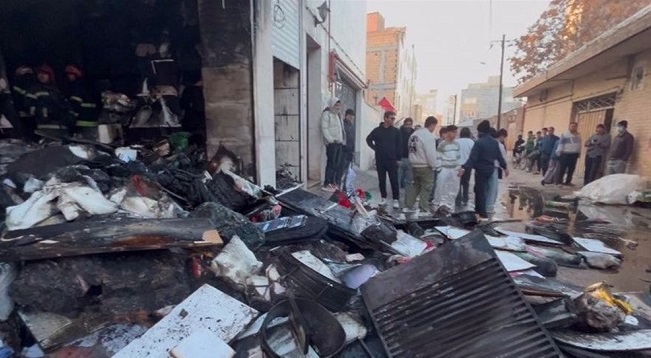
In contrast to reports from activists and international observers, Iranian state-linked media presented a different picture. According to Press TV and Tasnim News Agency, authorities said calm had largely returned to cities following a wave of riots.
Saeed Montazer al-Mahdi, spokesman for Iran’s Law Enforcement Command (FARAJA), told Tasnim that field reports indicated “general calm” nationwide. He claimed that public gatherings on Friday were protests against the actions of armed and terrorist groups, rather than anti-government demonstrations.
Officials alleged that foreign-backed armed groups carried out attacks on public and private property, including mosques and state institutions. Tasnim reported that three police officers were killed in Shiraz, while several members of security forces, including police and Basij militia personnel, died in incidents across Tehran, Qom, Khuzestan, Qazvin and North Khorasan provinces.
In Esfarayen, a local prosecutor and four security personnel were killed during riots, according to provincial authorities. State media also reported arson attacks on banks, fuel stations, mosques and retail stores, describing the violence as coordinated and externally driven.
A Standoff with No Immediate Resolution
As Iran remains largely cut off from the global internet, the competing narratives—between protesters and authorities, activists and state media—continue to fuel uncertainty. Western governments and international human rights bodies are pressing Tehran to halt violence against demonstrators, while Iranian leaders insist that foreign powers are orchestrating unrest to destabilize the country.
With economic pressures mounting, opposition figures calling for sustained civil resistance, and the government signalling zero tolerance for dissent, the standoff shows no signs of an immediate resolution. For now, Iran stands at a tense crossroads, with the outcome of the protests likely to have far-reaching implications for its political future and regional stability.