
Last Updated on January 2, 2026 5:38 pm by INDIAN AWAAZ
Aafreen Hussain in Kolkata
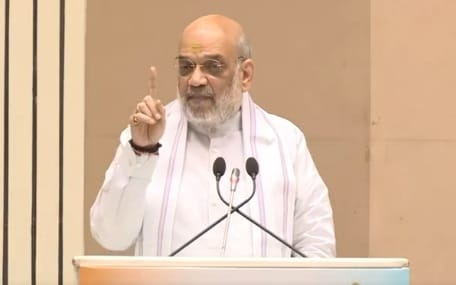
With just months before West Bengal heads into another high-stakes Assembly election, the Bharatiya Janata Party (BJP) has switched into full campaign mode. Leading this political offensive personally is Union Home Minister Amit Shah, whose three-day visit to Bengal is being widely seen as the beginning of the party’s decisive push for 2026.
On Wednesday, Amit Shah chaired a closed-door high-level organisational meeting at a Salt Lake hotel in Kolkata, bringing together the entire leadership core of the Bengal BJP. The meeting was attended by Leader of Opposition Suvendu Adhikari, State BJP President Samik Bhattacharya, all BJP MPs and MLAs, senior organisational leaders, and key municipal corporation representatives. Party sources reveal that only those leaders who are either potential candidates or expected to shoulder major campaign responsibilities were invited, making the gathering a de-facto shortlist for the 2026 electoral battlefield.
The biggest surprise of the meeting was the presence of former state BJP president Dilip Ghosh, a leader whose political future had been the subject of intense speculation. For months, rumours had swirled about his growing distance from the party, especially after he was seen sharing platforms with Chief Minister Mamata Banerjee at public events. Whispers of a possible switch to the Trinamool Congress had begun circulating in political corridors. However, Amit Shah personally meeting Dilip Ghosh sent a clear and powerful message that the BJP wants its old generals back on the front line. Party insiders indicate that Dilip Ghosh may be given a prominent organisational and campaign role in the 2026 elections.
Dilip Ghosh is widely regarded as the most successful BJP state president Bengal has seen. In the 2014 Lok Sabha elections, the BJP had only three MPs from the state. Under his leadership in 2019, the party surged to 18 MPs, and in the 2021 Assembly elections, the BJP jumped to 70 seats, emerging as the principal opposition. His grassroots connect and aggressive political style transformed the BJP into Bengal’s first true challenger to Trinamool’s dominance.
Sources present at the meeting said Amit Shah stressed three clear priorities: ending internal rivalries, rebuilding booth-level organisational strength, and presenting a united leadership face before voters. He reportedly made it clear that personal differences would not be allowed to weaken the party’s prospects in the 2026 Assembly elections.
The last Bengal Assembly election was held in April 2021, with results announced on May 2. With the 2026 polls expected to follow a similar timeline, Shah’s early intervention indicates that the BJP does not want to repeat past mistakes, particularly organisational disunity and strategic miscalculations. His three-day visit to Bengal is therefore not symbolic but tactical.
By reassembling both old and new BJP leadership on one platform, Amit Shah has delivered a clear political signal to the Trinamool Congress: the BJP is rebuilding its war room for 2026 and has already pressed the start button. The coming months are likely to witness an aggressive consolidation of leaders, cadres and messaging, making West Bengal once again one of India’s most politically charged electoral battlegrounds.