
VINIT WAHI / NEW DELHI
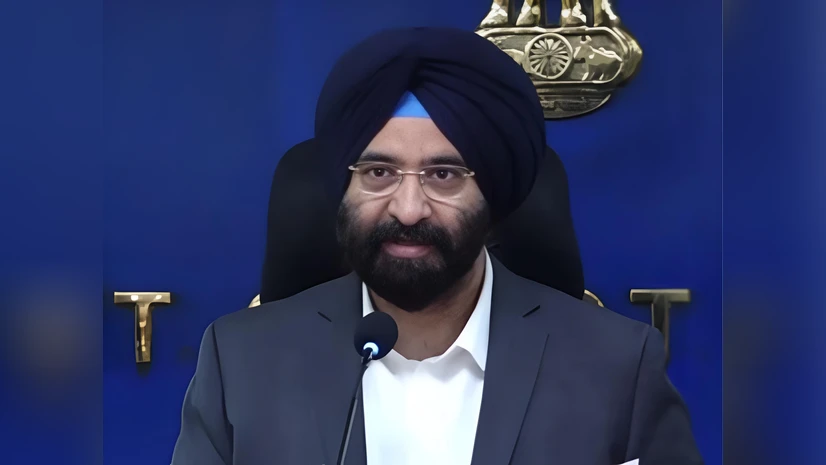
Saying that it was “impossible” for any elected government to reduce the air quality index (AQI) within 9-10 months, Delhi Environment Minister Manjinder Singh Sirsa on Tuesday apologised to the citizens for high pollution levels in the national capital.
“I apologise to the people of Delhi for the rising air pollution. We are working consistently to reduce it day by day. No government can completely control pollution levels within nine to ten months,” Sirsa said while addressing a press conference.
Delhi to Allow Only BS-VI Vehicles from December 18 as Pollution Control Measure
Delhi Environment Minister Manjinder Singh Sirsa on Tuesday announced that from Thursday, December 18, only BS-VI-compliant vehicles from outside the capital will be allowed to enter the city. The order, aimed at controlling air pollution, will remain in effect until further notice.
Addressing a press conference, Sirsa stated that vehicles without a valid Pollution Under Control (PUC) certificate will also be denied fuel at petrol pumps in Delhi starting the same day. Vehicle owners were given one day to ensure compliance with PUC norms.
The minister added that automated cameras at fuel stations will detect non-compliant vehicles, allowing enforcement without confrontation. “From Thursday, fuel will be automatically denied to such vehicles. Over eight lakh vehicle owners have already been penalized for not having valid PUC certificates,” he said.
Targeting the previous Aam Aadmi Party government, Sirsa alleged that they failed to control pollution during their ten-year tenure and are now protesting an issue that worsened under them. He added that Delhi’s air quality has remained better for nearly eight months in 2025 compared to the same period last year. While acknowledging a recent rise in pollution, he claimed the current government’s sustained efforts over the past ten months have kept the situation relatively better.
Sirsa also highlighted government initiatives taken to combat pollution, including reducing the height of Delhi’s garbage mountains by 15 meters, reclaiming 45 acres of legacy waste-affected land for plantation drives, and installing over 2,000 pollution-monitoring units. Fines totaling ₹9.21 crore have been collected, with enforcement being carried out by various departments.
He noted that while 13 pollution hotspots were identified in 2018, the current government has mapped 62 locations and taken corrective measures. Delhi now operates 3,400 electric buses, with plans to increase the fleet to 7,500 to reduce vehicular emissions. Sirsa also mentioned measures to minimize emissions from biomethanation plants and distribution of 10,000 heaters to ensure cleaner operations.
“A scientific committee has been constituted to recommend pollution-control measures, while the Commission for Air Quality Management has also set up a separate panel,” Sirsa said.
The minister said vehicles carrying construction material would be banned and strict penalties imposed on violators, including sealing of offending vehicles.
Delhi air quality remains ‘very poor’
Delhi’s air quality showed some improvement on Tuesday morning, with the Air Quality Index (AQI) recorded at 377, compared to 498 a day earlier, though smog continued to blanket the city.
According to Central Pollution Control Board (CPCB) data, air quality at 9 am remained in the ‘very poor’ category. Over the past two days, AQI levels crossed 400 at several locations, placing them in the ‘severe’ range.
On Tuesday, 11 of the city’s 40 monitoring stations recorded ‘severe’ air quality. Jahangirpuri, Mundka and Wazirpur registered the highest AQI readings at 426, data from the CPCB’s Sameer app showed.
Dense smog and fog reduced visibility across several parts of the city during the early morning hours. The minimum temperature was recorded at 8.3 degrees Celsius, slightly below normal, while the maximum temperature was expected to range between 23 and 25 degrees Celsius.