
Last Updated on November 5, 2025 11:15 pm by INDIAN AWAAZ
Zakir Hossain from Dhaka
An international delegation led by the Burma Task Force of US-based rights group Justice for All has called for a comprehensive and recognized education framework for Rohingya refugees in Bangladesh.
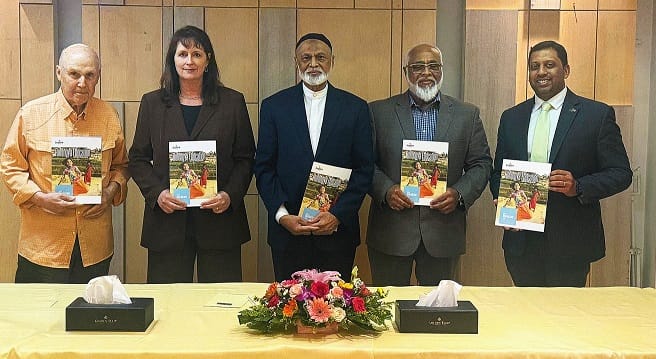
At a press conference in Dhaka on Monday, the three-member team—comprising global human rights and policy experts—outlined key recommendations based on long-term research, field visits, and talks with Rohingya communities.
The delegation submitted a memorandum to Bangladesh’s Chief Adviser Muhammad Yunus, urging three priorities: a unified national policy on Rohingya education, a recognized certification system to enable higher studies and jobs, and inclusion of US Muslim charitable organizations’ funds and expertise in education programs.
Imam Abdul Malik Mujahid, President of Justice for All and Chair of the Burma Task Force, praised Bangladesh’s generosity, saying, “The compassion shown by the government and people of Bangladesh toward the Rohingyas is a remarkable example for the world. Now it’s time to build bridges for the future through education.”
He emphasized, “Rohingya children, especially girls, must not be deprived of their future because of the lack of recognized education.” Mujahid noted that many community-run schools lack materials and trained teachers.
“Without official recognition and government support, these initiatives will have little impact on their future education or careers,” he added.
Their findings show a sharp gender gap—though 52% of school-age Rohingyas are female, only 3% are enrolled in any form of schooling. The data comes from a survey of 1,000 Rohingya women, along with consultations and field observations.
Nadine Maenza, former Chair of the US Commission on International Religious Freedom, said, “For Bangladesh, providing education in refugee camps is not just a humanitarian duty—it’s a strategic investment. An uneducated generation fosters dependency, but an educated one can bring peace and stability.”
Former Amnesty International spokesperson Richard Reoch added, “Education is a lifeline out of the horrors of genocide. Just as food and water are essential, education is vital for recovery and skill development.”
Mujahid said Justice for All is ready to collaborate with Bangladesh, noting, “The annual $4 billion charity of the American Muslim community can significantly support Rohingya education.”
He pointed out that the US Muslim community—around five million people with over 3,000 mosques and 500 educational institutions—could channel part of its annual zakat and sadaqah toward the cause.