

Last Updated on August 25, 2025 11:44 pm by INDIAN AWAAZ
Zakir Hossain / Dhaka
Bangladesh’s Chief Adviser Muhammad Yunus on Monday unveiled a seven-point roadmap aimed at ensuring the “speedy, safe, voluntary and sustainable” return of Rohingyas to Myanmar’s Rakhine state. Addressing a stakeholder dialogue in Cox’s Bazar, he appealed strongly: “We must not be held hostage to mere rhetoric; the time for action is now.” Yunus urged the global community to share responsibility until a durable resolution is achieved and emphasized the need to keep the Rohingya crisis active on the international agenda.
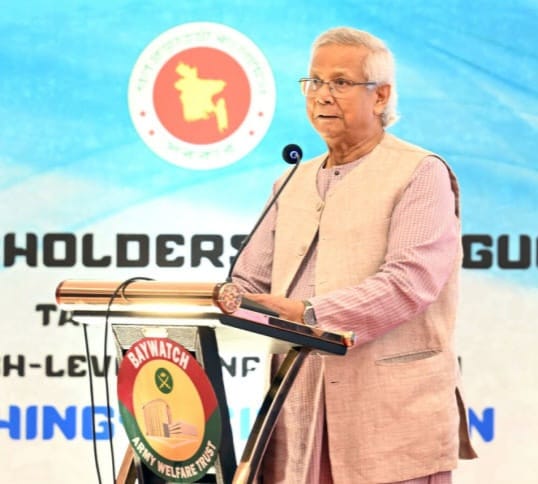
His seven-point proposal included: immediate repatriation, sustained donor support, an end to violence in Rakhine, inclusive dialogue, a robust regional and international role via ASEAN and neighbors, firm opposition to ethnic cleansing, and accountability through ICJ and ICC mechanisms. Yunus recounted a recent Iftar shared with UN Secretary-General António Guterres and refugees, stating, “We clearly heard Rohingyas’ keen desire to return home as soon as possible.” He warned that waiting for the “last Rohingya leaving Rakhine” would be “a historic blunder.” Noting that Bangladesh now shelters 1.3 million Rohingyas and sees 32,000 births annually in camps, he praised the support of host communities but stressed that “effective role of the international community is much more needed than ever before.”
Echoing Dhaka’s urgency, Chinese Ambassador Yao Wen reaffirmed Beijing’s commitment to facilitating repatriation. “Repatriation is the only solution,” he contended, calling for direct negotiations between Bangladesh and Myanmar and urging the international community to respect and support that process. He warned of waning global attention and reduced aid, emphasizing that the crisis “has increasingly become a heavy burden on Bangladesh’s social stability and economic development.” Yao referenced China’s diplomatic efforts—mediating between the Myanmar military and the Arakan Army—and highlighted its humanitarian contributions through UN partnerships.
In a rare display of multilateral backing, 11 countries, including India, Canada, Australia, the UK, Denmark, Norway, Sweden, Switzerland, the Netherlands, Italy, and Finland, issued a joint statement affirming their support for Bangladesh. “The high commissions and embassies sincerely acknowledge the humanitarian catastrophe of the Rohingyas,” noted the French Embassy in Dhaka, releasing the declaration on behalf of the group.
Also speaking at the session were Bangladesh’s National Security Adviser Khalilur Rahman, Foreign Secretary Asad Alam Siam, Disaster Management Adviser Faruk E Azam, and UNHCR’s Assistant High Commissioner Raouf Mazou. They all called for urgent international action to ensure safe, dignified repatriation.
Yunus concluded by reiterating: “The Rohingya crisis emanated from Myanmar and the solution also lies there… Your solidarity with the Rohingya voice could be a beacon of hope… to their homeland.”