
Last Updated on August 6, 2025 10:16 pm by INDIAN AWAAZ
India hit back within hours of announcement, calling the decision “unfair, unjustified and unreasonable” and saying it would take “all actions necessary to protect its national interests.”
R. Suryamurthy
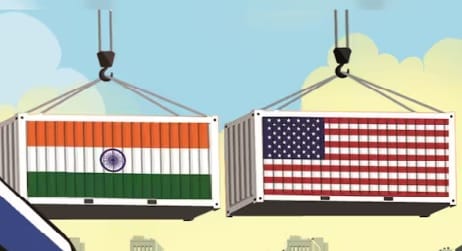
U.S. President Donald Trump on Wednesday signed an executive order imposing an additional 25% tariff on imports from India, citing New Delhi’s continued purchase of Russian oil, a move that drew sharp condemnation from the Indian government and warnings of severe damage to exporters. The new levy, which the White House said was needed to address a “national emergency” stemming from Russia’s war in Ukraine, will push total U.S. duties on most Indian goods to 50%. It will apply to nearly all imports except those covered by specific exemptions under earlier trade orders. The tariff will take effect in 21 days, excluding shipments already in transit or meeting narrowly defined exceptions. Trump said the measure was aimed at deterring countries from helping Moscow fund its military campaign through energy purchases.
“They’re fuelling the war machine, and if they’re going to do that, then I’m not going to be happy,” Trump told reporters earlier this week, adding that much of the oil India buys from Russia is resold on the open market “for big profits.” In a post on his Truth Social platform late Tuesday, Trump wrote: “India is not only buying massive amounts of Russian oil, they are then, for much of the oil purchased, selling it on the open market for big profits. They don’t care how many people in Ukraine are being killed by the Russian war machine. Because of this, I will be substantially raising the tariff paid by India to the USA.” The executive order also authorises future tariff action against other countries directly or indirectly importing Russian oil, and allows the president to adjust or revoke the measure if circumstances change – such as retaliation by affected nations or policy shifts by Moscow or New Delhi.
India calls move ‘unfair and unreasonable’ India’s Ministry of External Affairs (MEA) hit back within hours of the announcement, calling the decision “unfair, unjustified and unreasonable” and saying it would take “all actions necessary to protect its national interests.” “We have already made clear our position on these issues, including the fact that our imports are based on market factors and done with the overall objective of ensuring the energy security of 1.4 billion people of India,” the MEA said in a statement. “It is therefore extremely unfortunate that the U.S. should choose to impose additional tariffs on India for actions that several other countries are also taking in their own national interest.”
The ministry accused Washington and Europe of double standards, pointing to what it described as continuing significant trade with Russia, including energy and raw materials. It noted that the European Union imported a record 16.5 million tonnes of liquefied natural gas from Russia in 2024, while the United States continued to import uranium, palladium, fertilisers and chemicals from Moscow. “Like any major economy, India will take all necessary measures to safeguard its national interests and economic security,” the MEA said. Exporters warn of lost orders, job risks Indian exporters’ groups warned that the tariff hike would severely dent competitiveness in the U.S. market, India’s largest for goods trade after the European Union. “This move is a severe setback for Indian exports, with nearly 55% of our shipments to the U.S. market directly affected,” said S.C. Ralhan, president of the Federation of Indian Export Organisations (FIEO). “The 50% reciprocal tariff effectively imposes a cost burden, placing our exporters at a 30–35% competitive disadvantage compared to peers from countries with lesser reciprocal tariffs.” Ralhan said many U.S. buyers had already put orders on hold pending a review of sourcing costs, particularly in sectors dominated by small and medium-sized enterprises. “For a large number of MSME-led sectors, absorbing this sudden cost escalation is simply not viable. Margins are already thin, and this additional blow could force exporters to lose long-standing clients,” he said.
Ajay Sahai, FIEO’s director general, said exporters in apparel, leather goods, engineering products and processed foods were likely to be hardest hit. “Some of these sectors depend on the U.S. for up to 70% of their sales. Scaling down operations or shifting production to other countries may become inevitable for some firms,” Sahai said. Strategic tensions The tariff announcement comes amid heightened tensions in U.S.-India trade relations, even as the two countries deepen defence and technology cooperation. Trump had already imposed a 25% reciprocal tariff on Indian goods in April under a separate order targeting trade deficits, and last month threatened to “substantially raise” duties if India continued buying Russian oil. India has defended its energy trade with Moscow since the outbreak of the Ukraine war, saying it is driven by the need to secure affordable supplies after traditional Middle East crude flows shifted to Europe.
“Our ties with any country stand on their merit and should not be seen from the prism of a third country,” MEA spokesperson Randhir Jaiswal said last week. Energy analysts warn that a sudden halt in Indian purchases of Russian oil could tighten global supplies and drive crude prices toward $200 a barrel, hitting consumers worldwide