
Last Updated on September 19, 2025 7:16 pm by INDIAN AWAAZ
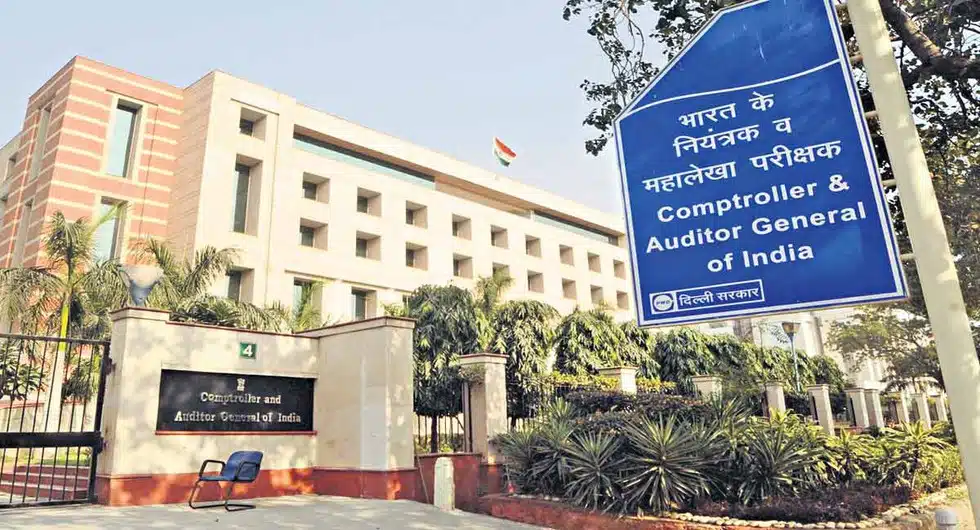
According to the State Finances 2022-23 report of the Comptroller and Auditor General (CAG), all 28 states recorded fiscal deficits in FY23, ranging from 0.76% of GSDP in Gujarat to 6.46% in Himachal Pradesh.
R. Suryamurthy
India’s states ended FY23 with widening fiscal gaps, as half of them overshot the deficit ceiling recommended by the XV Finance Commission, underlining concerns about fiscal prudence and the growing reliance on borrowings to fund current expenditure.
According to the State Finances 2022-23 report of the Comptroller and Auditor General (CAG), all 28 states recorded fiscal deficits in FY23, ranging from 0.76% of GSDP in Gujarat to 6.46% in Himachal Pradesh. The Finance Commission had prescribed a cap of 3.5% of GSDP, but 12 states exceeded this threshold, highlighting uneven fiscal management.
The sharpest slippages came from Himachal Pradesh (-6.46%), Assam (-6.3%), Bihar (-6%), Meghalaya (-6%), Punjab (-4.9%) and Sikkim (-4.5%), all well above the prudential limit. These states are struggling with high debt service costs and heavy salary and pension bills, which leave little space for capital outlays.
By contrast, Gujarat (-0.76%), Maharashtra (-1.1%), Karnataka (-1.6%) and Odisha (-2.1%) managed to keep deficits relatively contained, reflecting stronger tax bases and expenditure control.
Revenue-expenditure imbalance
The report noted that 16 states ran revenue surpluses in FY23, but 12 — including Andhra Pradesh, Kerala, Punjab, Rajasthan, Tamil Nadu and West Bengal — slipped into revenue deficits despite Finance Commission grants. For Punjab, the revenue deficit was as high as 3.8% of GSDP, suggesting borrowings are being used to fund day-to-day expenses.
This contravenes the “golden rule” of public finance, which stipulates that governments should borrow only to finance capital creation.
Borrowing without assets
The imbalance was stark in states such as Andhra Pradesh and Punjab, where capital expenditure was lower than net borrowings, implying that fresh debt was being diverted to cover revenue shortfalls rather than build productive assets. In Andhra Pradesh, only 17% of borrowings went into capital outlay.
Overall state liabilities stood at 28% of GSDP at end-March 2023, against the Finance Commission’s indicative ceiling of 33.3%. But 11 states, including Punjab, Himachal Pradesh, Bihar, West Bengal, Kerala and Rajasthan, breached the threshold. Punjab was the worst case, with liabilities topping 45% of its GSDP.
Policy contradictions
The fiscal deficit story exposes deep contradictions in state finances. While GST has boosted tax buoyancy, committed expenditures — salaries, pensions and interest payments — consumed nearly 44% of revenue expenditure, leaving little headroom. Subsidies accounted for another 9%. The result: even states with healthy GST inflows continue to slip on fiscal discipline.
Analysts warn that the persistence of high fiscal deficits in consumption-heavy states could crowd out capital investment and deepen intergenerational debt burdens. With the 16th Finance Commission set to review state finances in 2026, the challenge will be to reconcile demands for fiscal space with the imperatives of consolidation.