
Last Updated on August 4, 2025 7:27 pm by INDIAN AWAAZ
Zakir Hossain from Dhaka
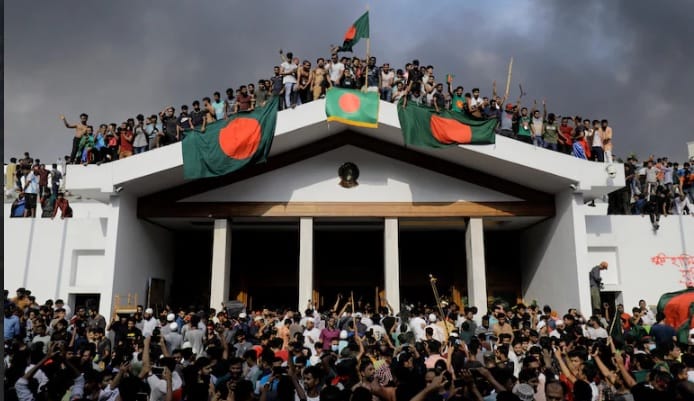
In a symbolic turn of history, the former official residence of ousted Bangladeshi Prime Minister Sheikh Hasina is being converted into a museum chronicling her rule and the student-led revolution that led to her downfall on August 5, 2024.
The sprawling Ganabhaban complex, once a fortress of power, is being repurposed to preserve what authorities describe as the people’s resistance to dictatorship. Graffiti scrawled by protesters—“Freedom”, “We want justice”, and “Killer Hasina”—remain untouched on the walls, now set to be preserved as part of the museum’s exhibits.
“Ganabhaban is a symbol of fascism, the symbol of an autocratic regime,” said rights activist and documentary photographer Mosfiqur Rahman Johan, 27, who was among the thousands who stormed the residence last year. Crowds danced in Hasina’s bedroom, feasted in her kitchens, and even swam in the lake she once fished in, marking the fall of a 15-year-long authoritarian rule. The United Nations estimates that 1,400 people were killed between July and August 2024 during her brutal crackdown on protests.
Nobel Peace laureate and interim Chief Adviser Muhammad Yunus said the museum would “preserve memories of her misrule and the people’s anger when they removed her from power.”
Hasina, 77, is currently in India and has refused to return for trial. She faces charges of crimes against humanity, including murder and torture—allegations she denies. Her former aides, including ex-IGP and home minister, are also facing trial.
Tanzim Wahab, curator of the under-construction museum, said the exhibits would feature personal stories of victims through films, photos, and plaques honouring those killed during Hasina’s rule. Interactive installations, animation, and even reconstructed detention cells will depict the horrors faced by political opponents.
“The museum’s deeper purpose is retrospective, looking back at the long years of misrule and oppression,” Wahab noted. “We want young people to use it as a platform for discussing democratic ideas, new thinking, and how to build a new Bangladesh.”
As Ganabhaban is being preserved, many symbols of the former regime have been dismantled by protesters. Statues of Hasina’s father Sheikh Mujibur Rahman were toppled, portraits torched, and even his residence—once a museum—was razed.
“When the dictatorship falls, its Mecca will go too,” said 23-year-old student Muhibullah Al Mashnun, who helped demolish the late leader’s house. “They were the statues of dictatorship.” Human Rights Watch, however, has cautioned the interim government, saying it now faces enormous challenges. “The interim government appears stuck… more focused on settling scores than protecting Bangladeshis’ rights,” HRW stated. Yet, for many, the transformation of Ganabhaban marks a powerful reckoning with the past—and a first step toward building a new republic.