
Last Updated on August 6, 2025 6:28 pm by INDIAN AWAAZ
R. Suryamurthy
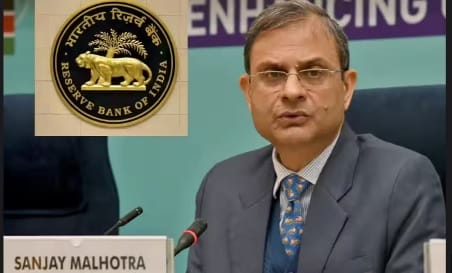
The Reserve Bank of India’s (RBI) Monetary Policy Committee (MPC) has chosen to hit the brakes on further rate cuts, maintaining the repo rate at 5.5% for the second straight meeting. This “hawkish pause” has sent a clear signal to the market: while inflation may be under control now, the central bank is not yet ready to celebrate.
Despite a significant downward revision of the current fiscal year’s inflation forecast to 3.1% from a previous estimate of 3.7%, the MPC’s decision was anything but dovish. The cautious tone stems from a forward-looking view that anticipates inflation to creep back above the central bank’s 4% target. Projections show inflation rising to more than 4% in the March 2026 quarter and nearing 5% by the June 2026 quarter. This long-term concern, coupled with a current core inflation rate of approximately 4%, suggests the RBI is prioritizing price stability over immediate economic stimulus.
“This move is consistent with the RBI’s long-term goal of achieving a 4% CPI inflation target,” said Sankar Chakraborti, MD & CEO of Acuité Ratings & Research.
The Tug-of-War Between Growth and External Risks
The RBI’s growth outlook remains optimistic, with a real GDP growth forecast of 6.5% for the current fiscal year, a number that reflects the resilience of the Indian economy. However, this optimism is tempered by significant external risks, notably the looming 25% tariff on Indian goods announced by the US. While some analysts believe the MPC may not be overly concerned, others, like Rajani Sinha, Chief Economist at CareEdge, and Dipti Deshpande, Principal Economist at Crisil, see the potential for these trade tensions to impact growth.
The central bank’s wait-and-see approach is also influenced by the slow transmission of its previous rate cuts. According to Crisil’s Deshpande, while money markets have responded quickly, the full impact on bank lending and deposit rates has yet to be felt in the broader economy. This incomplete transmission means the full effect of past policy actions hasn’t reached businesses and consumers, a key reason for the RBI to hold steady for now.
A Shifting Landscape for Credit and Policy
On the credit front, the RBI noted a slowdown in traditional bank credit growth, but this has been largely offset by a surge in funding from non-bank sources. Large corporations are increasingly turning to market instruments like commercial paper and corporate bonds. This shift has led experts like Chakraborti to suggest the RBI should consider the total mobilization of resources, not just bank credit, in its future decision-making.
The policy announcement also included a few initiatives to enhance financial inclusion, such as retail access to Treasury Bills via Systematic Investment Plans (SIPs) and the standardization of bank locker and account claim settlements. These measures are seen as a way to boost investor confidence and improve the efficiency of the financial system.
Ultimately, the MPC’s unanimous decision to hold the line reinforces a “non-consensus view” that the rate-cutting cycle may have ended, a sentiment echoed by Shilan Shah, Deputy Chief Emerging Markets Economist at Capital Economics. The bar for future rate cuts is now “very high” and would likely only be considered if growth momentum slows significantly, a view shared by Upasna Bhardwaj, Chief Economist at Kotak Mahindra Bank.