
Last Updated on June 10, 2026 12:54 pm by INDIAN AWAAZ
Staff Reporter / New Delhi
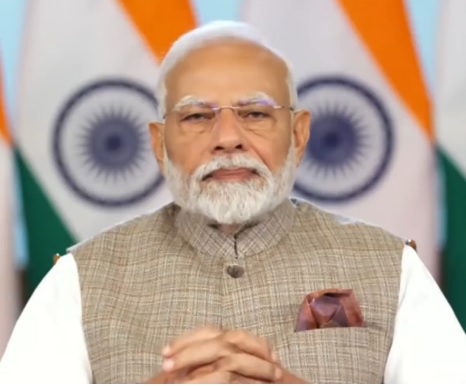
Prime Minister Narendra Modi on 10 June 2026 became India’s longest-serving elected Prime Minister, surpassing the tenure of the country’s first Prime Minister, Jawaharlal Nehru, in terms of continuous service after election.
Mr. Modi first took oath as Prime Minister on 26 May 2014. Jawaharlal Nehru had assumed office as India’s elected Prime Minister following the first general elections on 13 May 1952 and remained in office until his death on 27 May 1964. Nehru’s elected tenure lasted 4,398 days, while Prime Minister Modi completed 4,399 consecutive days in office on 10 June 2026.
The milestone comes at a time when many democracies around the world have witnessed frequent leadership changes and political transitions. Supporters of the government view the continuity of leadership across three consecutive national mandates as a reflection of sustained public confidence in the ruling administration.
During Prime Minister Modi’s tenure, the government has highlighted achievements including the expansion of digital public infrastructure, large-scale infrastructure development, welfare delivery reforms, and measures aimed at improving financial inclusion and economic growth. Government data and international assessments have also pointed to reductions in multidimensional poverty during this period.
At the same time, opposition parties and several policy observers have argued that issues such as employment generation, income inequality, institutional independence, and social cohesion remain important areas for continued attention alongside economic growth.
Internationally, India has expanded its engagement on trade, technology, climate policy and Global South priorities, strengthening its profile in multilateral forums and global diplomacy.
Political observers note that while this record marks an important milestone in India’s democratic journey, comparisons between leaders across different historical periods remain shaped by the distinct political, economic and social contexts in which they governed.