
Last Updated on August 13, 2019 8:55 am by INDIAN AWAAZ
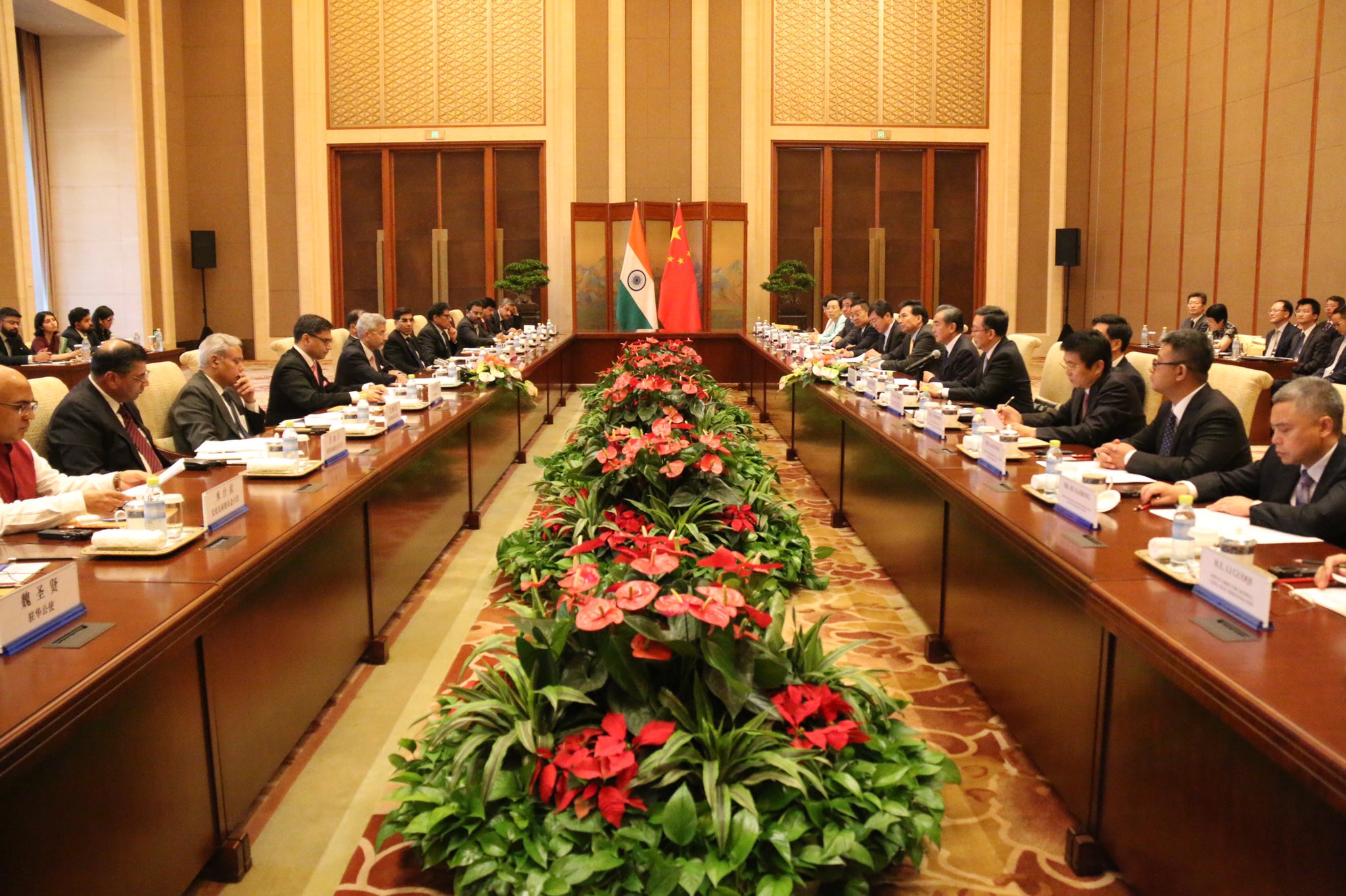
AGENCIES / Beijing / New Delhi
India’s External Affairs Minister S Jaishankar Monday explained to his Chinese counterpart Wang Yi that recent changes in India’s Constitution had “no implication for either the external boundaries of India or the Line of Actual Control (LAC) with China”. He also said that the move would not impact the Line of Control (LoC) with Pakistan.
Jaishankar told Wang that India was not “raising any additional territorial claims” and that China’s concerns were “misplaced”.
“During the bilateral meeting, Chinese Foreign Minister also brought up developments pertaining to legislation passed recently by the Indian Parliament on Jammu & Kashmir. External Affairs Minster conveyed that this was an internal matter for India. The issue related to changes in a temporary provision of the Constitution of India and was the sole prerogative of the country. The legislative measures were aimed at promoting better governance and socio-economic development. There was no implication for either the external boundaries of India or the Line of Actual Control (LAC) with China,” India’s MEA said ina stament.
It said: “India was not raising any additional territorial claims. The Chinese concerns in this regard were therefore misplaced. EAM also conveyed that so far as the India-China boundary question was concerned the two sides had agreed to a fair, reasonable and mutually acceptable settlement of the Boundary Question on the basis of the 2005 Political Parameters and Guiding Principles.”
As Wang, State Councillor and Foreign Minister, raised India’s move to revoke the special status granted to Jammu and Kashmir and bifurcate the state, Jaishankar made it clear that this was an “internal matter”.
During the bilateral meeting in Beijing, Wang also raised “rising tensions” between India and Pakistan as a result of these changes. Jaishankar reiterated that it was an “internal matter” that had “no bearing on Pakistan”.
Asking the Chinese side to “base its assessment on realities”, he pointed out that India had shown “restraint in the face of provocative Pakistani rhetoric and actions” and “stood for normalisation of ties in an atmosphere free of terror”.
This is the strongest position taken so far by the Indian government on views expressed by China and Pakistan on the abrogation of Article 370 and bifurcation of J&K.
Last week, China had objected to the formation of Ladakh as a Union Territory, saying it undermined its territorial sovereignty. It had also expressed “serious concern” about the situation in the region and said “relevant sides need to exercise restraint and act prudently”.
Delhi had responded to Beijing at the time, with the Ministry of External Affairs spokesperson saying that “India does not comment on the internal affairs of other countries and similarly expects other countries to do likewise”.