
Last Updated on September 18, 2025 11:35 pm by INDIAN AWAAZ
Staff Reporter
New Delhi: A day after Pakistan and Saudi Arabia signed a “Strategic Mutual Defence Agreement,” India on Thursday said it would closely assess the implications of the pact on its national security, regional balance, and global stability.
The agreement, inked during Pakistan Prime Minister Shehbaz Sharif’s visit to Riyadh, significantly elevates military cooperation between the two countries. A key clause states that “any aggression against either of the two countries shall be considered an aggression against both,” according to a joint communiqué issued by Islamabad and Riyadh.
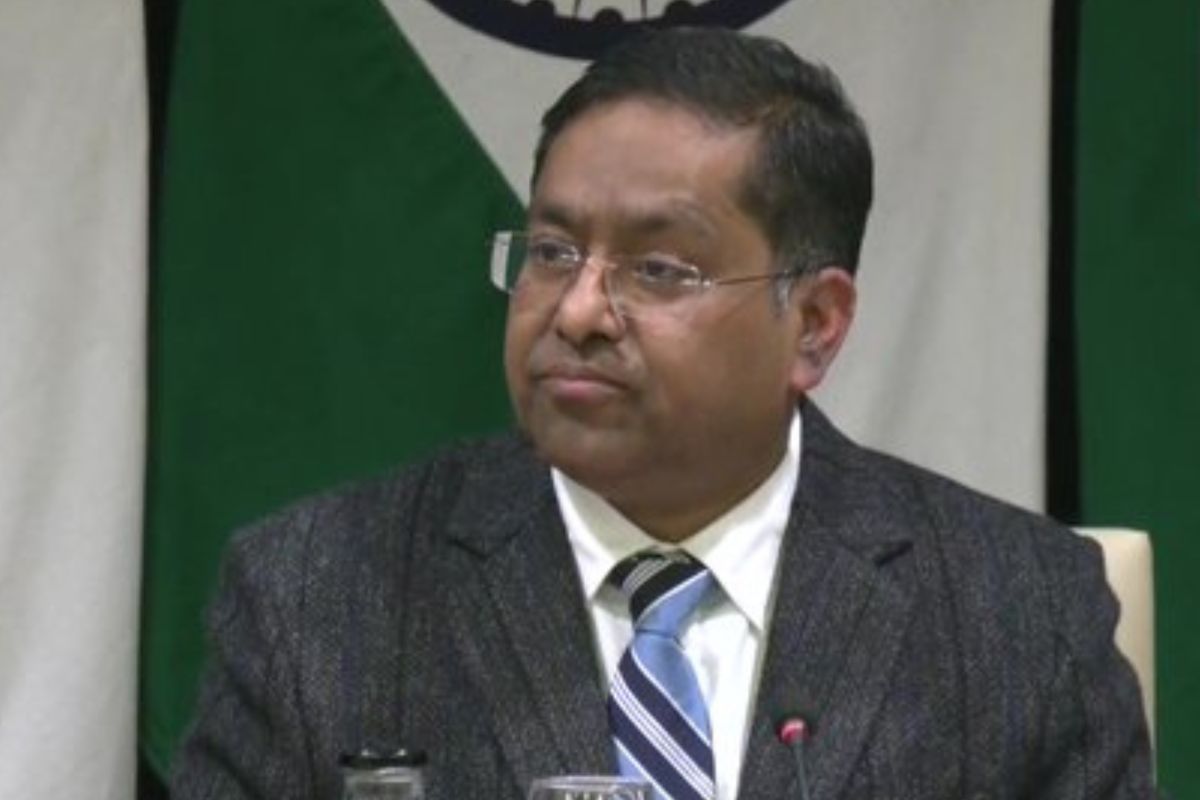
Responding to queries, External Affairs Ministry spokesperson Randhir Jaiswal acknowledged that New Delhi had been aware of discussions leading to the pact. “We have seen reports of the signing of a strategic mutual defence pact between Saudi Arabia and Pakistan. The government was aware that this development, which formalises a long-standing arrangement, had been under consideration,” he said.
Jaiswal added that India would undertake a comprehensive review to determine its impact. “We will study the implications of this development for our national security as well as for regional and global stability. The government remains committed to protecting India’s national interests and ensuring comprehensive national security in all domains,” he emphasised.
Analysts note that while defence cooperation between Pakistan and Saudi Arabia is not new, the formalisation marks a deeper strategic alignment. This could recalibrate regional security, particularly given Saudi Arabia’s growing assertiveness in Middle Eastern and South Asian geopolitics.
For India, the pact presents complex questions—not only regarding military balance with Pakistan but also in terms of its vast expatriate community and energy interests in West Asia.
So far, New Delhi has avoided direct criticism, adopting instead a watchful, measured stance as it navigates shifting geopolitical currents in the region.