
Last Updated on April 24, 2026 11:09 pm by INDIAN AWAAZ
Our Business Correspondent
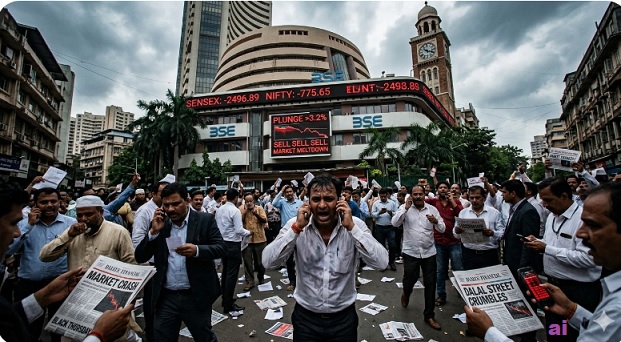
Indian equity markets closed sharply lower for the week, weighed down by a surge in global crude oil prices and mounting macroeconomic concerns. Benchmark indices came under sustained selling pressure as crude prices jumped nearly 8–10%, breaching the $105 per barrel mark amid escalating tensions in West Asia and fears of supply disruptions.
The spike in oil prices reignited concerns over inflation, a widening import bill, and potential stress on India’s fiscal position. Investor sentiment was further dampened by signs of slowing domestic demand and softer consumption trends. Adding to the cautious outlook, Moody’s revised India’s growth forecast downward, raising fresh doubts over earnings momentum.
Foreign institutional investors largely remained risk-averse, intensifying sell-offs in the latter half of the week. Overall, a mix of elevated crude prices, global uncertainty, and profit booking kept markets under pressure.
For the week ended April 24, the S&P BSE Sensex plunged 1,829.33 points, or 2.33%, to close at 76,664.21, while the Nifty 50 dropped 455.6 points, or 1.87%, to settle at 23,897.95. Broader markets showed relative resilience, with mid-cap and small-cap indices posting modest declines.
Volatility Through the Week
Markets began the week on a cautious note, with marginal gains on Monday and a stronger rally on Tuesday. However, sentiment reversed midweek as indices snapped a three-day winning streak on Wednesday, followed by steep declines on Thursday and Friday amid heavy selling pressure.
Macro Signals Mixed
Economic data painted a mixed picture. India’s core sector output contracted 0.4% in March 2026, dragged down by lower production in key segments such as coal, crude oil, fertilisers, and electricity. Annual core sector growth stood at 2.6% for FY26.
At the same time, business activity indicators remained robust. The HSBC Flash India PMI data signaled strong expansion across manufacturing and services, indicating underlying economic resilience despite near-term headwinds.
Moody’s downgrade of India’s FY27 GDP growth forecast to 6% from 6.8% highlighted risks from weak consumption, slowing industrial output, and rising energy costs. However, strong forex reserves, resilient services exports, and continued infrastructure spending are expected to provide some cushion.
Oil Policy Clarity
Amid rising crude prices, the Ministry of Petroleum and Natural Gas dismissed speculation of a sharp hike in petrol and diesel prices, calling such reports misleading. The government reiterated that fuel prices have remained stable despite global volatility.
Stocks in Focus
Banking majors saw declines despite steady earnings. HDFC Bank and ICICI Bank slipped even as they reported healthy profit growth. IT stocks faced sharp selling, with Infosys, HCL Technologies, and Tech Mahindra among the major laggards.
On the positive side, Nestlé India surged on strong earnings, while Bharat Heavy Electricals Limited gained on robust order inflows. Mid-cap performers such as Cyient DLM and Himadri Speciality Chemical also posted notable gains.
Global Cues
Global economic indicators remained mixed. Europe saw easing producer price pressures, while the UK reported moderating unemployment but persistent inflation. In Asia, Japan’s manufacturing activity strengthened, and South Korea posted robust quarterly growth, reflecting resilience despite global uncertainties.
Outlook:
Markets are likely to remain volatile in the near term, tracking crude oil movements, geopolitical developments, and global capital flows. Investors may stay cautious amid inflation risks and earnings uncertainty, while selectively focusing on sectors with strong fundamentals.