
Last Updated on October 22, 2026 4:06 pm by INDIAN AWAAZ
Crop losses, mounting farm debt and rising rice prices expose the cost of inadequate water management and reactive policymaking. India needs a drought-resilient agricultural strategy that protects farm incomes without passing the burden on to consumers.
By Pravin Kumar

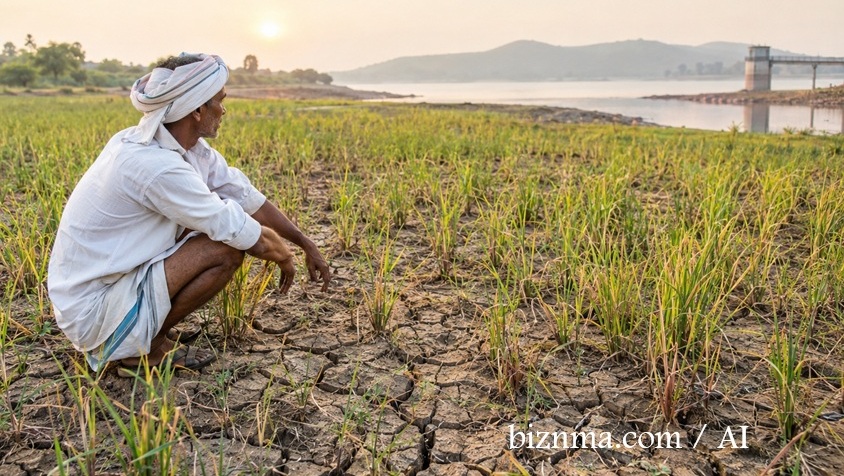
India’s weak monsoon is exposing a fundamental weakness in the country’s agricultural policy: despite repeated warnings about water scarcity and climate uncertainty, millions of farmers remain dangerously dependent on rainfall, while consumers are vulnerable to sudden increases in food prices. With Karnataka reporting extensive crop damage, farmers in Maharashtra facing mounting financial distress and rice prices for some varieties in Tamil Nadu reportedly rising by as much as 50%, the crisis demands more than emergency relief. It calls for a decisive shift from managing droughts after they occur to building an agricultural system capable of withstanding them.
The warning signs are difficult to ignore. Estimates suggest that around 33% of crops in Karnataka have been damaged, while reports indicate that more than one lakh acres of paddy cultivation have been affected by water shortages in Tamil Nadu’s Cauvery delta. Reservoir levels have also raised concerns about the availability of water for irrigation and future cropping seasons. These figures may vary as assessments are updated, but the underlying problem is clear: inadequate rainfall can quickly translate into lost farm incomes, rural economic distress and pressure on food prices.
The central policy question is no longer simply how much rain India receives. It is why a poor monsoon continues to threaten the economic security of so many farming households and the food budgets of ordinary citizens.
The farmer bears the risk, the consumer pays the price
Agriculture operates on a troubling imbalance. Farmers must spend on seeds, fertilisers, pesticides, labour and irrigation before knowing whether their crops will survive. When rainfall fails, much of that investment can be lost. Yet the financial obligations remain, and the next sowing season demands fresh expenditure.
For indebted farmers, crop failure can turn a difficult year into a prolonged financial crisis. Reports of four farmer suicides in Maharashtra within seven days underline the human cost of agrarian distress, although the circumstances of individual deaths must be established independently. Such tragedies also reinforce the need for accessible institutional credit, effective insurance and timely intervention before financial pressures become overwhelming.
The crisis does not end with the farmer. A decline in production can tighten supplies and raise prices, forcing consumers to pay more for essential food items. In effect, farmers may earn less because their harvest has failed, while consumers spend more because supplies have become scarce.
This is the contradiction policymakers must address. A functioning agricultural system should not leave producers financially devastated by weather shocks while exposing consumers to unpredictable food inflation. The answer lies in reducing production risks, improving supply chains and ensuring that relief reaches both sides of the food economy.
Drought relief cannot substitute for water security
The reported drought conditions across Karnataka, Maharashtra, Andhra Pradesh and Telangana highlight the scale of the challenge. In Karnataka, 226 of the state’s 240 taluks have reportedly been classified as drought-affected. Such widespread stress raises serious questions about the resilience of irrigation systems, local water storage and agricultural planning.
Water scarcity is not merely a seasonal inconvenience. Low reservoir storage can constrain irrigation during the current cropping season and undermine preparations for the next. It can also affect livestock, horticulture and rural drinking-water supplies.
Governments routinely respond to droughts with emergency measures, including water tankers, compensation and relief programmes. These interventions are necessary, but they cannot be the principal strategy for dealing with a recurring risk. A tanker can provide temporary relief; it cannot repair a depleted aquifer, restore a neglected water body or make an inefficient irrigation system sustainable.
India needs a sustained programme of watershed development, rainwater harvesting, restoration of village ponds and small reservoirs, groundwater recharge and efficient irrigation. Public investment should be directed towards regions where water stress is persistent, with local communities involved in planning and monitoring.
Equally important is the need to manage water as a limited economic resource. Crop choices must reflect local water availability, particularly in regions where cultivation places heavy demands on irrigation. However, farmers cannot reasonably be expected to abandon familiar crops without assured markets, access to suitable seeds, technical support and viable prices for alternatives.
Crop diversification must therefore be backed by procurement reforms and market development. Without these safeguards, the burden of adapting to water scarcity will once again fall disproportionately on cultivators.
Food inflation demands early intervention
The reported increase of up to 50% in the prices of certain rice varieties in Tamil Nadu illustrates how local production shocks can affect household budgets. Such increases should not be mistaken for a uniform rise in rice prices nationwide, but they serve as a warning about the consequences of supply disruptions.
For poorer households, food inflation is particularly damaging because food accounts for a large share of expenditure. Higher prices leave less money for healthcare, education, transport and other necessities. The impact can be especially severe when rising food costs coincide with weak employment or stagnant incomes.
The government’s response must begin before shortages become acute. Production estimates, reservoir levels, mandi arrivals, wholesale prices and retail trends should be monitored together to identify emerging risks. Where supplies are likely to tighten, authorities should prepare alternative sourcing arrangements, strengthen distribution networks and ensure that vulnerable families can access essential food at affordable prices.
Market intervention must be carefully calibrated. Restricting exports or releasing public stocks may sometimes help stabilise supplies, but poorly timed or unpredictable measures can undermine farmers’ price expectations. The objective should be to protect consumers without creating fresh uncertainty for producers.
Nor should governments rely solely on suppressing prices. If farmers are denied remunerative returns, investment in agriculture may weaken further. Sustainable food security requires adequate production, efficient distribution, fair farm-gate prices and targeted protection for consumers who cannot absorb price shocks.
Climate uncertainty requires a change in agricultural priorities
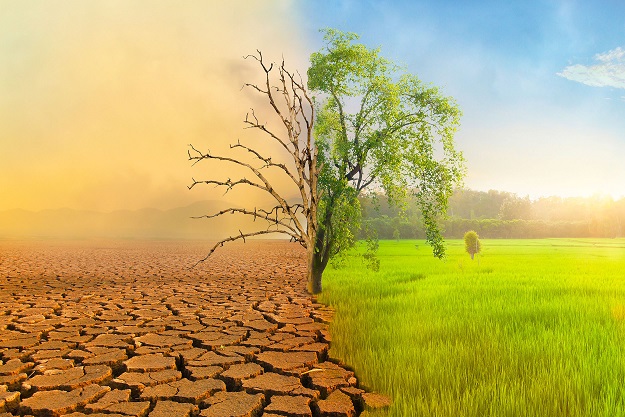
El Niño can influence India’s monsoon, but it would be misleading to attribute every rainfall deficit or crop loss to this single phenomenon. The distribution of rainfall, temperature patterns, soil moisture, irrigation access and reservoir storage also shape agricultural outcomes.
The larger concern is that weather uncertainty is exposing weaknesses that have existed for years. Farming systems with inadequate irrigation, limited crop insurance and little financial protection are especially vulnerable when rainfall becomes erratic.
Agricultural policy must therefore place resilience alongside productivity. Drought-tolerant seeds, timely and locally relevant weather forecasts, soil-moisture conservation, micro-irrigation and diversified cropping can help reduce exposure to climatic shocks. These measures must be affordable and accessible to small and marginal farmers rather than remaining limited to well-resourced cultivators.
Insurance also needs to work when farmers need it most. Crop-loss assessment should be transparent, claims should be settled promptly and coverage should reflect the actual risks faced by cultivators. Credit relief may be necessary in severely affected areas, but it must be accompanied by support for the next cropping cycle to prevent temporary distress from becoming a recurring debt trap.
The livelihoods of agricultural labourers and livestock owners deserve equal attention. When cultivation contracts, rural employment declines and demand for local goods and services weakens. Drought policy must recognise this wider economic chain rather than focus exclusively on landowners.
From crisis management to preparedness
The immediate priorities are clear: assess crop damage accurately, deliver compensation without delay, settle eligible insurance claims and provide drinking water and livestock support in affected areas. Governments should also prepare for the possibility that low water availability will disrupt the next cropping season.
But emergency assistance must be linked to measurable long-term reforms. Water conservation projects need clear targets and regular monitoring. Agricultural advisories must be supported by functioning markets. Public distribution systems must be prepared for local shortages, while food-stock decisions should be guided by credible production and price data.
Above all, accountability must improve. Drought preparedness cannot begin only after reservoirs run low and crops wither. State governments and district administrations should have advance plans that identify vulnerable regions, specify relief triggers and establish clear responsibilities for water allocation, crop-loss assessment and food-supply management.
India has developed substantial agricultural production and distribution capabilities. The challenge is to ensure that these strengths translate into security for farmers and consumers when the monsoon disappoints. Repeated drought-related distress is not inevitable; its severity depends partly on the quality of preparation and the speed of public intervention.
A weak monsoon is a natural hazard. A system that leaves farmers exposed to ruin and consumers vulnerable to food-price shocks is a policy failure.
The real test of agricultural governance is not whether governments announce relief after a drought, but whether they reduce the damage before it occurs. Protecting farmers’ incomes, managing water prudently and keeping essential food affordable must be treated as interconnected priorities. Until that shift takes place, every deficient monsoon will threaten to become another cycle of crop losses, rural distress and food inflation.
The author is a senior journalist.