
Last Updated on June 3, 2026 5:03 pm by INDIAN AWAAZ
By Vivek Shukla
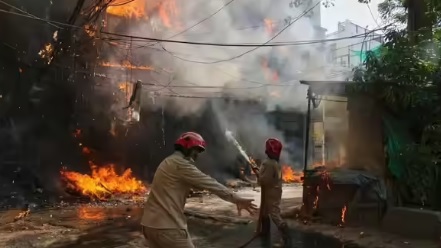
The devastating fire at a hotel in Delhi’s Malviya Nagar has once again forced the city to confront questions it has postponed for far too long.
Watching visuals of people trapped behind smoke and flames is deeply unsettling. One cannot help but think of the desperate attempts made by those caught inside to survive. Some escaped. Many did not.
And yet, if Delhi’s history is any guide, the pattern is painfully familiar: grief, official statements, announcements of inquiries and compensation—and then a gradual return to normalcy until the next tragedy strikes.
That may be the city’s biggest failure.
Fire incidents in Delhi are no longer isolated accidents. Whether in apartment complexes, hotels, commercial buildings, markets or informal settlements, recurring fires reveal deeper structural problems—poor enforcement, unsafe construction practices, weak oversight and a collective tendency to forget.
Delhi has seen these warnings before.
The Gopala Tower fire of 1983 remains one of the city’s defining urban disasters. A transformer fire in the high-rise building at Rajendra Place trapped hundreds of people for hours. Rescue operations became a national story and raised serious questions about fire preparedness and building safety.
Then came the Uphaar cinema tragedy in 1997, one of India’s most painful reminders of what happens when safety systems fail. Fifty-nine people, including 23 children, lost their lives—not merely because of the fire itself, but because emergency exits were blocked, evacuation systems failed and basic precautions were ignored.
But these tragedies belong not only to history.
In recent years, a fire in a four-storey residential building in Palam claimed nine lives, with some residents reportedly forced to jump in an attempt to survive. More recently, a deadly blaze in Vivek Vihar in East Delhi killed nine people. Preliminary findings pointed to electrical causes, while locked exits, grilled balconies and limited escape routes worsened the consequences.
Now Malviya Nagar joins this growing list. The uncomfortable question is: why does Delhi keep repeating the same mistakes?
The answer lies beyond any single department or agency. Rapid urbanisation, unplanned construction, ageing electrical systems, increasing power demand, unauthorised modifications and weak compliance with fire regulations together create an environment where one spark can turn catastrophic.
Many buildings appear compliant on paper but fail basic safety expectations in practice. Fire equipment is installed but not maintained. Audits are conducted but rarely followed by sustained monitoring.
Summer conditions in Delhi add another layer of risk. Heavy use of air conditioners, overloaded electrical infrastructure and poor evacuation planning can transform a local incident into a mass casualty event within minutes.
After every tragedy, authorities become visible. Committees are formed. Investigations begin. Responsibility is discussed.
But the larger question remains: do these investigations change how buildings are designed, inspected and managed? Fires do not merely destroy structures—they expose the strengths and weaknesses of governance.
Every person lost in these incidents was not a statistic but someone’s child, parent, colleague or friend. Delhi cannot continue treating fire disasters as seasonal emergencies.
What is needed is not another cycle of condolences but a long-term culture of prevention: mandatory and transparent fire audits, stricter enforcement, modernisation of ageing buildings, accountability for violations and public awareness that safety cannot be outsourced.
Otherwise, Gopala Tower, Uphaar, Palam, Vivek Vihar and Malviya Nagar will become more than names of tragedies. They will become milestones in a city that repeatedly mourns—but rarely learns.
Until Delhi begins to learn from its fires, the flames will keep returning—and lives will continue to be reduced to ashes.
Writer is a senior Journalist