
Last Updated on July 29, 2026 8:16 pm by INDIAN AWAAZ
R. Suryamurthy
Nearly seven years after the Citizenship (Amendment) Act (CAA) triggered nationwide protests over fears of a nationwide citizenship verification exercise, the Union government has introduced legislation that once again places birth certificates at the centre of India’s identity architecture.
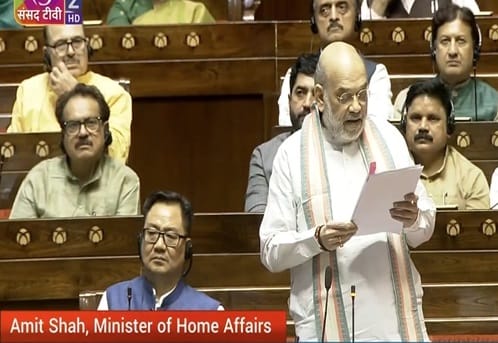
The Registration of Births and Deaths (Amendment) Bill, 2026, introduced in the Lok Sabha by Union Home Minister Amit Shah, seeks to tighten the rules governing delayed registration of births and deaths, arguing that stronger verification is essential to protect the integrity of India’s civil registration system.
But while the government portrays the measure as an administrative reform aimed at curbing fraudulent registrations and improving the quality of official records, legal experts and civil rights observers say the proposal carries implications far beyond municipal record-keeping. They argue that the Bill reflects the steady transformation of birth certificates from simple civil documents into foundational proofs of legal identity, raising fresh concerns about whether stricter procedures could disproportionately affect India’s poorest and most marginalized citizens.
The proposed amendments alter Section 13 of the Registration of Births and Deaths Act, 1969 by introducing a graduated approval mechanism for delayed registrations.
Under the Bill, births or deaths reported more than one year but within two years of occurrence would require verification and approval from a District Magistrate, Sub-Divisional Magistrate or an Executive Magistrate authorised by the District Magistrate. Registrations sought after two years would require an order from a Judicial Magistrate First Class following similar verification.
The existing law requires a magistrate’s order after one year but does not distinguish between delays of two years and those extending over decades. By separating the approval process into executive and judicial stages, the government says it intends to make delayed registrations more rigorous while encouraging timely reporting.
The Statement of Objects and Reasons accompanying the Bill says the amendments are intended to make delayed registration provisions “more stringent” after consultations with states and Union Territories following implementation of the 2023 amendments to the Act.
The proposal also replaces references to the repealed Code of Criminal Procedure with the Bharatiya Nagarik Suraksha Sanhita, 2023, bringing the legislation into conformity with India’s new criminal law framework.
More Than a Birth Certificate
The government’s rationale rests on a simple proposition: birth and death certificates have become the bedrock of modern governance.
Today, birth certificates serve as primary documents for school admissions, passports, Aadhaar enrolment, welfare schemes, inheritance claims, voter records and numerous other public services. Since the 2023 amendments designated birth certificates as a single document for establishing date and place of birth for multiple government purposes, the integrity of the civil registration system has assumed even greater significance.
From the Centre’s perspective, stricter scrutiny of delayed registrations is therefore necessary to prevent fraudulent claims, duplicate identities and manipulation of official records.
Yet that very centrality is also what makes the Bill politically sensitive.
As birth certificates become indispensable gateways to education, healthcare, financial inclusion and welfare entitlements, any additional procedural barriers risk affecting not merely administrative efficiency but access to fundamental rights.
The Shadow of CAA, NRC and NPR
The legislation arrives against the backdrop of one of the most contentious political debates in contemporary India.
When Parliament passed the Citizenship (Amendment) Act in December 2019, it sparked nationwide protests after opponents argued that, together with a proposed nationwide National Register of Citizens (NRC) and the National Population Register (NPR), millions could be forced to establish their citizenship through documentary evidence.
The government consistently rejected those fears. It maintained that the CAA merely offered a fast-track citizenship route for persecuted religious minorities from Pakistan, Bangladesh and Afghanistan, that the NPR was a routine exercise conducted under the Census framework, and that no decision had been taken on implementing a nationwide NRC.
Nevertheless, the protests reflected a deeper anxiety about documentation in a country where millions of births historically went unregistered.
Demonstrators argued that migrant workers, daily wage earners, homeless persons, tribal communities, internally displaced populations and rural households often lacked formal documentation because of administrative failures rather than personal neglect. For many, obtaining birth certificates years after birth has long involved navigating a maze of local officials, incomplete records and inconsistent procedures.
Against that backdrop, the new Bill is almost certain to be examined not merely as an administrative amendment but as another step in strengthening the state’s documentary infrastructure.
Although the legislation makes no reference to citizenship, the CAA, NRC or NPR, critics argue that tightening access to delayed birth registration inevitably assumes greater significance when birth certificates increasingly function as foundational identity documents.
A Question of Access
The government’s objective of improving the credibility of civil records enjoys broad support among policy experts.
India has made substantial progress in civil registration over the past decade, with birth registration rates rising sharply through digitisation, online registration systems and expanding institutional deliveries.
Yet delayed registrations remain common in remote villages, conflict-affected regions, tribal districts and among migrant populations.
In many cases, delays result not from fraud but from geography, poverty, illiteracy, lack of awareness or administrative shortcomings.
Legal experts say the proposed requirement of judicial approval after two years could introduce additional costs, procedural delays and uncertainty for applicants seeking birth certificates years later for education, employment, passports, inheritance disputes or welfare benefits.
The burden could also extend to an already overstretched judicial system, unless supported by simplified digital verification processes and clear timelines for disposal of applications.
Notably, the Bill contains no parallel provisions for expanding access to registration services, simplifying documentation requirements or creating dedicated grievance mechanisms for genuine applicants whose registrations have been delayed for reasons beyond their control.
Nor does it propose additional financial allocations, stating that the amendments will have no recurring or non-recurring expenditure from the Consolidated Fund of India, suggesting that existing administrative machinery will absorb the expanded responsibilities.
Balancing Integrity With Inclusion
The Bill is consistent with the government’s larger digital governance strategy, where reliable civil registration databases underpin welfare delivery, demographic planning and identity verification across multiple government platforms.
Few dispute the need to prevent fraudulent registrations or improve the credibility of official records.
The larger question, however, is whether stronger verification mechanisms can coexist with easy and equitable access to legal identity.
For millions of Indians, delayed birth registration is not the result of deception but of structural disadvantages rooted in poverty, migration, geography or institutional failure. Without safeguards that recognise those realities, experts warn that tougher compliance standards could unintentionally deepen documentation gaps instead of closing them.
As Parliament takes up the Bill, the debate is therefore likely to extend well beyond municipal record-keeping. It touches on a larger policy dilemma that has defined India’s identity discourse since the CAA protests: how to build a robust and trustworthy national documentation system without making access to legal identity contingent on navigating an increasingly complex bureaucracy.
In a country where birth certificates are rapidly becoming the gateway to citizenship-linked documentation, public services and welfare entitlements, the challenge is no longer merely registering births on time. It is ensuring that the pursuit of administrative integrity does not come at the cost of excluding precisely those citizens who have historically struggled to enter the official record.