
Last Updated on November 13, 2025 10:42 pm by INDIAN AWAAZ
Zakir Hossain from Dhaka
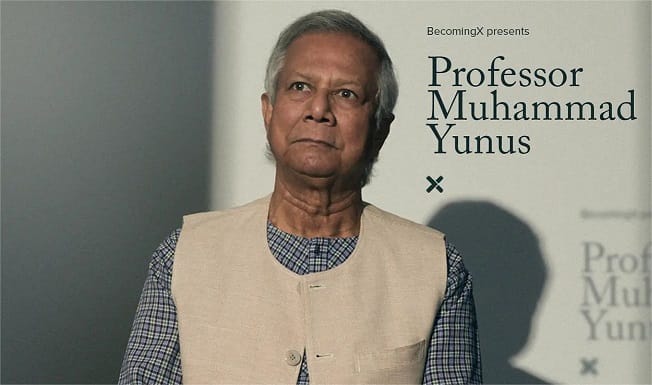
Bangladesh’s interim Chief Adviser Muhammad Yunus on Thursday announced that a national referendum on sweeping constitutional reforms will be held on the same day as the general election in February 2026.
In a televised address to the nation, Yunus said the referendum, part of the “July National Charter” agreed upon by political parties after last year’s uprising, would determine the future structure of Bangladesh’s democracy, including the revival of the caretaker government system and the creation of an upper house of parliament.
“Our government had three main responsibilities, to prosecute the murders, to organise the necessary reforms for an accountable and effective democratic system, and to hand over power through fair elections,” Yunus said. “Holding the referendum with the polls will make the process more participatory and cost-effective.”
The chief adviser said voters will answer a single question divided into four parts, covering proposals for a bicameral legislature, restoration of the caretaker system, greater separation of powers, women’s representation, judicial independence, and a two-term limit for prime ministers.
To balance political demands, Yunus announced that the proposed 100-member Upper House would be formed through proportional representation, based on each party’s share of votes in the national polls. If the referendum passes, the next parliament will serve a dual mandate as both legislature and Constitutional Reform Council, with 180 days to complete the reforms.
Meanwhile, President Mohammed Shahabuddin signed and issued the July National Charter (Constitutional Reform) Implementation Order, 2025, giving the charter legal force. The order removed an earlier clause that would have automatically incorporated reforms into the constitution if the council failed to act within 270 days — a provision strongly opposed by the BNP and its allies.
The July Charter, drafted after the 2024 student-led uprising that toppled Sheikh Hasina, outlines 26 points of reform aimed at preventing authoritarianism and ensuring balance between the executive, judiciary, and legislature. It also calls for recognizing Bangladesh as a multi-ethnic and multi-religious nation and officially acknowledging last year’s mass movement.
The document was signed by 25 parties including the BNP and Jamaat-e-Islami but boycotted by the National Citizen Party (NCP) and four left-leaning groups, which cited the absence of binding legal guarantees.
BNP Standing Committee member Salahuddin Ahmed, reacting to Yunus’ speech, alleged the chief adviser “violated” the July Charter by announcing measures not discussed during consensus talks. Jamaat-e-Islami Secretary General Mia Golam Porwar also criticised the timing, saying, “By holding the election and referendum on the same day, the government has plunged the country into further crisis.”
Despite political discord, Yunus stressed that the reforms were vital to “restore people’s trust in democracy” and ensure that “no one can again misuse power as in the past.”
The announcement came amid tight security across Dhaka, as a special tribunal prepares to deliver its verdict in the trial of ousted Prime Minister Sheikh Hasina on charges of ordering a crackdown during the July 2024 student uprising.
Hasina, who fled to India after being deposed, has denounced the proceedings as a “kangaroo court,” accusing the Yunus administration of violating human rights and banning her party, the Awami League.