
Last Updated on May 3, 2026 4:08 pm by INDIAN AWAAZ
How Atul Kumar Anjaan carved a formula out of a government report and turned it into a weapon for India’s farmers
By Rajan Kshirsagar
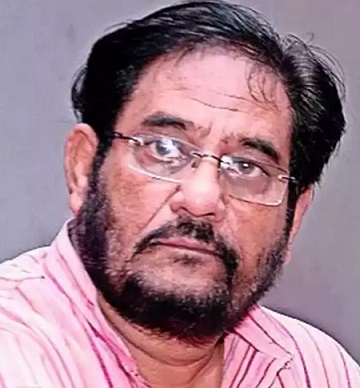
On the morning of May 3, 2024, a lanky 69-year-old who had faced police repression many times and sat through countless government committee rooms finally passed away. Atul Kumar Anjaan, General Secretary of the All India Kisan Sabha and a prominent face of India’s radical peasant movement, died in Lucknow after a long battle with cancer.
Tributes poured in across ideological lines. Sitaram Yechury mourned him, as did Defence Minister Rajnath Singh, recalling their days at Lucknow University. But Anjaan’s true legacy lives not in obituaries, but in the fields—where farmers still chant the formula he popularized: C2+50% for MSP with legal guarantee.
What sounds like common sense today took decades of effort. Anjaan transformed a technical recommendation into a mass movement slogan. As one of the few part-time members of the Swaminathan Commission, he saw beyond data—he saw the human cost.
His life is not just a political journey; it is a lesson in how policy becomes protest—and protest becomes policy.
The Inheritance of Freedom Struggle
Born on April 28, 1955, in Lucknow, Atul Kumar Anjaan grew up in a family rooted in resistance. His father, Dr. Ayodhya Prasad Singh, was associated with the Hindustan Socialist Republican Association of Bhagat Singh and Chandrashekhar Azad and had endured imprisonment under British rule.
At Lucknow University, he earned the name “Anjaan” (the unknown), even as he became widely known for his powerful oratory. He was elected President of the Lucknow University Students’ Union four consecutive times—a record that still stands.
By age 20, he was leading the National College Students’ Union. In 1979, he became National President of the All India Students Federation, holding the position for seven years.
A defining moment came during the 1973 Police-PAC revolt in Uttar Pradesh. Anjaan emerged as a key leader and was imprisoned for four years and nine months—a period he wore as a badge of honor.
Building a Red Fortress
By the 1990s, Anjaan had risen to key positions in the Communist Party of India, joining its National Executive in 1992 and National Secretariat in 1995.
However, his real work was with the All India Kisan Sabha (AIKS), where he became General Secretary in 1997 and served for 27 years until his death.
Fluent in multiple languages, Anjaan connected deeply with farmers across India—from Andhra Pradesh to Maharashtra to Punjab. He documented the realities of agrarian distress long before it became a national talking point: farmer suicides, debt traps, and declining interest in agriculture.
The Farmer in the Room
In 2004, the UPA government formed the National Commission on Farmers under Dr. M.S. Swaminathan.
Among scientists and economists, Anjaan stood out as someone who lived the politics of farming.
He emphasized two key points:
- Farmers were not even being paid their full cost of production
- The state must intervene with guaranteed procurement, low-interest loans, and effective insurance
The Commission’s 2006 report recommended MSP at 50% above production cost. However, it did not clearly define which cost.
Anjaan insisted it must be C2 (comprehensive cost)—including land rent and capital interest.
This interpretation led to the powerful and enduring demand: C2+50%.
The Movement’s Engine
After the report, Anjaan continuously pushed governments to implement its recommendations.
During the 2020 farm laws crisis, he quickly identified their impact:
- Weakening government procurement
- Promoting private markets
- Threatening MSP security
He played a key role in building unity among farmer groups under the Sanyukt Kisan Morcha, which eventually forced the government to repeal the laws.
He strongly believed in issue-based unity, putting farmers’ survival above ideological differences.
The Unfinished Business
Anjaan’s politics went beyond headlines. He supported land reforms, opposed the 2015 Land Acquisition Ordinance, and criticized communal politics.
Even during his final days in 2024, he remained active, sending a message from his hospital bed calling for unity against government policies affecting farmers.
He passed away shortly afterward.
The Red Line
Today, at protest sites across India—from Punjab to Maharashtra—the slogan remains: “Swaminathan Commission, C2+50%” It is painted on tractors, written on banners, and echoed in rallies. What began as a technical recommendation is now a nationwide demand across political ideologies.
Anjaan’s greatest achievement was transforming policy into a people’s movement. He showed that change can come from within the system—but must ultimately return to the people.
Even two years after his death, the recommendations remain only partially implemented.
But as long as farmers continue the struggle, Atul Kumar Anjaan’s legacy lives on.
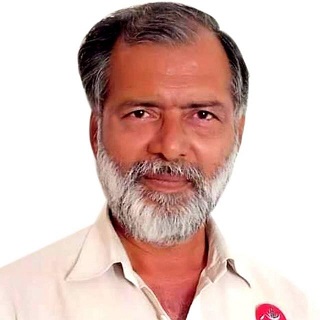
Rajan Kshirsagar is President All India Kisan Sabha