
Last Updated on May 17, 2026 1:02 am by INDIAN AWAAZ
Calls HC Ruling ‘Contrary to Historical and Constitutional Principles
Staff Reporter / New Delhi
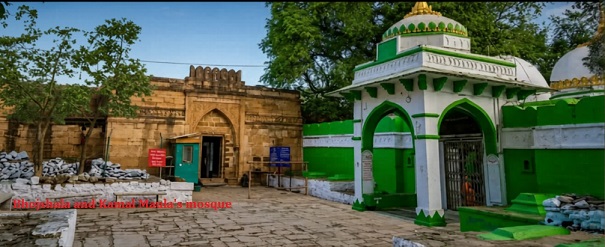
The All India Muslim Personal Law Board has strongly opposed the recent verdict of the Madhya Pradesh High Court in the Bhojshala–Kamal Maula Mosque dispute, saying the judgment declaring the Bhojshala–Kamal Maula Mosque complex as a Saraswati temple is inconsistent with historical records, archaeological evidence and the earlier position taken by the Archaeological Survey of India (ASI).
In a press statement, AIMPLB spokesperson Dr. S. Q. R. Ilyas said the Kamal Maula Mosque Committee would challenge the verdict before the Supreme Court of India and that the Board would extend full legal and moral support in the matter.
Dr. Ilyas alleged that the High Court judgment overlooked historical evidence, revenue records, colonial-era documents and gazetteers which, according to the Muslim side, identified the structure as a mosque for centuries. He further claimed that the ruling was inconsistent with the spirit of the Places of Worship Act, 1991, which seeks to maintain the religious character of places of worship as they existed at the time of Independence.
Referring to the earlier administrative arrangement at the site, Dr. Ilyas said the ASI had for years officially referred to the monument as “Bhojshala / Kamal Maula Mosque,” reflecting its disputed and shared religious character. Under the 2003 arrangement, Hindus were permitted to offer prayers on Tuesdays while Muslims were allowed to offer namaz on Fridays. According to the Board, this arrangement itself acknowledged the historical claims and religious association of both communities with the site.
The AIMPLB spokesperson said the Muslim side had argued before the court that no conclusive historical evidence existed to establish that a Saraswati temple from the era of Raja Bhoj stood at the exact location of the present structure. He stated that historical revenue records consistently described the site as a mosque and alleged that these records were not given adequate consideration in the judgment.
Dr. Ilyas also questioned the interpretation of architectural findings cited in recent ASI surveys. He noted that several medieval Islamic structures in the subcontinent incorporated reused material from earlier buildings and argued that the presence of pillars, carvings or non-Islamic architectural elements could not automatically negate the centuries-old status of a mosque.
According to the Board, the judgment relied heavily on traditions associated with Raja Bhoj, Sanskrit learning and archaeological observations while giving insufficient weight to continuous religious usage, official documentation and constitutional safeguards.
The AIMPLB maintained that the verdict gives precedence to what it described as a presumed ancient temple narrative while overlooking the long-standing status of the mosque and the earlier shared-management arrangement recognized by the ASI. The Board reiterated that it would fully support the legal challenge against the ruling in the Supreme Court.
The Madhya Pradesh High Court on Friday ruled that the long-disputed site of Bhojshala and Kamal Maula Mosque complex in Dhar was originally a temple dedicated to Goddess Vagdevi (Saraswati). The court said the site was established as a centre of Sanskrit learning during the reign of Raja Bhoj of the Parmara dynasty (around 1010 CE to 1055 CE).