
Last Updated on October 19, 2026 5:27 pm by INDIAN AWAAZ
Will Fear Affect the Festive Spirit?
By Aafreen Hussain
The stampede at the Chorbagan Sarbojanin Durga Puja pandal in north Kolkata on October 17, which claimed 19 lives and left around 25 people injured, has cast a shadow over the city’s biggest annual festival. The tragedy, which claimed the lives of children and adults alike, has renewed concerns about crowd management, emergency preparedness and the enforcement of safety regulations at large public gatherings.
The incident has prompted heightened scrutiny of security arrangements at prominent pandals, with particular attention to entry and exit routes, police deployment, crowd-control barriers, emergency communication and fire safety. As celebrations continue, the priority for authorities and organisers is to prevent further overcrowding and ensure that visitors can enter, move through and leave pandals safely.
What Went Wrong at Chorbagan?
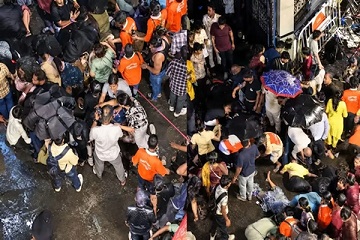
The stampede occurred at around 7.30 pm on Saturday amid heavy rainfall and a sudden surge of visitors. Initial reports have pointed to narrow approach lanes, inadequate crowd management, confusion over announcements and limited movement space as possible contributing factors. Investigators are examining the sequence of events to establish how the situation escalated.
According to local reports, the pandal had only one exit, and ropes used for crowd control were reportedly dropped during the incident. Reports have also raised questions about the experience of volunteers and the adequacy of security deployment. These details are part of the emerging account of the tragedy, and responsibility for individual failures must be established through the investigation.
The incident highlights a critical weakness in crowd safety: even when a venue has security personnel, an unexpected surge can become dangerous if people cannot move freely in different directions or receive clear instructions. Rain, congestion and conflicting announcements can further complicate an already crowded situation.
Police have arrested seven people in connection with the case, including members of the organising committee and personnel associated with crowd control and private security. A special investigation team has been formed to examine possible lapses and determine accountability.
Have Crowds Declined After the Tragedy?
Durga Puja attracts visitors from across West Bengal, including Hooghly, Howrah, Arambagh, North 24 Parganas and South 24 Parganas. Devotees also travel from Bihar and other states, while international visitors come to experience Kolkata’s celebrated festivities.
Following the Chorbagan incident, several prominent pandals, including Chetla Agrani, Suruchi Sangha, Tala Pratyay and Santosh Mitra Square, temporarily suspended entry as a precaution. The closures reflected concerns about crowd pressure and the need to reassess arrangements before allowing visitors back inside.
However, verified citywide attendance figures are not yet available to establish whether the tragedy has significantly reduced overall footfall. Temporary closures and changes in visitor movement should not, by themselves, be interpreted as evidence of a sustained decline.
The immediate concern is whether high-footfall venues can manage crowds safely during peak evening hours, particularly when visitors arrive in large groups or weather conditions change suddenly.
Police Step Up Inspections and Crowd-Control Measures
The Chorbagan tragedy has intensified scrutiny of security arrangements at major Durga Puja venues. Kolkata Police and other authorities are reviewing crowd-management systems, the placement of personnel and the coordination between organisers, private security teams and emergency services.
A key priority is to prevent excessive crowd density before it becomes dangerous. This requires monitoring visitor numbers, controlling entry when a venue approaches capacity and ensuring that incoming crowds do not obstruct people trying to leave.
Security measures that warrant particular attention include:
- Separate entry and exit routes: Organisers should maintain clearly marked, unobstructed routes wherever the venue layout permits. Emergency exits must remain accessible, and narrow lanes should not become bottlenecks.
- Controlled entry and crowd monitoring: Police and trained volunteers should monitor crowd density at approach roads, queues and viewing areas. Entry should be temporarily suspended when safe capacity is reached.
- Strategic police deployment: Personnel should be positioned at critical junctions, narrow passages, queue intersections and exit points, rather than concentrating only near VIP entrances or prominent locations.
- Reliable public announcements: Instructions should be clear, consistent and coordinated with police. Unverified warnings or ambiguous messages can create panic when visitors are already tightly packed.
- CCTV surveillance and communication: Camera feeds, public-address systems and direct communication between control rooms and on-ground teams can help authorities identify congestion and respond before it escalates.
- Emergency medical assistance: Ambulances, first-aid stations and trained medical personnel should be readily accessible. Emergency corridors must remain free of parked vehicles, stalls and waiting crowds.
These measures are particularly important at older neighbourhood pandals, where narrow streets and restricted access can complicate evacuation.
Fire Safety Also Under Scrutiny
Crowd management is only one aspect of public safety. Fire prevention, electrical safety and unobstructed emergency access are equally important, especially at temporary structures built with decorative materials.
On October 19, the New Indian Express reported that the West Bengal Fire and Emergency Services Department had issued notices to three prominent south Kolkata puja committees—Chetla Agrani, Ballygunge Cultural Association and Tridhara Sammilani—over alleged shortcomings in fire-safety arrangements.
Reported concerns included LPG cylinders near highly inflammable materials and inadequate lighting or obstructions affecting access routes at one venue. The notices underline the importance of regular inspections and compliance checks during the festival.
Organisers should ensure that: Fire extinguishers and other required firefighting equipment are available, functional and accessible.
- Electrical wiring, temporary lighting and generators are inspected by qualified personnel.
- Cooking areas and LPG cylinders are kept away from combustible decorations and public movement routes.
- Fire-service access roads remain clear.
- Emergency exits and evacuation signage are visible, including in dimly lit areas.
- Volunteers know how to alert the fire service and guide visitors without creating panic.
Fire-safety compliance should be checked before a pandal opens and monitored throughout the festival, rather than treated as a one-time formality.
Rain, Panic and the Need for an Emergency Plan
The Chorbagan incident also demonstrates why crowd-safety planning must account for sudden changes in weather. Heavy rain can prompt visitors to rush towards covered areas, creating an abrupt concentration of people at entrances, shelters and narrow passages.
Organisers should establish a specific bad-weather protocol in coordination with police and civic authorities. This should identify safe shelter areas, alternative movement routes, procedures for temporarily stopping entry and designated personnel authorised to make emergency announcements.
Crowds should never be directed towards a shelter without first assessing whether it has sufficient capacity. If a route becomes congested, trained personnel should prevent additional people from entering the affected area and redirect incoming visitors where safe alternatives exist.
Communication is equally important. Announcements should provide practical instructions, avoid speculation and be coordinated through a designated control point. In a rapidly developing emergency, conflicting messages can make it harder for visitors to understand where to go.
Emergency Response and Accountability
West Bengal Chief Minister Suvendu Adhikari has ordered an inquiry into the incident, while investigators examine possible failures in crowd control and safety arrangements. Seven people have been arrested in connection with the case, and a special investigation team is probing the circumstances surrounding the deaths.
The investigation will need to establish whether the venue had adequate evacuation arrangements, whether security personnel were deployed appropriately, whether crowd-control procedures were followed and whether emergency services could reach the victims without delay.
Accountability must extend beyond identifying immediate mistakes. Findings should help establish whether existing safety requirements were enforced, whether organisers and authorities coordinated effectively and whether corrective measures were implemented after inspections.
The government has also announced compensation and assistance for affected families, according to reports. While financial support is important, it cannot replace the need for a transparent investigation and measures to prevent similar tragedies.
Political Leaders Express Grief
Political leaders across party lines have expressed condolences to the victims’ families and called attention to the tragedy. Former chief minister Mamata Banerjee expressed shock and sadness over the deaths, while the CPI(M) Polit Bureau conveyed its condolences and raised concerns about crowd management and accountability.
BJP leaders have also called for a transparent investigation. Some accounts have suggested that announcements and the actions of private security personnel may have contributed to the panic. These claims must be assessed against eyewitness accounts, CCTV footage and other evidence before conclusions are drawn.
The focus of the inquiry should remain on establishing the facts, identifying failures and determining what changes are needed to protect visitors at future public gatherings.
Will Fear Affect the Festive Spirit?
For countless families, Durga Puja is an eagerly awaited annual celebration. Visitors travel across Kolkata to admire the idols, artistic installations and elaborate themes, often spending hours moving between neighbourhoods with friends and relatives.
The Chorbagan tragedy has understandably raised concerns about visiting crowded pandals, particularly among families with children and older people. Yet reliable attendance data will be needed to determine whether visitor behaviour has changed significantly.
Authorities and organisers must recognise that public confidence depends not only on visible security personnel but also on effective systems behind the scenes. Clear routes, controlled queues, trained staff and prompt communication can help visitors feel safer while reducing the risk of dangerous crowd surges.
Safety Must Come Before Celebration
The Chorbagan tragedy is a stark reminder that public safety cannot depend on luck, good intentions or the assumption that crowds will remain orderly. Large gatherings require advance planning, clearly assigned responsibilities, regular inspections and the ability to respond quickly when conditions change.
Kolkata’s Durga Puja organisers and authorities should prioritise unobstructed exits, effective crowd monitoring, trained volunteers, adequate police deployment, CCTV surveillance, functioning public-address systems, fire-safety compliance and accessible medical assistance.
Every visitor must be able to celebrate without being exposed to preventable danger. Protecting human life must remain the foremost responsibility of organisers, police, emergency services and the administration.