
Our Correspondent
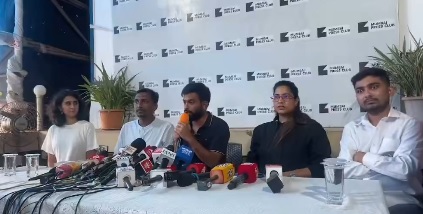
MUMBAI: The Cockroach Janta Party (CJP) has announced that it will go ahead with a protest at Mumbai’s Shivaji Park on Friday, October 2, against Chief Election Commissioner Gyanesh Kumar, despite not receiving permission from the Mumbai Police to hold the demonstration.
CJP founder Abhijeet Dipke said on Thursday that the organisation would press for the resignation of the Chief Election Commissioner and demand criminal action against him. The group has also called for freezing the Special Intensive Revision (SIR) of electoral rolls and sought greater transparency in the process of appointing the Chief Election Commissioner, including participation of civil society representatives.
The proposed Mumbai demonstration is part of a wider campaign planned by the organisation. According to Dipke, CJP will organise protests in six other cities after Mumbai, with the campaign expected to culminate at Jantar Mantar in New Delhi by the end of October.
Allegations against CEC
At a press interaction, Dipke made several allegations against CEC Gyanesh Kumar and questioned the functioning of the Election Commission of India. He alleged that around 13 crore names had been deleted from electoral rolls since 2024 and claimed that the scale of deletions had affected the electoral process.
He also alleged that the margin between the NDA and the INDIA bloc in the 2024 Lok Sabha election was small while, according to him, a much larger proportion of votes had subsequently been removed from electoral rolls.
Dipke further alleged that the Election Commission was working in favour of the ruling establishment and demanded Kumar’s resignation. He said that if the CEC did not step down, the protesters would subsequently seek the resignation of Prime Minister Narendra Modi.
The CJP leader also raised concerns about electronic voting machines (EVMs), arguing that electronic systems could be compromised. He demanded that elections be conducted using paper ballots instead.
Police deny permission
The Mumbai Police have not granted permission for the proposed protest at Shivaji Park. The issue of holding public events at the venue has also been the subject of proceedings before the Bombay High Court.
Mumbai’s designated protest venue is Azad Maidan. Asked why CJP had not chosen Azad Maidan for the demonstration, Dipke said the organisation wanted to protest specifically at Shivaji Park and maintained that demonstrations could be held at other locations as well.
When asked whether CJP had approached the Bombay High Court seeking permission, Dipke indicated that it had not done so, questioning the usefulness of pursuing the matter through the courts.
His comments came after Maharashtra Chief Minister Devendra Fadnavis warned that protesters could face police custody for violating restrictions. Dipke said he was prepared to face detention and indicated that such action would not deter the organisation from continuing its campaign.
Wider electoral-roll controversy
The proposed protest comes amid an ongoing political controversy over electoral-roll revision and the functioning of the Election Commission. Opposition parties and several civil society groups have raised questions over the Special Intensive Revision process, including the deletion of names from electoral rolls and the procedures followed for additions and deletions.
The controversy has also intensified over changes related to voter-registration forms and the Election Commission’s digital processes. Political parties have sought greater transparency in the handling of electoral data and the safeguards used to ensure that eligible voters are not excluded.
The Election Commission has maintained that electoral-roll revision is carried out under the applicable legal framework and involves prescribed procedures for claims, objections and verification. Allegations regarding wrongful deletion or manipulation of electoral rolls therefore remain subject to verification through the competent authorities and courts.
CJP questions Supreme Court
Dipke also criticised the Supreme Court when asked why CJP was not waiting for the apex court to hear pending petitions concerning electoral rolls and the SIR process.
Questioning the court’s role, he alleged that the judiciary too had failed to adequately address concerns over voting rights. His remarks were made in the context of the ongoing legal and political debate surrounding electoral-roll revisions and voting procedures.
The proposed October 2 demonstration is therefore set against a wider dispute involving the Election Commission, electoral-roll revisions, SIR and demands for greater transparency in the electoral process. Whether the CJP protest proceeds at Shivaji Park despite the absence of police permission will depend on the enforcement of the applicable restrictions and directions of the authorities or courts.