
Last Updated on March 21, 2026 11:09 pm by INDIAN AWAAZ
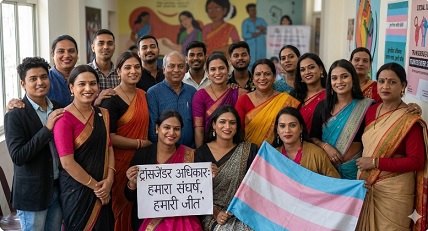
AMN / NEW DELHI
Over a 100+ members of the All-India Feminist Alliance (ALIFA) and National Alliance for Justice, Accountability and Rights (NAJAR) – pan India platforms associated with the National Alliance of People’s Movements (NAPM) have issued an Open Appeal to all the Parliamentarians (Lok Sabha and Rajya Sabha), expressing grave concerns over the Transgender Persons (Protection of Rights) Amendment Bill, 2026, introduced in the Lok Sabha on 13th March, 2026.
They have appealed to all MPs to individually and collectively heed to the sane voices from across the country resisting this unconstitutional Bill and ensure the Bill is immediately withdrawn and not passed by both the Houses of the Parliament. They have also appealed that no legislative changes must be made without widespread and inclusive consultations with transgender, intersex, non-binary, gender queer persons, collectives, communities and civil society organizations working with them.
This letter states that the Bill violates constitutional rights of the citizens of India and has been introduced without empirical backing or due consultations with the transgender community or even the National Council for Transgender Persons. The Bill, in limiting the coverage of the Transgender Persons (Protection of Rights) Act, 2019, introduces arbitrary and inhuman requirements for ‘compliance’ that are very likely to make access to fundamental rights and entitlements impossible for a large number of transgender persons, thus making the very communities it seeks to ‘protect’, additionally vulnerable to medical, legal and social discrimination, humiliation and violence.
In National Legal Services Authority v. Union of India (2014) 5 SCC 438 [“NALSA Judgement”], the Supreme Court held that the right to self-determination / self-identification of one’s gender is a fundamental right protected under Articles 14, 19, and 21 of the Constitution. The Court held that this right requires no medical or surgical procedure, no medical certification, and no administrative / state approval. The Transgender Persons (Protection of Rights) Act, 2019 (the “Principal Act”), though imperfect in several respects, gave statutory expression to this constitutional guarantee. The Amendment Bill proposes to withdraw legal recognition based on this constitutional guarantee to live as one’s self-identified gender and perpetuates harmful social stigmas around transgender persons. The Bill thus turns the wheel back, on the progress made since a decade of the NALSA judgement in a retrograde manner.
Presenting specific and detailed objections to the Bill, the signatories stated that it narrows down the definition of ‘transgender person’, thus violating the legal and constitutional rights of lakhs of citizens. The Bill de-recognizes self-perceived identity, introduces medical gatekeeping, excludes most vulnerable transgender people, criminalizes transgender people’s support systems and does not address existing legal drawbacks.
Transgender persons in India have held their hard-won right to legal recognition of their self-identified gender identity for over ten years. Despite some limitations of existing legal frameworks, they have relied upon it to secure identity documents, access education, healthcare, employment and public services, assert their rights before courts and institutions across the country, and live as equal members of Indian democracy. The Amendment Bill proposes to remove that recognition, not on account of any demonstrated failure of the existing framework, but on the basis that the Government considers their identities insufficiently grounded in biology or socio-cultural tradition to warrant protection. This is a dangerous precedent; utterly unconstitutional in principle, and deeply discriminatory in its undoing of the rights of transgender citizens of the country.
The signatories have stated that the Amendment Bill, 2026 does not represent our collective will as citizens of this country and threatens the hard-won feminist, social justice fight and rights for equal citizenship; constitutional parity and bodily autonomy for all.
ALIFA and NAJAR have called upon all Members of the Parliament to ensure that:1. The Amendment Bill, 2026 in its current form be immediately and fully withdrawn;2. The Amendment Bill, as it stands currently, be sent to the existing Parliamentary Standing Committee on Social Justice and Empowerment for a comprehensive review;3. The aforesaid Standing Committee conducts detailed investigation and invites testimonies from members of the transgender, intersex, non-binary and genderqueer communities, collectives and civil society, civil liberties groups on the operational and procedural aspects and limitations of the 2019 Act and the current Amendment; 4. The transgender, intersex, non-binary and genderqueer persons consulted by the Standing Committee must reflect the full range of trans, genderqueer experience, as recognised in the NALSA judgment and as upheld by the definition of the 2019 Act, including diversity of language, caste, region, religion, gender and sexual orientation; 5. The existing provisions (including drawbacks) of the Principal Act of 2019, as systematically highlighted in the Supreme Court’s judgement in Jane Kaushik v. Union of India (2025) are adequately considered before proceeding with any legislative changes.The signatories urged that only after the Standing Committee submits its recommendations, in light of such evidence-generating exercises, should there be any attempt at legislative review, towards further strengthening of rights guaranteed under NALSA 2014.
ALIFA and NAJAR hope the MPs and their political parties will ensure the withdrawal of this draconian Bill and uphold the rights of transgender persons, thousands of who have been protesting this Bill across India, for the past one week.
The Joint Submission to the MPs was made by All India Feminist Alliance (ALIFA) and National Alliance for Justice, Accountability and Rights (NAJAR). ALIFA is a collective of feminist, grassroots organizations and individuals and NAJAR is a forum of progressive lawyers and legal professionals for democratic causes. Many of our members also identify as transgender, non-binary, genderqueer, intersex persons and others are in solidarity, together asserting constitutional and human rights.