

Last Updated on March 14, 2026 2:57 pm by INDIAN AWAAZ
ANDALIB AKHTER / New Delhi
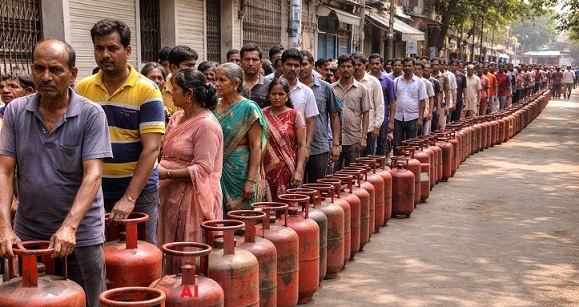
Faced with rising global energy uncertainties and supply disruptions linked to tensions in West Asia, the Indian government has taken temporary measures to expand the use of alternate fuels such as kerosene, coal and biomass. The move is aimed at easing pressure on liquefied petroleum gas (LPG) supplies while ensuring uninterrupted fuel availability for commercial establishments.
Officials say the decision was taken as a precautionary step following concerns that prolonged geopolitical tensions in the Middle East could affect global energy supply chains. With international crude oil prices, including Brent Crude, climbing above $100 per barrel, governments around the world are reassessing energy security strategies.
India, which imports nearly 85 percent of its crude oil requirements, remains particularly vulnerable to fluctuations in global energy markets. In response, the government has allowed the temporary use of kerosene, coal and biomass as alternate fuels, particularly for commercial kitchens, hotels, restaurants and other establishments that consume large quantities of cooking fuel.
Temporary Shift in Fuel Policy
Under the latest decision, state pollution control boards have been advised to permit the limited use of these fuels during the ongoing supply pressure. The step is intended to reduce demand for LPG in the commercial sector so that household supplies remain stable.
To support the measure, the government has also increased kerosene allocation to states by around 48,000 kilolitres, in addition to the existing quota. The fuel will be distributed through the public distribution system and authorised fuel outlets.
At the same time, state-run coal companies have been directed to ensure adequate coal availability for small businesses and industries that may shift temporarily to alternate fuel sources.
Energy officials have clarified that the move is strictly temporary and aimed at managing supply disruptions, rather than representing a long-term change in India’s clean energy policies.
Environmental and Policy Considerations
Kerosene and coal have historically been used as cooking fuels in India but their use declined significantly over the past decade due to environmental concerns and the expansion of cleaner fuel programmes.
The government’s flagship scheme Pradhan Mantri Ujjwala Yojana has played a key role in providing LPG connections to millions of low-income households, significantly reducing reliance on traditional fuels such as firewood, coal and kerosene.
Environmental experts caution that the temporary return to these fuels should be carefully managed to avoid air pollution and health risks, particularly in densely populated urban areas.
Long-Term Strategy Remains Focused on Cleaner Fuels
Despite the short-term reliance on conventional fuels, India continues to pursue a long-term transition toward cleaner and more sustainable energy sources.
Key initiatives include the National Green Hydrogen Mission, which aims to develop large-scale production of green hydrogen, and the FAME India Scheme, which promotes electric mobility.
India is also expanding renewable energy capacity, targeting 500 gigawatts of non-fossil fuel power generation by 2030.
Balancing Energy Security and Sustainability
Energy analysts say the government’s latest step highlights the delicate balance between energy security and environmental goals. While the temporary use of kerosene and coal may help manage immediate supply challenges, policymakers remain focused on accelerating the shift toward renewable energy and alternate fuels.
The current situation has once again underscored the importance of diversifying India’s energy mix to reduce dependence on imported fossil fuels and strengthen resilience against global supply shocks.