
Last Updated on March 11, 2026 12:34 am by INDIAN AWAAZ
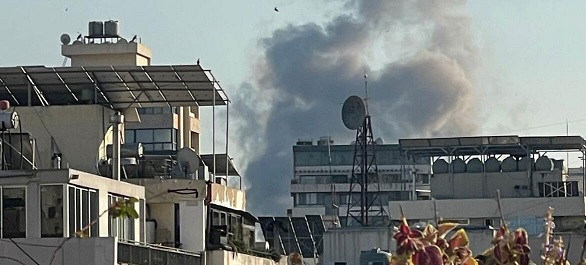
UN Photo/Pasqual Gorriz Smoke rises in Beirut, Lebanon, following the outbreak of hostilities across the Middle East
UN NEWS
The conflict in the Middle East continues, with strikes and counter-strikes across the region and the humanitarian toll mounting. UN agencies warn that rising civilian casualties, mass displacement – particularly in Lebanon – and damage to critical infrastructure are deepening the crisis, while disruptions to shipping and energy routes risk driving up global prices and worsening food insecurity. Stay with us for updates from across the United Nations system.
Tuesday’s highlights:
- ‘Toxic rain’ warning in Iran: WHO said hazardous “black rain” linked to strikes on oil depots in Tehran could pose serious health risks as toxic pollutants spread in the air.
- Civilian toll rising in Lebanon: Hospitals and first responders are under “extraordinary strain” as casualties climb amid continued Israeli strikes and ground operations, reported WHO.
- UN peacekeepers escort civilians to safety: UNIFIL troops helped around 80 residents leave the southern Lebanese village of Alma Al Chaab after evacuation orders were issued for communities south of the Litani River.
- Food insecurity fears grow: WFP warned the conflict is driving up food and fuel prices, risking hunger for vulnerable families across the region and beyond.
- Displacement surges across region: UNHCR reported rapidly rising displacement, with nearly 700,000 people uprooted in Lebanon and cross-border movements increasing into Syria and elsewhere.
10 Mar 2026 23:14
Lebanon: UN mission reports continued exchanges of fire
The UN Interim Force in Lebanon (UNIFIL) says fighting continues across the Blue Line, with rockets fired towards Israel and Israeli airstrikes and artillery shelling reported in southern Lebanon.
Peacekeepers have also observed movements by Israel Defense Forces north of the Blue Line – which separates the armed forces of Lebanon and Israel.
A mortar shell also struck near a UNIFIL position in Sector East on Monday, scattering debris across nearby structures. No injuries were reported and the origin of the shell remains under investigation.10 Mar 2026 22:53
UN agency deploys mobile health teams in Lebanon
Escalating strikes across southern Beirut, southern Lebanon and the Bekaa Valley have killed and injured hundreds of people and forced nearly 700,000 from their homes. Most displaced families are sheltering in schools or other temporary sites, while others remain in cars or by the roadside.
The already fragile health system is under severe strain, with dozens of primary health centres closed. Disruptions to reproductive health services, poor sanitation and overcrowded shelters are increasing risks for women and girls, including gender-based violence.
The UN reproductive health agency, UNFPA, is deploying mobile health teams and providing reproductive health care, psychosocial support and essential supplies for displaced families.
UN rights chief warns strikes on civilian infrastructure increasing risks
Volker Türk, UN High Commissioner for Human Rights has warned that the widening Middle East crisis is having a growing and dangerous impact on civilians across the region.
He expressed alarm over repeated strikes on residential areas and essential infrastructure, including hospitals, schools, water facilities and energy systems.
“Under the laws of war, civilians and civilian infrastructure must be protected at all costs,” he said, stressing that all parties must respect international humanitarian law and be held accountable for violations.
Environmental damage and global fallout raise further concerns
Mr. Türk also warned that attacks on critical infrastructure could have serious environmental and humanitarian consequences.
In Iran, strikes reportedly hit fuel facilities and a desalination plant, raising fears of toxic pollution and acid rain. A separate attack on a desalination facility in Bahrain has also threatened water access for civilians.
The High Commissioner said the crisis is already reverberating globally, disrupting shipping in the Strait of Hormuz and affecting energy, food and fertilizer supplies, with the most vulnerable populations likely to bear the heaviest impact.10 Mar 2026 21:57