
Last Updated on February 6, 2026 1:31 am by INDIAN AWAAZ
AMN / NEWS DESK
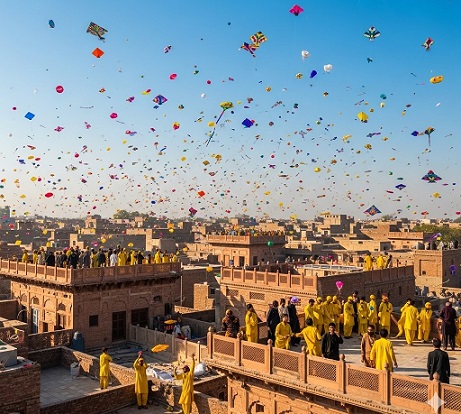
Shortly after midnight on Thursday, the historic city of Lahore witnessed a long-awaited transformation as the sky erupted in a kaleidoscope of color, marking the official commencement of the Basant festival. For the first time in nearly two decades, the Punjab government has formally lifted the 2007 ban on kite flying, ushering in a three-day celebration that is as much about cultural revival as it is about modern public safety.
The festival, scheduled to run until February 8, follows the recent promulgation of the Punjab Kite Flying Ordinance, 2025. This legislative framework serves as the backbone for the festival’s return, aiming to balance the city’s vibrant traditions with the necessity of protecting human life. Punjab Information Minister Azma Bokhari confirmed that the festivities are being conducted under “close monitoring,” with a massive deployment of law enforcement agencies across Lahore’s districts.
Safety and Enforcement
The 18-year prohibition was originally sparked by a rise in fatalities caused by chemical-coated strings and celebratory gunfire. To prevent a recurrence of these tragedies, the new ordinance grants significant powers to the police. Officers of sub-inspector rank and above are now authorized to conduct searches and make arrests without warrants if credible evidence of dangerous activity—such as the use of prohibited “manjha” (sharp string)—is found.
While the “Bo Kata!” echoes return to the rooftops, the atmosphere is one of cautious joy. The Punjab government has emphasized that comprehensive conditions are in place to ensure zero loss of life.
HISTORY OF BASANT
Traditionally celebrated as a vibrant herald of spring in the Punjab region, Basant is a centuries-old festival that honors the season’s blooming yellow mustard fields through kite flying and yellow attire.
The festival carries deep historical roots across various communities, evolving from a seasonal folk celebration into a massive urban spectacle in Lahore before safety concerns led to its long-term suspension.
Sufi Traditions: Basant gained significant cultural momentum through the 12th-century Sufi saint Nizamuddin Auliya. Legend says his disciple, the poet Amir Khusrau, dressed in yellow and brought flowers to cheer the saint up after a personal loss, marking the “Basant Panchami” tradition within Sufi shrines.
The Mughal Influence: During the Mughal era, Basant was an elite affair hosted in the royal courts, where music, poetry, and kite flying were used to welcome the transition from the harsh winter to the mild spring.